Dezsõ Kertész
Actor
- Active
- 1918-1918
Films 1
About Dezsõ Kertész
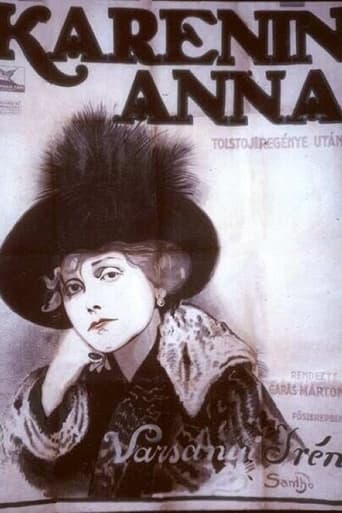
Dezső Kertész is a documented silent-era Hungarian actor who appears in film records for the 1918 production of Anna Karenina, a period in which Hungarian cinema was producing ambitious literary adaptations amid the disruptions of World War I and the rapid transformation of European film culture. Surviving mainstream reference material on him is extremely limited, and he appears to have had a brief screen presence rather than a long, internationally documented career. Because his credited film work is confined to the 1918 period in the sources available, he is best understood as a minor but authentic participant in early Hungarian silent cinema rather than a widely chronicled star. No reliable, widely circulated biographical account of his later life, training, or personal history is readily available in standard film-history references. His name is closely tied to Anna Karenina (1918), which is the key surviving anchor for his screen career. Beyond that film, detailed information about his subsequent acting work, death, or off-screen life is currently not well documented in widely accessible English-language sources. As a result, he remains one of the many early European film figures whose contributions are preserved primarily through credits and archival film records rather than extensive biographies.
More about Dezsõ Kertész
In film history
Dezső Kertész's cultural significance lies less in celebrity status and more in what his surviving credit reveals about the infrastructure of early Hungarian silent cinema. Performers like him helped populate ambitious literary adaptations that connected Hungarian filmmaking to the broader European tradition of prestige production. Even when an actor's individual biography is sparse, their presence in a film such as Anna Karenina (1918) reflects the international reach of Russian literary material and the artistic aspirations of Central European studios during the silent era. His record also illustrates how many early film careers have been partially lost to time, with surviving credits often standing in for fuller historical documentation.
Later reputation
Kertész's lasting legacy is archival: he remains part of the historical record of early Hungarian film performance, especially in relation to an important 1918 adaptation of a major literary work. For film historians, such figures are valuable because they help reconstruct casting, production networks, and performance traditions in the silent period. Although he is not a widely celebrated name, his inclusion in filmography databases ensures that his contribution is not erased from classic-cinema history. His legacy therefore resides in preservation and scholarship rather than in fame or a large body of surviving work.
Influence
There is no well-documented evidence of direct influence on later actors or filmmakers, but his participation in silent-era Hungarian production contributes to the broader lineage of Central European screen acting. By appearing in a literary adaptation at a time when film performance depended heavily on gesture, expression, and visual storytelling, he would have worked within the interpretive traditions that shaped silent acting more generally. His influence is best understood indirectly, as part of the ensemble of early performers whose work helped establish the norms of regional cinema.
Off screen
Reliable public information about Dezső Kertész's personal life is not readily available in standard film-reference sources. No widely verified details concerning marriages, family background, residence, or later career are currently established from accessible archival summaries. Because he appears in surviving records primarily through a single known film credit, most aspects of his private life remain undocumented in broadly available references.
Credits
- Appeared in the silent film Anna Karenina (1918), one of the period's literary adaptations
- Represents the small but significant body of Hungarian actors working in wartime-era silent cinema
- Documented in filmography records as an active screen performer during 1918
Roles
- Role in Anna Karenina (1918) not fully documented in surviving reference sources
Films
- Anna Karenina (1918)
Notes
- He is associated with one of the classic literary adaptations of the silent era, Anna Karenina (1918).
- He appears to have had a very brief or sparsely documented screen career in surviving reference sources.
- His name is Hungarian and uses the accent mark in Dezső, which is often omitted in simplified databases.
- He is one of many early European actors whose careers are known primarily through film credits rather than biographies.
- His documented activity falls entirely within 1918 in the sources currently available.
- Because of the age of the film record, details such as his exact role, birth date, and later life are not widely preserved.
Questions
Who was Dezső Kertész?
Dezső Kertész was a Hungarian silent-era actor known from surviving film records, most notably for Anna Karenina (1918). He appears to have been active only in the late silent period, and very little biographical detail has survived in widely accessible sources.
What films is Dezső Kertész best known for?
He is best known for Anna Karenina (1918), the key surviving credit associated with his screen career. No other widely documented film appearances are readily confirmed in standard reference sources.
When was Dezső Kertész born and when did he die?
At present, reliable public sources do not provide confirmed birth or death dates for Dezső Kertész. His archival footprint is limited, so those details remain unavailable in the accessible record.
What awards did Dezső Kertész win?
No awards or nominations are currently documented for Dezső Kertész in the available historical record. This is common for many silent-era performers whose careers were not extensively covered by later award systems or surviving press documentation.
What was Dezső Kertész's acting style?
No detailed critical descriptions of his acting style are readily available. As a silent-era actor, he would have worked in a performance mode shaped by gesture, facial expression, and visual storytelling rather than spoken dialogue.
What is Dezső Kertész's legacy in film history?
His legacy is primarily historical and archival, since he represents the many lesser-documented performers who contributed to early Hungarian cinema. His presence in Anna Karenina (1918) helps preserve the cast history of an important silent literary adaptation.