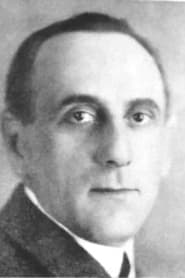
Gyula Margittai
Actor
- Active
- 1918-1918
Films 1
About Gyula Margittai
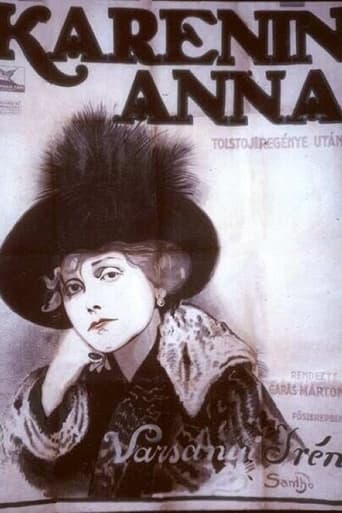
Gyula Margittai is a little-documented Hungarian film actor associated with the silent era, best known today for appearing in the 1918 screen adaptation of Anna Karenina. Surviving reference sources indicate that his film career, at least in the available record, is extremely brief and centered on this single known credit, suggesting either a very limited screen career or substantial gaps in the historical documentation. Because the early Hungarian silent-film industry suffered from incomplete archiving and the loss of many productions, very little personal information about Margittai has survived in widely accessible modern databases. He appears to belong to the generation of stage-trained performers who moved into cinema during the 1910s, when Hungarian filmmakers were adapting major literary works and recruiting actors capable of conveying character through expressive silent performance. Aside from his credit in Anna Karenina, reliable biographical details such as his birth date, death date, family background, training, and later life remain unverified in standard English-language film references. As a result, Margittai is remembered primarily as one of the many early Central European screen players whose work is preserved more in cast lists than in detailed biographical records. His significance lies in his participation in a formative period of Hungarian cinema rather than in a large surviving filmography.
More about Gyula Margittai
On screen
No contemporary reviews or detailed performance descriptions have been verified for Gyula Margittai. Based on the silent-era context in which he worked, his screen acting would almost certainly have relied on expressive physical gesture, facial nuance, and clear visual storytelling rather than spoken dialogue. Because no surviving critical commentary has been confidently identified, any further characterization of his style would be speculative.
In film history
Gyula Margittai's cultural impact is best understood in the context of early Hungarian silent cinema rather than through a wide individual fame. His documented presence in Anna Karenina places him within the tradition of European filmmakers adapting major literary classics for the screen, helping establish cinema as a respectable dramatic art form. While his name is not widely familiar today, actors like Margittai contributed to the professionalization of film acting in Hungary during the silent era, when the screen was moving beyond novelty entertainment toward serious narrative storytelling. His surviving credit also serves as a reminder of how many early performers have been partially erased by incomplete records, film loss, and the passage of time.
Later reputation
Margittai's legacy is archival and historical rather than star-driven: he is part of the chain of early performers whose names help reconstruct the personnel of Hungarian silent cinema. Even with only one widely documented film credit, his participation in a prestige adaptation such as Anna Karenina gives him a place in the history of early literary cinema in Central Europe. For film historians, figures like Margittai are important because they illuminate the breadth of talent working in the industry beyond the handful of better-known directors and leading stars. His name endures as a surviving trace of a cinematic era from which much has been lost.
Influence
There is no verified evidence that Gyula Margittai directly mentored later actors or exerted a documented influence on major performers or directors. His broader influence is indirect: as part of the ensemble of silent-era Hungarian actors, he contributed to a performance tradition based on visual expressiveness and literary adaptation. In that sense, his work belongs to the foundation on which later Hungarian screen acting developed, even though his individual career is not well enough documented to trace a direct lineage of influence.
Off screen
No reliably verified information is currently available in standard film references regarding Gyula Margittai's personal life, including marriage, children, education, or family background. This absence of data is not unusual for lesser-documented silent-era performers, especially those working in regional European cinema where archival losses were common. He should therefore be treated as a historically documented screen performer whose private life remains largely unknown to modern researchers.
Credits
- Appeared in the 1918 silent film Anna Karenina, one of the few surviving documented credits associated with his name
- Worked during the final years of World War I, a formative and turbulent period for the Hungarian film industry
- Represents the class of early Hungarian screen actors whose contributions are preserved primarily through production records and cast listings
- Associated with literary adaptation cinema, a major prestige category in early European silent filmmaking
Roles
- Role in Anna Karenina (1918)
Films
- Anna Karenina (1918)
Notes
- Gyula Margittai is most securely identified today through a single surviving film credit: Anna Karenina (1918).
- He worked in the silent era, so any performance would have been conveyed without synchronized dialogue.
- His career appears in film databases with a very narrow date range, suggesting either a brief screen career or incomplete archival preservation.
- He is associated with Hungarian cinema, a national film culture that produced a number of literary adaptations in the 1910s.
- Because so little biographical information survives, he is one of the many early film performers known mainly to historians and archivists.
- His record illustrates how the careers of many silent-era actors are fragmented due to lost films and incomplete production documentation.
- Anna Karenina was a prestigious literary property in early cinema, indicating that Margittai participated in a serious dramatic production rather than a purely commercial novelty.
- There are no widely verified awards or honors connected to his name in current accessible references.
Questions
Who was Gyula Margittai?
Gyula Margittai was a Hungarian silent-era actor best known for appearing in Anna Karenina (1918). He is a historically documented but very sparsely recorded figure, and much of his personal life and career remains unknown due to the limited survival of early film records. He represents the many early Central European performers whose names persist mainly in cast lists and archival references.
What films is Gyula Margittai best known for?
He is best known for Anna Karenina (1918), which is the principal film credit associated with his name in widely accessible references. No other reliably verified screen appearances are currently documented in the same level of detail. If additional films existed, they have not been consistently preserved in modern reference sources.
When was Gyula Margittai born and when did he die?
His birth date and death date are not currently verified in accessible standard film references. The same is true of his birth place and death place, which remain undocumented in the sources commonly available to researchers. This lack of data is typical for some silent-era actors, especially those whose careers were brief or poorly archived.
What awards did Gyula Margittai win?
No awards or formal honors are currently documented for Gyula Margittai in the available historical record. This does not necessarily mean he received none, only that no verifiable award information has survived in the sources accessible today. For many early silent-era actors, recognition came through production work rather than modern award systems.
What was Gyula Margittai's acting style?
No contemporary review has been confidently identified that describes his performances in detail. As a silent-era actor, his style would have depended on facial expression, gesture, and physical clarity to communicate emotion and story. Any more precise statement about his technique would be speculative without surviving critical commentary.
What is Gyula Margittai's legacy in film history?
His legacy is primarily historical and archival. He is one of the many early Hungarian screen actors whose names help document the development of silent cinema and literary adaptation film-making in Central Europe. Even with limited surviving information, his credit in Anna Karenina places him within an important early chapter of film history.