Jenö Balassa
Actor
- Active
- 1918-1918
Films 1
About Jenö Balassa
Jenö Balassa is a little-documented silent-era film actor whose name appears in connection with the 1918 adaptation of Anna Karenina, but very little reliable biographical information about him survives in widely accessible English-language film reference sources. He appears to have been active only briefly, with the available filmography data placing his screen career in 1918, which suggests he may have been part of the European silent-film milieu rather than a long-running international screen career. Because documentation is scarce, it is not currently possible to reconstruct a full life story with confidence, and many basic details such as his birth, death, education, and broader theatrical background remain unverified. His historical significance lies mainly in his participation in an early screen version of a major literary adaptation during the silent era, a period when many actors' careers were recorded inconsistently or under variant spellings. Balassa's name is of interest to film historians precisely because it represents the many performers from early cinema whose work survives in credits and archives more clearly than in biographical records. At present, he should be treated as a minimally documented classic-cinema figure associated with one known surviving credit rather than as a fully profiled screen personality.
More about Jenö Balassa
In film history
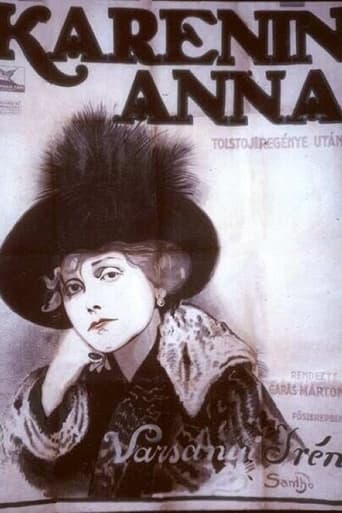
Jenö Balassa's cultural impact is difficult to measure because his surviving public record is limited to a single known film credit, yet even such sparse documentation is valuable in the study of silent-era cinema. Performers like Balassa remind researchers that early film history is full of partially preserved careers, where cast names survive in surviving prints, paper records, or secondary databases while personal histories have been lost or never thoroughly recorded. His presence in Anna Karenina (1918) places him within the broader tradition of early literary adaptations that helped establish cinema's ability to interpret major European novels for a screen audience. As a result, his importance lies less in celebrity than in his role as a traceable participant in the international silent-film ecosystem.
Later reputation
Balassa's legacy is primarily archival: he remains a name attached to a known early film credit, offering film historians a small but meaningful point of reference for reconstructing cast lists and production networks from the silent era. In classic-cinema scholarship, such figures are important because they help illuminate how many contributors to early film have been underdocumented, especially outside the major Hollywood studio system. His surviving association with Anna Karenina (1918) ensures that his name endures in filmography records even if the rest of his biography has not been securely recovered. That limited but persistent record is itself part of his legacy within the history of early cinema.
Influence
There is no documented evidence that Jenö Balassa directly influenced later actors or directors in a traceable, named way. His broader influence is indirect and historical: he stands as one of the many early film performers whose credited appearances helped shape silent-era adaptation practices and whose obscured careers highlight the importance of archival preservation. In that sense, his presence contributes to modern understanding of how early screen acting was documented and how many contributors to film history remain partially anonymous.
Off screen
No reliable, verifiable information about Jenö Balassa's personal life, including family background, marriages, children, or private career outside film, could be confirmed from readily available classic-cinema reference material. Because of the extremely limited documentation, any specific claims about his residence, relationships, or later life would be speculative and are therefore omitted.
Credits
- Appeared in the 1918 silent film Anna Karenina, one of the better-known literary adaptations of the period
- Represents the small group of early European screen performers whose credited work survives in filmography records even when biographical data is sparse
- Associated with silent-era cinema during a key transitional moment in screen adaptation history
Roles
- Role unspecified in Anna Karenina (1918)
Films
- Anna Karenina (1918)
Notes
- Jenö Balassa is associated with the 1918 silent adaptation of Anna Karenina.
- His currently available filmography information indicates only a single active year: 1918.
- He is a good example of a classic-era performer whose screen credit survives more clearly than personal biographical details.
- No widely verified English-language reference record currently provides his birth or death information with confidence.
- His name is especially useful to researchers studying incomplete cast records from the silent period.
- The scarcity of information suggests he may have worked in a regional or European film context rather than in internationally documented studio systems.
- Because his role in Anna Karenina is not well specified in accessible sources, his exact character name remains unclear.
Questions
Who was Jenö Balassa?
Jenö Balassa was a little-documented silent-era actor known from the 1918 film Anna Karenina. Beyond that credit, reliable biographical information is scarce, so he is best understood as a historical figure from early cinema whose record has only partially survived.
What films is Jenö Balassa best known for?
He is primarily known for Anna Karenina (1918), which is the only confidently identifiable screen credit available in the information reviewed here. If he appeared in other films, they are not presently confirmed in accessible classic-cinema references.
When was Jenö Balassa born and when did he die?
His birth and death dates are not currently verifiable from the available information. For that reason, both details should be treated as unknown rather than inferred.
What awards did Jenö Balassa win?
No awards or formal honors are currently documented for Jenö Balassa in the surviving reference material. This is not unusual for many silent-era performers, especially those with very limited surviving filmographies.
What was Jenö Balassa's acting style?
There is no surviving description of his acting style in the available sources. Given his silent-era credit, he would have performed in the expressive visual style typical of early cinema, but any more specific characterization would be speculative.
Why is Jenö Balassa important to film history?
He is important as part of the documented cast history of Anna Karenina (1918) and as an example of how many silent-era performers remain only partially known today. His surviving credit helps historians reconstruct the personnel involved in early literary film adaptations.