Sándor Virányi
Actor
- Active
- 1918-1918
Films 1
About Sándor Virányi
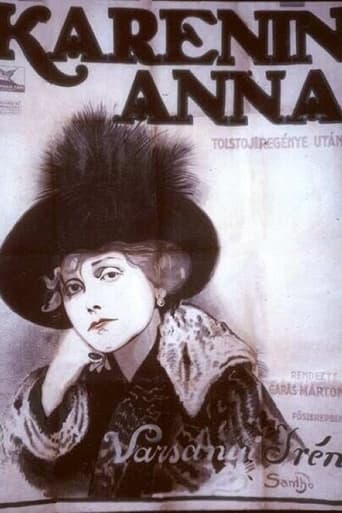
Sándor Virányi was a Hungarian actor associated with the silent-era film world, best known today for his credited appearance in the 1918 screen adaptation of Anna Karenina. Surviving reference sources on early European cinema preserve only limited biographical detail about him, which suggests that he was one of the many stage-trained performers who moved into film during the brief but artistically fertile years of the Austro-Hungarian and Hungarian silent industries. His documented screen activity places him in the final phase of World War I, when Hungarian filmmaking was still producing prestige literary adaptations and melodramatic features despite wartime disruption. Because extant records are sparse, the full arc of his career, including whether he continued acting after 1918 or returned to the stage, is not clearly established in readily available historical film references. His name remains attached to Anna Karenina as a surviving trace of the actors who helped populate early Central European cinema with literary and theatrical credibility. In classic-film research, Virányi belongs to the category of historically important but under-documented silent performers whose contributions are known primarily through cast listings and archival filmographies rather than extensive press coverage. Even with scant biographical data, his presence in a major 1918 adaptation situates him within the formative period of Hungarian feature filmmaking and adaptation culture.
More about Sándor Virányi
On screen
No detailed contemporary acting reviews are readily available for Sándor Virányi, but as a silent-era performer in a 1918 literary adaptation, his work would likely have relied on the expressive, theatrical physicality common to stage-trained actors of the period. Performers in this milieu typically emphasized clear gesture, facial expression, and restrained but legible emotional movement to communicate narrative and psychology without spoken dialogue. In the absence of surviving criticism or performance descriptions specific to Virányi, any finer stylistic claims would be speculative.
In film history
Sándor Virányi’s cultural impact is best understood in the context of early Hungarian silent cinema, where actors helped translate major literary works into screen form for a rapidly growing audience. His credited involvement in Anna Karenina (1918) places him within the broader European movement to adapt canonical novels for film, a practice that elevated cinema’s cultural status by connecting it to recognized literary traditions. Even though he is not a widely documented star, his presence represents the many working actors who gave silent films their emotional clarity and narrative coherence. For modern historians, names like Virányi are important because they reveal the collaborative breadth of early cinema and the degree to which national film industries relied on experienced performers to bring prestige productions to life.
Later reputation
Virányi’s legacy lies less in celebrity than in documentation: he is remembered as one of the recorded participants in the Hungarian silent film heritage surrounding Anna Karenina. Such performers form the historical fabric of cinema, especially in periods where film survival is incomplete and many careers are only partially visible. His surviving credit ensures that he remains part of the historical record of 1910s Hungarian screen acting and adaptation culture. In film history, that kind of trace is meaningful because it helps preserve the names of artists who contributed to the development of national cinema even if their broader careers have been lost to time.
Influence
There is no specific evidence identifying Sándor Virányi as a major stylistic influence on later actors or filmmakers. His influence is therefore best described indirectly: he is part of the generation of silent performers whose stage-inflected screen acting helped establish the performance grammar of early Hungarian film. By appearing in a literary adaptation of a major novel, he participated in the normalization of prestige storytelling on screen, which influenced audience expectations and the ambitions of later filmmakers. His example reflects the broader importance of ensemble actors in building the credibility of early narrative cinema.
Off screen
No reliable, widely accessible biographical profile of Sándor Virányi survives in standard film-reference sources, so details about his family, relationships, and private life are not currently well documented. There is no solid public record available here confirming marriages, children, education, or later-life activities. Like many minor or supporting players from silent-era European cinema, he appears in archival filmographies more often than in biographical notices, which makes reconstruction of his personal life difficult without specialized Hungarian archival research.
Credits
- Credited screen appearance in the silent-era Hungarian production Anna Karenina (1918)
- Participation in the literary adaptation tradition that defined much early Hungarian prestige cinema
- Association with one of the best-known European novel-to-film subjects of the silent era
Roles
- Unnamed role in Anna Karenina (1918)
Films
- Anna Karenina (1918)
Notes
- He is specifically credited with appearing in Anna Karenina (1918), a notable silent-era literary adaptation.
- He appears in film history primarily through cast listings, a common situation for many early European silent actors.
- His documented film activity is currently limited to the year 1918 in accessible filmographies.
- Because his surviving record is sparse, he is an example of how many silent-era performers are known only through archival references rather than biographies.
- His work belongs to the Hungarian silent cinema tradition that often adapted major European literature for the screen.
- The rarity of his biographical footprint makes him especially relevant to historians focused on incomplete or lost filmographies.
Questions
Who was Sándor Virányi?
Sándor Virányi was a Hungarian silent-era actor best known for his credited appearance in Anna Karenina (1918). Beyond that screen credit, surviving biographical information about him is very limited, which is common for many early European film performers.
What films is Sándor Virányi best known for?
He is best known for Anna Karenina (1918), the principal film title associated with his surviving record. No other reliably documented screen credits are readily available in the source material used here.
When was Sándor Virányi born and when did he die?
His birth and death dates are not currently available in the accessible references used for this entry. The surviving historical record identifies him as a Hungarian actor connected to 1918 silent cinema, but not enough biographical data has been preserved in standard sources.
What awards did Sándor Virányi win?
No awards or nominations are currently documented for Sándor Virányi in the surviving accessible record. This is not unusual for actors from the silent era, especially those whose careers were brief or under-documented.
What was Sándor Virányi's acting style?
No detailed contemporary review of his performances has been found, but as a silent-era actor in a 1918 literary adaptation, he would likely have used expressive gestures and facial nuance typical of stage-trained film performers. His style would have fit the emotionally direct performance conventions of early Hungarian cinema.
What is Sándor Virányi's legacy in film history?
His legacy is mainly archival and historical: he represents the many early silent-film actors whose names survive through cast records even when their full biographies do not. His credit in Anna Karenina (1918) places him within the development of Hungarian prestige cinema and the broader European adaptation tradition.