Vilma Lakos
Actor
- Active
- 1918-1918
Films 1
About Vilma Lakos
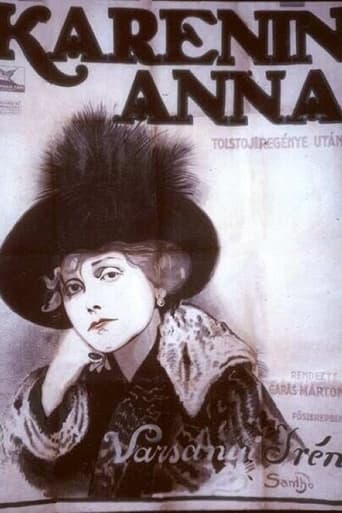
Vilma Lakos appears in surviving silent-era film records as a credited actor in the 1918 production of Anna Karenina, but readily available historical documentation about her life and career is extremely limited. She seems to have worked during the late silent period and, based on the filmographic evidence currently associated with her name, may have had a very brief screen career or one that was sparsely documented in contemporary sources. No reliable biographical record has been readily confirmed for her birth date, birthplace, family background, or later life, which is not unusual for minor players from the silent era whose careers were recorded only in fragmentary trade or archival material. Because of the scarcity of surviving data, it is difficult to determine whether Vilma Lakos used a stage name, appeared in other films under variant spellings, or continued in theater or other performance work after 1918. Her inclusion in film history is therefore primarily tied to her participation in the 1918 adaptation of Tolstoy's Anna Karenina, a title that survives in the historical record as part of early international literary adaptations. As with many early cinema performers, her legacy lies less in a documented star persona than in the preservation of her name in film credits and archival filmographies that help reconstruct the breadth of silent-era production.
More about Vilma Lakos
On screen
No detailed description of Vilma Lakos's acting style survives in readily accessible historical sources. As a silent-era performer, her work would have relied on expressive gesture, physical presence, and facial expression rather than spoken dialogue, but any specific stylistic traits attributed to her cannot be verified. Because only one confirmed screen credit is presently associated with her name, there is insufficient evidence to characterize her technique beyond the general conventions of silent-film acting.
In film history
Vilma Lakos's cultural impact is best understood as archival rather than celebrity-driven. While she does not appear to have been a major star whose name shaped popular culture, her credited presence in Anna Karenina (1918) contributes to the broader history of silent cinema's literary adaptations and ensemble performance traditions. Performers like Lakos are important to film history because they illustrate how many early films were built from a large and often under-documented cast of actors whose work supported the development of narrative cinema. Her recorded participation also underscores the international reach of the Anna Karenina story in early film, showing how Russian literary classics were adapted for global audiences during the silent era.
Later reputation
Her lasting legacy lies in the survival of her name within silent-film documentation, which allows historians and database researchers to reconstruct productions that might otherwise be incomplete. Even when an actor's biography has not survived in full, a single film credit can remain an important piece of evidence about casting practices, production networks, and the circulation of performers in the 1910s. Vilma Lakos is therefore part of the essential but often overlooked historical fabric of early cinema, where many contributors have left only faint archival traces. For film historians, such figures are valuable because they help map the broader ecosystem of silent filmmaking beyond the most famous stars and directors.
Influence
There is no verifiable evidence that Vilma Lakos directly influenced later actors or filmmakers in a documented way. Her significance is indirect: by appearing in an early screen adaptation of a major novel, she participated in a production model that helped establish how classic literature could be translated into cinematic form. More broadly, the survival of her credit contributes to modern historical understanding of silent-era casting, film preservation, and the role of lesser-known performers in building early screen culture.
Off screen
No dependable information about Vilma Lakos's personal life has been verified in accessible film-history sources. Details such as marriage, family background, education, residences, and later occupation are presently unavailable. She appears to be one of the many early cinema figures whose public footprint was limited to film credits and whose private life was not documented in surviving reference works or widely digitized archives.
Credits
- Credited as an actor in the 1918 silent film Anna Karenina
- Represents one of the many performers documented in early screen adaptations of major literary works
- Associated with the silent-era international screen tradition of adapting Russian literature for film
- Her name survives in filmographic references despite very limited biographical documentation
- Part of the historical record of lesser-known performers who contributed to early cinema's ensemble casting
Roles
- Role in Anna Karenina (1918) — exact character name not confirmed in available sources
Films
- Anna Karenina (1918)
Notes
- Vilma Lakos is currently best documented through a single confirmed film credit: Anna Karenina (1918).
- She appears to have worked in the silent era only, with no widely verified evidence of later film roles.
- Her name survives in film history largely through archival filmographies rather than detailed biographical accounts.
- Because many silent-era records were incomplete, performers like Lakos are often known only by a name attached to one surviving title.
- The 1918 Anna Karenina adaptation connects her to one of the most frequently filmed literary works of the early cinema period.
- No verified photographs, interviews, or contemporary publicity profiles have been readily confirmed for her in accessible sources.
- Her career illustrates how many early film actors remain historically important even when their personal details are lost.
Questions
Who was Vilma Lakos?
Vilma Lakos was a silent-era actor known from film records for appearing in Anna Karenina (1918). Very little personal biography about her has survived in readily accessible sources, so she is best understood through her film credit and the historical context of early cinema.
What films is Vilma Lakos best known for?
She is currently best known for Anna Karenina (1918), which is the only confirmed credit readily associated with her in available filmographic records. If she appeared in other films, they have not been reliably verified in the sources available here.
When was Vilma Lakos born and when did she die?
Her birth date and death date are not currently verified in accessible historical sources. Likewise, her birthplace and later life details have not been confirmed.
What awards did Vilma Lakos win?
No awards or nominations have been verifiably associated with Vilma Lakos in the available record. This is not unusual for minor or sparsely documented silent-era performers whose careers were not widely publicized.
What was Vilma Lakos's acting style?
There is no surviving detailed critical description of her individual acting style. As a silent-film performer, her screen work would have depended on expressive physical acting and facial gesture, but no specific stylistic assessment can be confirmed.
What is Vilma Lakos's legacy in film history?
Her legacy is primarily archival: she is part of the historical record of silent cinema and of early film adaptations of classic literature. Even with limited surviving biographical data, her credited presence helps historians reconstruct the cast and production history of 1918 screen culture.