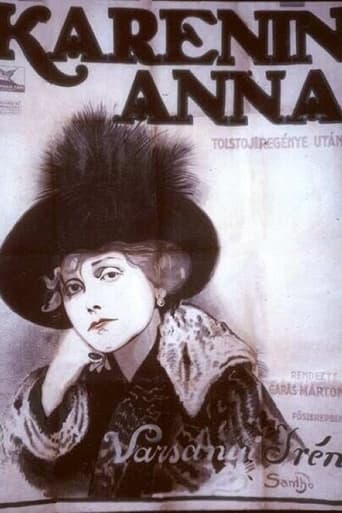
Karola Gárdi
Actor
- Active
- 1918-1918
Films 1
About Karola Gárdi
Karola Gárdi is a very obscure Hungarian silent-era film performer known primarily for her appearance in the 1918 production of Anna Karenina. Surviving reference sources on early Central European cinema provide only fragmentary information about her, and detailed records about her life, training, and later career do not appear to have been widely preserved. Based on the available filmography data, she was active in film at least during 1918, which places her in the final years of the Austro-Hungarian silent-film period. Her name is associated with one of the many early screen adaptations of Leo Tolstoy's novel, a subject that attracted filmmakers across Europe in the 1910s. Because of the scarcity of documentation, it is not currently possible to reconstruct a full biography with confidence without risking confusion with similarly named individuals. She remains part of the large but often under-documented circle of actors who contributed to the formative years of Hungarian and Central European cinema. Her surviving legacy is mainly historical: she is remembered through cast lists and archival film references rather than through extensive contemporary publicity or later retrospective fame.
More about Karola Gárdi
On screen
No detailed contemporary descriptions of Karola Gárdi's acting style have been found in available reference sources. As a silent-era performer, her screen work would have depended on visual expressiveness, gesture, and facial expression rather than spoken dialogue. Any assessment beyond that would be speculative, because reviews, interviews, and performance analyses specifically naming her are not currently available.
In film history
Karola Gárdi's cultural impact is best understood as archival and historical rather than celebrity-driven. Her presence in a 1918 adaptation of Anna Karenina situates her within the international early-cinema movement that brought major literary works to the screen and helped establish film as a serious narrative art form. Even when individual performers are little documented, their participation in these productions contributed to the development of national film industries and to the circulation of European literary culture through cinema. For researchers and archivists, names like hers are important because they help reconstruct the personnel networks of silent-era filmmaking in Hungary and the wider Central European region.
Later reputation
Her lasting legacy lies in her association with early Hungarian silent cinema and the surviving historical record of Anna Karenina (1918). Although she does not appear to have left behind a well-documented star persona or a large credited filmography, she remains a verifiable part of film history through cast listings and archival references. For modern film historians, she is representative of the many performers whose contributions are real but whose biographies have been partially lost to time. Her name continues to matter as evidence of the breadth and diversity of silent-era European screen acting, especially in productions that adapted canonical literature. In that sense, her legacy is as a preserved trace of a vanished cinematic world.
Influence
No direct evidence has been found that Karola Gárdi influenced later actors or filmmakers in a documented, traceable way. Her broader influence is indirect: by participating in early literary adaptations, she was part of a performance tradition that helped define screen acting in the silent era. Performers of her generation contributed to the visual vocabulary that later actors and directors refined in European and international cinema. Because her individual career is sparsely documented, it is more accurate to describe her as part of the collective influence of early Hungarian film artists rather than as an individually cited trendsetter.
Off screen
There is no reliable public biographical record currently available that documents Karola Gárdi's personal life, including family background, marriages, or later life. This lack of information is common for many silent-era performers from smaller European film industries, where studio paperwork and newspaper coverage were not consistently preserved. As a result, any claims about her private life would be speculative and are best left unfilled until archival evidence emerges.
Education
No verified information is currently available regarding her education or any formal dramatic training.
Credits
- Appeared in the 1918 silent adaptation Anna Karenina
- Worked during the late Austro-Hungarian silent-film era
- Represents one of the many early screen performers whose work survives mainly in archival filmography records
- Associated with literary adaptation cinema in Central Europe
Roles
- Role in Anna Karenina (1918) not individually documented in surviving accessible sources
Films
- Anna Karenina (1918)
Notes
- Karola Gárdi is primarily documented through her credit in Anna Karenina (1918).
- She appears to have had a very brief or at least very sparsely recorded film career.
- Her known activity falls entirely within the silent-film era.
- Her surviving record is typical of many early Hungarian film performers whose lives were not extensively archived.
- She is associated with a major literary adaptation rather than with a long run of star vehicles.
- Available reference sources do not currently provide a confirmed birth date or death date.
- She should not be confused with any similarly named contemporary performer; her identification is tied to the 1918 filmography record.
Questions
Who was Karola Gárdi?
Karola Gárdi was a Hungarian silent-era film actor best known from her credited appearance in Anna Karenina (1918). Very little biographical information survives about her life, and she is mainly remembered through filmographic records.
What films is Karola Gárdi best known for?
She is currently best known for Anna Karenina (1918), the only title securely associated with her in the available filmography record. No broader confirmed filmography is readily available from surviving accessible sources.
When was Karola Gárdi born and when did she die?
Her birth date and death date are not currently verified in accessible historical sources. Likewise, her birthplace and later-life details remain undocumented in the material currently available.
What awards did Karola Gárdi win?
No awards or formal honors are currently documented for Karola Gárdi in the accessible record. This is not unusual for many early silent-film performers, whose careers were often under-archived.
What was Karola Gárdi's acting style?
There are no surviving contemporary descriptions of her individual acting technique. As a silent-film performer, her work would have relied on visual expressiveness, gesture, and facial nuance, but any more specific stylistic judgment would be speculative.
What is Karola Gárdi's legacy in film history?
Her legacy is largely historical and archival: she represents the many early performers who helped shape silent cinema but left behind only a thin documentary trace. Her name remains important because it helps preserve the cast history of early Hungarian film and literary adaptation cinema.