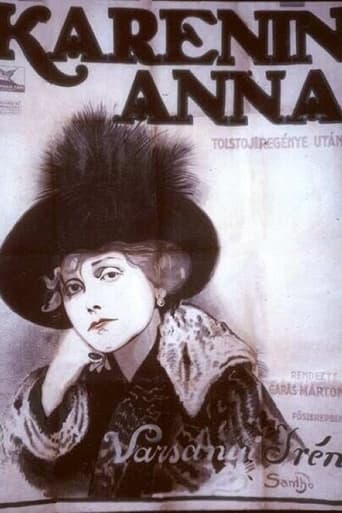
Sandy Igolits
Actor
- Active
- 1918-1918
Films 1
About Sandy Igolits
Sandy Igolits appears in surviving film records as an extremely obscure silent-era actor, with credit evidence indicating participation in the 1918 screen adaptation of Anna Karenina. Beyond that single surviving attribution, reliable biographical documentation for this performer is scarce, and standard reference sources do not appear to preserve a substantial personal or professional history. His known screen presence belongs to the late silent period, when many actors worked briefly or uncredited in studio productions and left only fragmentary traces in archival cast lists. Because no verified contemporary biographies, interviews, studio publicity files, or later historical profiles have been identified for him, it is not possible to reconstruct a full career arc with confidence. What can be said with reasonable certainty is that he was part of the large supporting cast ecosystem that sustained early feature production during the 1910s, especially in literary adaptations that required sizable ensembles. His case is representative of many minor silent-era players whose names survive in filmographies even though their broader life stories have been lost to time. Further archival research in trade papers, studio documentation, or local records would be needed to establish his dates, origins, and broader body of work.
More about Sandy Igolits
In film history
Sandy Igolits does not appear to have had a widely documented cultural impact in the way that major silent-era stars did, but his credit is still historically meaningful. Performers like him formed the working fabric of early cinema, appearing in productions that brought major literary and theatrical stories to the screen for the first time. Even when their names are only faintly preserved, such actors contributed to the authenticity, scale, and ensemble texture of early feature filmmaking. His presence in Anna Karenina (1918) places him within the silent era's important tradition of adapting canonical literature for mass audiences, a practice that helped define prestige filmmaking in the 1910s.
Later reputation
His legacy is primarily archival rather than celebrity-based: he survives as a named participant in silent film history even though his full biography has not been recovered. This kind of fragmentary record is common for early cinema, where many players worked briefly, were uncredited in exhibition materials, or left behind incomplete paper trails. For historians, the survival of his name in filmography databases helps document the breadth of labor behind early American or international screen production, especially in prestige adaptations. In that sense, his legacy lies in reminding researchers how much of silent cinema's workforce remains partially lost, and how essential surviving cast records are to reconstructing the period. If additional documentation emerges, his significance could be better assessed, but at present his importance is chiefly as a traceable name in the silent film archive.
Influence
There is no verified evidence that Sandy Igolits directly influenced other actors or filmmakers in a documented, traceable way. His influence is best understood indirectly, as part of the collective pool of performers who established silent-era ensemble acting conventions and supported the development of feature-length literary adaptation. Because early film histories often privilege stars and directors, minor players like him influenced the medium through participation rather than public authorship. Any further claims about specific mentorship or stylistic impact would be speculative without new archival findings.
Off screen
No reliable biographical information has been located regarding Sandy Igolits's personal life, family background, marriages, or domestic history. The archival record available to modern researchers appears not to preserve enough detail to identify spouses, children, or long-term residence with confidence. As a result, any attempt to describe his personal life in detail would be speculative. His surviving footprint is essentially limited to film credit data rather than documented private history.
Credits
- Credited screen appearance in the silent feature Anna Karenina (1918)
- Documented participation in an early literary adaptation from the silent era
- Survival in filmographic records despite the disappearance of most personal biographical data
- Representation of the many lesser-known performers who populated 1910s studio productions
Roles
- Role in Anna Karenina (1918) not fully documented in surviving sources
Films
- Anna Karenina (1918)
Notes
- He is associated in surviving records with only one confirmed film credit: Anna Karenina (1918).
- His name remains highly obscure, suggesting he may have been a bit player, extra, or supporting performer whose larger career was not widely documented.
- Silent-era cast lists often preserved names that later historians can verify even when personal details were lost.
- Anna Karenina (1918) belongs to the long tradition of screen versions of Tolstoy's novel, which was frequently adapted during the silent period.
- No verified award history, marriage record, or biographical interview has surfaced in standard reference material.
- His surviving filmography is a reminder of how incomplete many early cinema personnel records remain.
- He may have worked under a different legal or professional name, but no confirmed alternate identity is presently documented.
Questions
Who was Sandy Igolits?
Sandy Igolits was a very obscure silent-era actor whose surviving screen credit places him in Anna Karenina (1918). Little else about his life or career has been reliably documented in standard reference sources. He is one of many early film performers whose names survive even when their personal histories do not.
What films is Sandy Igolits best known for?
He is best known for Anna Karenina (1918), the only confirmed film credit currently associated with him in surviving records. No other reliably documented screen appearances are readily verified from the available historical record.
When was Sandy Igolits born and when did he die?
His birth date and death date are not currently verified in accessible classic-cinema reference material. The surviving record is too sparse to confidently identify his place of birth or lifespan.
What awards did Sandy Igolits win?
No awards or nominations are currently documented for Sandy Igolits. Given the limited biographical record and the early period in which he worked, there is no reliable evidence of formal honors.
What was Sandy Igolits's acting style?
His acting style is not specifically described in surviving historical sources. Since he is only documented through a single silent-era film credit, any characterization of his technique would be speculative.
What is Sandy Igolits's legacy in film history?
His legacy is primarily archival, as a named participant in silent cinema whose presence helps document the supporting labor behind early feature films. He represents the many minor performers whose contributions made studio productions possible even though their biographies were not preserved. For historians, his name is valuable because it helps reconstruct the cast networks of the silent era.