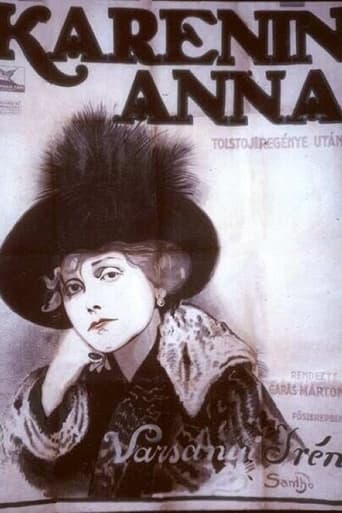
Sári Almási
Actor
- Active
- 1918-1918
Films 1
About Sári Almási
Sári Almási was a Hungarian silent-era actor whose surviving screen record is extremely limited, and she is best documented today through her appearance in the 1918 film adaptation of Anna Karenina. Available film history references suggest that her career belongs to the late Austro-Hungarian silent-cinema period, when many performers appeared in only a small number of productions and documentation was often fragmentary. Because her filmography is so sparse in surviving sources, little can be confirmed about her later professional life, training, or whether she continued acting after 1918. She is therefore best understood as one of the many early Central European screen artists whose work survives chiefly in cast lists and archival references rather than in an extensive body of credited performances. Her presence in Anna Karenina places her within the culturally ambitious literary adaptations that were common in silent cinema and that helped legitimize film as a serious dramatic medium. Beyond that title, reliable biographical details are scarce, and many standard personal data points have not been firmly established in accessible film reference sources. For that reason, any comprehensive account of her life must remain cautious and preserve the distinction between documented fact and absence of evidence.
More about Sári Almási
On screen
No detailed contemporary reviews or surviving performance analyses have been located for Sári Almási, so her individual acting style cannot be described with confidence. As a silent-era performer, her work would have depended on gesture, facial expression, and visual storytelling rather than spoken dialogue, and her likely performance vocabulary would have followed the restrained or expressive conventions used in Hungarian and broader European silent drama. Any more specific characterization would be speculative without surviving criticism or film footage.
In film history
Sári Almási's cultural impact is best understood in the context of early Hungarian silent cinema rather than through an individually extensive surviving body of work. Performers like her helped populate the prestige literary adaptations that were central to the silent era's efforts to establish film as a serious cultural art form. Even when screen histories are incomplete, these actors contributed to the visual language and dramatic traditions that shaped Central European cinema during a pivotal transitional period. Her presence in Anna Karenina also reflects the international circulation of major literary narratives through film, demonstrating how Hungarian cinema participated in a wider European adaptation culture. In modern film scholarship, names such as hers are valuable because they represent the many artists whose careers were real and active but whose records were later obscured by time, studio loss, and incomplete archival survival.
Later reputation
Sári Almási's lasting legacy lies primarily in historical remembrance rather than in a large surviving filmography. She is part of the early generation of screen performers whose names preserve the texture of silent-era production history, especially in Hungary and the former Austro-Hungarian cinematic sphere. Her documentation in Anna Karenina ensures that she remains traceable in film databases and archival work, even if many personal details are lost. For historians, such figures are important because they illustrate how much of early cinema depended on ensemble casts whose individual careers may not have been fully recorded. Her legacy is therefore archival and historiographic: she stands as evidence of the depth and diversity of early European film culture, even where the surviving paper trail is thin.
Influence
There is no documented evidence that Sári Almási directly mentored later performers or that her work exerted a measurable individual influence on major figures in film history. Her broader influence is indirect, through participation in the silent-era performance tradition that informed later screen acting in Central Europe. By appearing in a literary adaptation like Anna Karenina, she contributed to the standardization of expressive, narrative-driven screen acting that remained important into the early sound era. Her historical significance is thus collective rather than personal: she belongs to the cohort of early actors whose work formed part of the foundation on which later Hungarian cinema developed.
Off screen
No reliable public biographical record has been found that documents Sári Almási's personal life in detail. Information about marriages, family background, education, and later life is not readily available in standard film reference sources. As a result, it is not possible to responsibly describe her personal life beyond noting that the surviving record is highly incomplete.
Education
No verified information about her education or formal training is currently available in accessible reference sources.
Credits
- Appeared in the 1918 silent adaptation of Anna Karenina, her best-documented screen credit
- Worked in the late Austro-Hungarian silent film era, a formative period for Central European cinema
- Represents the type of early film performer whose contributions are preserved mainly through archival cast records
- Associated with one of the era's major literary adaptations, a prestige form in silent cinema
Roles
- Role in Anna Karenina (1918) - exact character name not securely documented in accessible sources
Films
- Anna Karenina (1918)
Notes
- Sári Almási is primarily documented through a single known film credit in surviving reference material.
- Her best-known title, Anna Karenina, was a prestige literary adaptation during the silent era.
- She worked during the final years of the Austro-Hungarian Empire, a turbulent and highly productive period for regional cinema.
- Because her career is so sparsely documented, she is a representative example of many silent-era performers whose biographies are incomplete.
- Her name appears in film history records even though many standard personal details remain unverified.
- The scarcity of information about her makes her of interest to archival researchers and database curators.
- She is associated with the Hungarian branch of early European screen culture rather than with Hollywood.
Questions
Who was Sári Almási?
Sári Almási was a Hungarian silent-era actor best known today for appearing in Anna Karenina (1918). Her surviving film record is very limited, and she appears to have worked during the late Austro-Hungarian period of early European cinema.
What films is Sári Almási best known for?
She is best known for Anna Karenina (1918), which is the principal surviving screen credit associated with her name. No additional film titles can be confirmed with confidence from readily available reference sources.
When was Sári Almási born and when did she die?
Her birth and death dates are not currently verified in accessible film reference sources. The surviving record is too sparse to establish those details confidently.
What awards did Sári Almási win?
No awards or nominations are currently documented for Sári Almási in the available record. This is not unusual for silent-era actors whose careers were not widely preserved in later award histories.
What was Sári Almási's acting style?
Her individual style cannot be described in detail because no critical analysis or surviving performance documentation has been reliably located. As a silent-film performer, she would have relied on visual expression, gesture, and dramatic presence typical of the era.
What is Sári Almási's legacy in film history?
Her legacy is primarily archival and historical. She represents the many early Hungarian and Central European screen performers whose names survive even when personal details and full filmographies have been lost.