
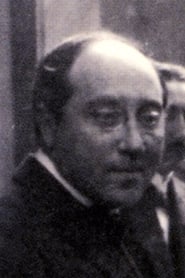
Rino Lupo
Director
Born: 1888 in Rome, Italy Died: 1934 Active: 1921-1923 Birth Name: Sebastiano Lupo
Films
2 films

About Rino Lupo
Made significant contributions to early Portuguese cinema during the silent era. After emigrating to Portugal in the early 1920s, he quickly established himself as one of the country's filmmakers, directing some of the most ambitious productions of the period. His most notable works include 'Mulheres da Beira' (1921), a dramatic tale set in the Beira region of Portugal, and 'Os Lobos' (1923), a thriller that showcased his growing technical mastery. Lupo was known for bringing a sophisticated visual style to Portuguese cinema, influenced by contemporary Italian and German expressionist cinema. Despite his brief active period from 1921-1923, he on the development of Portuguese film language and narrative techniques. His career was cut short by the economic difficulties facing the Portuguese film industry in the mid-1920s, leading to his return to Italy. Lupo's work represents a crucial bridge between the early primitive stages of Portuguese cinema and its later artistic maturation.
The Craft
Behind the Camera
Rino Lupo's directing style was characterized by sophisticated visual composition influenced by Italian and German expressionist cinema. He employed dynamic camera movements and dramatic lighting techniques that were advanced for Portuguese cinema of the early 1920s. Lupo favored strong narrative structures with clear emotional arcs, often focusing on themes of rural life and social dynamics. His films demonstrated a keen eye for location shooting, utilizing Portugal's diverse landscapes to enhance storytelling. He was known for his meticulous attention to detail and ability to extract nuanced performances from his actors in the challenging medium of silent film.
Milestones
- Directed 'Mulheres da Beira' (1921), one of the earliest narrative feature films in Portuguese cinema
- Created 'Os Lobos' (1923), a technical and artistic achievement in Portuguese silent film
- Pioneered sophisticated visual techniques in Portuguese cinema
- Brought international film influences to Portuguese cinema
Best Known For
Must-See Films
Accolades
Special Recognition
- Recognized posthumously as a pioneer of Portuguese cinema
- Films preserved in the Portuguese Cinematheque archives
Working Relationships
Worked Often With
Studios
Why They Matter
Impact on Culture
Rino Lupo played a crucial role in the development of Portuguese cinema during its formative years. His films demonstrated that Portuguese cinema could achieve artistic and technical standards comparable to other European productions of the era. By bringing sophisticated visual techniques and narrative sophistication to Portuguese filmmaking, he helped elevate the artistic ambitions of the national cinema. Lupo's work represented a transitional moment in Portuguese film history, moving away from documentary-like recordings toward fully realized narrative cinema. His focus on Portuguese themes and settings while employing international cinematic techniques helped establish a unique identity for Portuguese cinema that would influence subsequent generations of filmmakers.
Lasting Legacy
Rino Lupo's legacy lies in his role in establishing Portuguese narrative cinema as a serious artistic medium. Though his career was brief, his two surviving feature films are now regarded as important artifacts of early Portuguese cinema and are studied by film historians. Lupo demonstrated that Portuguese cinema could compete artistically with other European national cinemas, inspiring confidence in local filmmakers and producers. His visual innovations and narrative techniques influenced the next generation of Portuguese directors who emerged in the late 1920s and 1930s. Today, film scholars recognize Lupo as a crucial figure who helped bridge the gap between primitive Portuguese film production and the more sophisticated cinema that would emerge in the following decades.
Who They Inspired
Lupo influenced Portuguese cinema by introducing advanced visual techniques and narrative structures that were uncommon in the country's early film productions. His use of location shooting, sophisticated lighting, and dramatic camera movements set new standards for Portuguese filmmakers. The artistic ambition of his films encouraged Portuguese producers to invest in more complex and sophisticated productions. His success in creating compelling narratives with distinctly Portuguese themes while maintaining international cinematic standards provided a model for future Portuguese directors seeking to balance national identity with global cinematic trends.
Off Screen
Rino Lupo, born Sebastiano Lupo, emigrated from Italy to Portugal in the early 1920s seeking opportunities in the burgeoning film industry. He married a Portuguese woman and integrated into the local artistic community, though he maintained his Italian citizenship throughout his life. After his brief but impactful career in Portuguese cinema ended, he returned to Italy where he continued working in the film industry in lesser capacities. Lupo struggled financially in his later years and died in relative obscurity in 1934, before his contributions to Portuguese cinema could be properly recognized.
Education
Likely self-taught in filmmaking, typical of early cinema pioneers; may have had formal training in theater or arts in Italy
Family
- Unknown Portuguese spouse (1920s-1934)
Did You Know?
- Rino Lupo was one of the few foreign directors to make significant contributions to early Portuguese cinema
- His real name was Sebastiano Lupo, but he used 'Rino' as his professional name
- Both of his feature films were thought lost for decades before being rediscovered and restored
- He was part of a small but influential community of Italian filmmakers working in Portugal during the silent era
- His films were among the first Portuguese productions to receive international distribution
- Lupo spoke fluent Portuguese, which helped him integrate into the local film community
- His directing style showed clear influences from contemporary German expressionist cinema
- Despite his Italian origins, his films are considered important works of Portuguese national cinema
- He worked with some of the earliest Portuguese film stars, helping establish their careers
- His career in Portugal coincided with a brief golden age of silent film production in the country
In Their Own Words
Cinema must speak the language of the people while showing them the beauty of their own land
In silence, the camera must become the most eloquent storyteller
Every frame should be a painting, every scene a poem
Frequently Asked Questions
Who was Rino Lupo?
Italian-born on YTB.my.
What films is Rino Lupo best known for?
Titles linked here include Mulheres da Beira (1921), Os Lobos (1923).
When was Rino Lupo born and when did he die?
Born 1888; died 1934.
What awards did Rino Lupo win?
Rino Lupo did not receive formal awards during his lifetime, as he worked in the early silent era before such recognition systems existed. However, he is now recognized posthumously as a pioneer of Portuguese cinema.
What was Rino Lupo's directing style?
Lupo's directing style was characterized by sophisticated visual composition influenced by Italian and German expressionist cinema, featuring dynamic camera movements, dramatic lighting, and strong narrative structures focused on Portuguese themes.