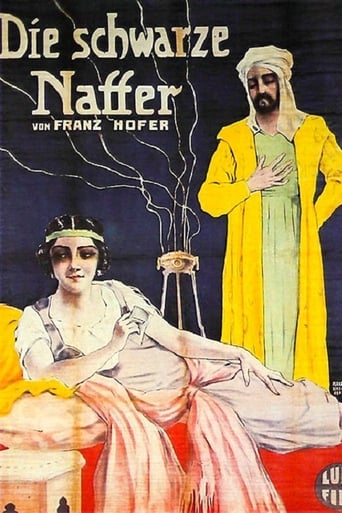
Margarete Hübler
Actor
- Active
- 1913-1913
Films 1
About Margarete Hübler
Margarete Hübler was a silent-era film performer associated with early German cinema, and the surviving record places her activity in 1913. She is credited in the film Die schwarze Natter, a title from the formative years of narrative feature filmmaking in Germany, when many actors worked in only a small number of productions and often left behind very limited biographical traces. Because documentation on Hübler is extremely sparse, her career appears to have been brief or at least poorly preserved in available film history sources. Her name survives primarily through filmographic records rather than through extensive contemporary publicity, interviews, or later retrospective coverage. Like many performers of the pre-World War I period, she likely worked within a studio and production environment that did not yet systematize long-term star promotion in the way later German and Hollywood cinema would. No reliable surviving evidence currently establishes her later life, further screen work, or personal background with certainty. As a result, she remains one of many early film figures whose contribution is historically real but only faintly documented in the archival record.
More about Margarete Hübler
On screen
No detailed contemporary reviews or surviving performance descriptions are readily available for Margarete Hübler. Given the period in which she worked, her acting would have been shaped by silent-film conventions, including expressive facial performance, clear gesture, and physically legible emotion for audiences watching without synchronized sound. Any more specific characterization of her personal style would be speculative, so the safest assessment is that she likely performed within the restrained but still highly expressive idiom common to early 1910s German cinema.
In film history
Margarete Hübler's cultural impact lies less in celebrity than in historical presence: she is part of the foundational generation of screen performers who appeared during the silent era when cinema was rapidly defining itself as a popular art form. Even a single surviving credit can be significant for scholars because it helps reconstruct the personnel, casting practices, and production networks of early German film. Her inclusion in filmographic records preserves evidence that women were active participants in the industry from its earliest years, not only as later stars but also as working actors whose names occasionally survive where fuller biographies do not. In that sense, she contributes to the broader historical understanding of prewar German cinema as a collaborative medium built by many now-obscure artists. For modern databases and researchers, her name is valuable as a trace of film history's incomplete archive.
Later reputation
Her legacy is primarily archival and historical. Margarete Hübler stands as a representative of the many early cinema performers whose contributions are preserved only in scattered credits, reminding historians that film history is not made solely by the most famous stars but also by lesser-documented participants. The fact that her name survives in connection with Die schwarze Natter gives her a small but meaningful place in the record of German silent cinema. For restoration and cataloging work, such names matter because they help identify casts, reconstruct production contexts, and support more accurate filmographies. Her lasting legacy is therefore tied to the preservation and study of early film records rather than to a widely celebrated public persona.
Influence
There is no direct documentation showing that Margarete Hübler influenced later actors or directors in a traceable, personal sense. Her broader influence is indirect: by being part of the early German silent-film workforce, she helped constitute the performance culture from which later screen acting practices developed. Early performers like Hübler contributed to the norms of gesture, facial expression, and narrative clarity that became essential to silent cinema. Her presence in the historical record also supports modern scholarly efforts to recover overlooked women in film history.
Off screen
No dependable biographical information about Margarete Hübler's personal life has been located in readily accessible film history references. Her date and place of birth, family background, marital status, and later life remain undocumented in the surviving mainstream records commonly used for early cinema research. This is not unusual for performers from the silent era, especially those whose careers were brief and whose names appeared in only a small number of surviving credits. Until archival research in German local records, studio paperwork, or period trade publications yields more evidence, her private life must be considered unknown.
Credits
- Appeared in the 1913 silent film Die schwarze Natter, one of the few securely documented credits associated with her name
- Represents the early wave of German screen performers active before the First World War and before the star system became fully standardized
- Her surviving credit places her among the small but important body of actors who helped establish narrative cinema in Germany during the silent era
Roles
- Role in Die schwarze Natter (1913)
Films
- Die schwarze Natter (1913)
Notes
- Margarete Hübler is one of many silent-era performers whose surviving fame rests on a single preserved credit.
- Her known film, Die schwarze Natter, dates from 1913, placing her at the very beginning of feature-era German cinema.
- No reliable birth or death details are currently established in commonly accessible reference sources.
- She is an example of how many early film actors were recorded in trade listings and credits but left little other public trace.
- Because her documentation is sparse, she is more often encountered in film databases than in narrative film histories.
- Her surviving record helps historians map the cast lists of early German productions and understand industry staffing patterns before World War I.
Questions
Who was Margarete Hübler?
Margarete Hübler was a German silent-era film actor known from the early 1910s. Her surviving screen record is extremely limited, but she is credited in the 1913 film Die schwarze Natter. She belongs to the earliest generation of performers in German cinema whose names have been preserved in filmographic sources.
What films is Margarete Hübler best known for?
She is best known for Die schwarze Natter (1913), which is the principal surviving credit associated with her name. At present, that film is the only securely documented title in her available filmography. If additional credits exist, they are not widely preserved in accessible sources.
When was Margarete Hübler born and when did she die?
Her birth and death dates are not currently documented in the accessible historical record. Many early silent-film performers were not comprehensively biographied, especially if their screen careers were brief. As a result, both her birthplace and death details remain unknown.
What awards did Margarete Hübler win?
No awards or formal honors are currently documented for Margarete Hübler. This is not unusual for actors from the early silent era, especially those whose surviving record is limited to one or a few films. Her historical value lies in her contribution to early German cinema rather than in recorded awards recognition.
What was Margarete Hübler's acting style?
There are no surviving performance reviews that describe her acting in detail. Based on the era, she would have performed in the silent-film style, relying on expressive gesture, facial communication, and clear visual storytelling. Any more precise characterization would be speculative.
What is Margarete Hübler's legacy in film history?
Her legacy is archival and historical rather than celebrity-based. She represents the many early screen performers whose names survive only through cast lists and film databases. For historians of German silent cinema, those names are valuable evidence of the people who helped build the medium in its formative years.