Films
1 film
About Alfredo Bracci
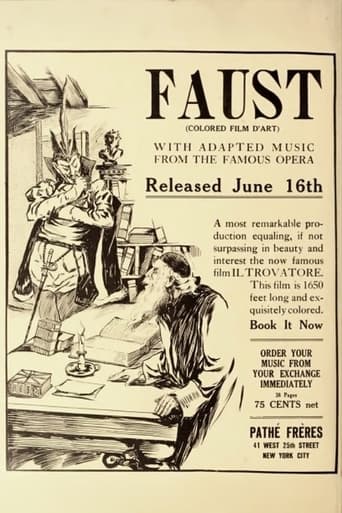
Alfredo Bracci appears once in this catalog: Faust (1910). Specifically in the silent film era. His known filmography consists of a single appearance in the 1910 adaptation of 'Faust,' which places him among the pioneers of motion picture performance. As an actor working in 1910, Bracci would have been part of the transitional period when cinema was evolving from simple novelty acts to a legitimate artistic medium. His participation in 'Faust' suggests he was likely involved with one of the early Italian film studios that were producing ambitious literary adaptations during this period. The fact that his career appears to have been limited to 1910 indicates he may have been among the many early performers who briefly participated in cinema before returning to other theatrical pursuits. Unfortunately, detailed records about early silent film actors from this period are often incomplete, making it difficult to trace the full extent of his career or artistic contributions.
The Craft
On Screen
As a silent film actor from 1910, Bracci would have employed the exaggerated theatrical gestures and facial expressions typical of early cinema, where actors needed to convey emotion without dialogue and often without the benefit of sophisticated camera techniques.
Milestones
- Appeared in the 1910 film adaptation of 'Faust'
Best Known For
Iconic Roles
Must-See Films
Working Relationships
Studios
Why They Matter
Impact on Culture
Alfredo Bracci represents the generation of actors who helped establish the foundations of cinema as an art form. His participation in early literary adaptations like 'Faust' contributed to the development of film as a medium capable of handling complex narrative material. Although his individual contribution was small, actors like Bracci were essential in demonstrating that cinema could adapt and interpret classic literary works for the screen.
Lasting Legacy
As one of the earliest known film actors, Alfredo Bracci's legacy is primarily historical rather than artistic. He represents the generation of performers who transitioned from traditional theater to the new medium of motion pictures. While his name is largely forgotten today, his work in 1910 places him among the first generation of professional film actors in cinema history.
Who They Inspired
Due to the brief nature of his film career and the limited documentation of his work, it's difficult to trace Alfredo Bracci's direct influence on other performers. However, like all early film actors, he contributed to establishing the basic techniques of screen acting that would evolve throughout the silent era and into sound cinema.
Off Screen
Very little is documented about Alfredo Bracci's personal life, which is common for actors from the earliest days of cinema. Many performers from this period were stage actors who briefly ventured into film before returning to theater, and their personal details were not systematically recorded in film industry archives.
Did You Know?
- Appeared in cinema during its infancy in 1910
- Participated in one of the earliest film adaptations of the Faust legend
- His entire known film career spans only one year
- Represents the era when many stage actors briefly experimented with the new medium of film
- Early Italian cinema was among the most productive in the world during 1910
- Silent film actors from this period often had backgrounds in traditional theater
- The lack of extensive records about him is typical of early film performers
- 1910 was a pivotal year when cinema was transitioning from novelty to art form
Frequently Asked Questions
Who was Alfredo Bracci?
Screen credits include the 1910 film adaptation of 'Faust.' He represents one of the earliest generations of film actors, working during cinema's formative years when the medium was still establishing itself as an art form.
What films is Alfredo Bracci best known for?
Titles linked here include Faust (1910).
When was Alfredo Bracci born and when did he die?
Specific birth and death dates for Alfredo Bracci are not documented in available historical records, which is common for actors from the earliest days of cinema. He is known to have been active as a film actor in 1910.
What awards did Alfredo Bracci win?
Alfredo Bracci did not receive any documented awards or nominations, which is typical for actors from 1910 as formal film award systems had not yet been established during this early period of cinema.
What was Alfredo Bracci's acting style?
As a silent film actor from 1910, Bracci would have used the exaggerated theatrical style common in early cinema, relying heavily on gestures and facial expressions to convey emotions without dialogue or sophisticated camera techniques.