Frederick A. Thomson
Director
- Active
- 1914-1914
Films directed 1
About Frederick A. Thomson
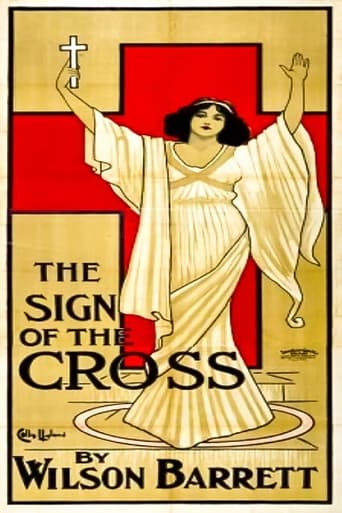
Frederick A. Thomson was an early American silent-era film director active in the 1910s, a period when the feature film was still emerging and the grammar of screen storytelling was being established. He is best remembered today for directing the 1914 historical-religious spectacle The Sign of the Cross, an ambitious production that reflected the era's fascination with literary adaptation, melodrama, and biblical-pageant subject matter. Thomson appears in surviving film documentation as a director rather than as a performer or producer, and his recorded screen career is brief, with extant filmography information placing his active period in 1914. Because so much of the earliest cinema record has been lost or incompletely documented, comparatively little biographical detail about his personal life has survived in widely accessible sources. What can be stated with confidence is that he was part of the formative generation of filmmakers working before the studio system fully consolidated, when directors often moved between short subjects and larger prestige productions. His association with The Sign of the Cross places him within the cohort of filmmakers experimenting with large-scale visual spectacle and moral drama in the years just before Hollywood's silent-era peak. Beyond that single notable credit, his career remains obscure, which is itself typical of many craftsmen whose work helped shape early film history but whose names were later overshadowed by the better-documented figures of the 1920s and 1930s.
More about Frederick A. Thomson
Behind the camera
Frederick A. Thomson's directing style cannot be described in rich technical detail from surviving biographical sources alone, but his known work suggests the conventions of early 1910s silent filmmaking: clear staging, tableau-based composition, and an emphasis on dramatic clarity over elaborate camera movement. As the director of a historical-religious feature, he would have been working within a mode that prized spectacle, moral seriousness, and expressive blocking to communicate story points without synchronized dialogue. His work likely relied on the theatrical visual language common to the period, with strong attention to tableau scenes, crowd arrangement, and the emphasis of key gestures and symbols. In the context of early feature production, such direction often balanced pageant-like imagery with a straightforward narrative pace suitable for intertitles and silent performance.
In film history
Frederick A. Thomson's cultural impact is best understood as part of the broader foundation of silent-era screen storytelling rather than through a large surviving body of famous titles. His most notable credit, The Sign of the Cross, belongs to the wave of early American features that helped prove audiences would respond to longer, more ambitious productions built from historical or literary sources. Directors like Thomson contributed to the evolving prestige of motion pictures at a time when the industry was still defining its artistic ambitions and commercial possibilities. Even when individual names are not widely remembered, these early filmmakers helped establish the templates for epic staging, moral drama, and adaptation that later became central to Hollywood. In that sense, Thomson is a representative figure in the transition from novelty short films to feature-length cinema.
Later reputation
Thomson's legacy lies primarily in his place within the early architecture of film history. His surviving credit on The Sign of the Cross anchors him to a moment when American cinema was moving toward the large-scale production values and narrative seriousness that would characterize later silent classics. Although he does not appear to have left behind a substantial canon of well-known titles, his work belongs to the crucial early 1910s period that produced many of the formal and industrial practices later taken for granted in Hollywood. For historians, directors like Thomson are important because they remind us that cinema's development was not driven only by the most famous auteurs, but also by numerous working filmmakers whose names faded while their innovations remained embedded in the medium. His legacy is therefore archival and historical: he is one of the many early directors whose recorded presence helps map the evolution of silent feature filmmaking.
Influence
Because detailed documentation of Frederick A. Thomson's career is sparse, his direct influence on later filmmakers cannot be traced with confidence in the same way as more extensively documented directors. His significance is more diffuse, residing in the early silent traditions of spectacle, adaptation, and visual storytelling that later directors inherited and refined. By contributing to a major 1914 feature, he participated in a production culture that influenced how studios conceived prestige cinema in the years that followed. The broader influence of such early directors can be seen in the acceptance of feature-length historical drama as a viable commercial form, an approach later embraced by major filmmakers throughout the silent and early sound eras.
Off screen
Very little verified information about Frederick A. Thomson's personal life is readily available in standard film references. No reliable public record surfaced here for his marriages, children, education, or family background, which is common for many early silent-era filmmakers whose careers were documented only sporadically in trade publications and production listings. As a result, his off-screen life remains largely unknown to modern researchers unless additional archival material is consulted. The absence of detailed personal data should not be read as a lack of importance, but rather as a reflection of how unevenly early film history was preserved.
Credits
- Directed the 1914 silent feature The Sign of the Cross, one of his best-documented surviving credits
- Worked during the formative pre-classical silent era, when feature-length filmmaking was still being standardized
- Participated in early cinematic adaptations of literary and historical material, a major trend in 1910s American filmmaking
- Represents the generation of filmmakers whose contributions helped establish prestige production practices in silent cinema
Films
- The Sign of the Cross (1914)
Notes
- Frederick A. Thomson is chiefly remembered today for a single surviving major credit rather than a long list of widely known films.
- His documented active period appears to be only 1914, which makes him especially difficult to research compared with later silent-era directors.
- He directed The Sign of the Cross, a title later remade in the sound era, showing the enduring appeal of the story material.
- His career falls in the years immediately before Hollywood became fully dominated by the studio system.
- Like many early silent filmmakers, he is better preserved in trade listings and filmographic references than in modern biographical profiles.
- His obscurity illustrates how many early directors helped shape cinema history without becoming household names.
- The historical-religious genre of his best-known work was popular in the early 1910s as audiences sought prestige and spectacle.
- Because many silent films are lost, Thomson's total filmography may be incomplete or difficult to verify today.
Questions
Who was Frederick A. Thomson?
Frederick A. Thomson was an American silent-era film director best known for directing The Sign of the Cross in 1914. He is one of the many early filmmakers whose work helped establish the feature film during the formative years of cinema.
What films is Frederick A. Thomson best known for?
He is primarily associated with The Sign of the Cross (1914), his best-documented and most notable directing credit. His surviving filmography appears limited, or at least incompletely documented in modern sources.
When was Frederick A. Thomson born and when did he die?
His birth and death dates are not readily available in standard accessible references. At present, the most reliable information places him as active in film in 1914, but his full life dates remain unverified.
What awards did Frederick A. Thomson win?
No verified awards or nominations are known from the surviving biographical record. This is not unusual for early silent-era directors, many of whom worked before the modern awards system existed.
What was Frederick A. Thomson's directing style?
His directing style can be inferred only in broad terms from the silent-era context and his historical-religious subject matter. He likely used clear, stage-oriented visual storytelling, expressive blocking, and tableau composition typical of early 1910s feature filmmaking.
What is Frederick A. Thomson's legacy in film history?
His legacy lies in his role as part of the pioneering generation of silent filmmakers who helped move cinema toward feature-length prestige productions. Even though he is not a widely remembered name, his work contributes to the foundation of early American film history.
Was Frederick A. Thomson an actor as well as a director?
The available information identifies him primarily as a director, not as a notable actor. No reliable evidence in the accessible record shows a substantial acting career.