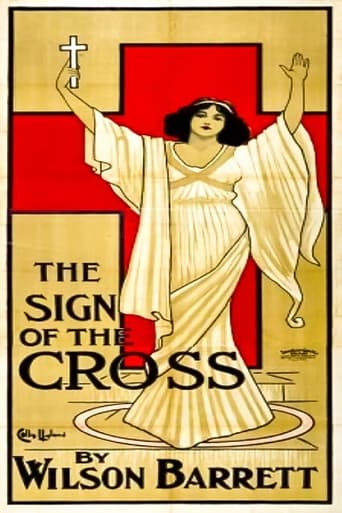
Sheridan Block
Actor
- Active
- 1914-1914
Films 1
About Sheridan Block
Sheridan Block appears in surviving film records as a very early silent-era screen performer, with his name associated with the 1914 production The Sign of the Cross. Beyond that credit, reliable biographical information is extremely sparse, which is not unusual for minor players in the first years of American feature filmmaking, when cast lists were often incomplete and studio publicity focused on leads. The available evidence suggests that he worked in the film industry at least briefly during 1914, but no dependable documentation has surfaced in standard reference sources for his birth, death, family background, or later career. Because of the limited surviving record, it is not currently possible to reconstruct a full career arc with confidence or to identify whether he continued in film under another name. What can be stated securely is that Sheridan Block belongs to the wide group of early silent-film performers whose contributions are preserved primarily in cast listings rather than in biographical archives. His surviving screen presence is therefore chiefly of interest to historians studying the labor and ensemble casts of pre-World War I American cinema. Any further identification would require corroboration from primary sources such as studio papers, trade journals, census records, or archival newspapers.
More about Sheridan Block
In film history
Sheridan Block's cultural impact is difficult to measure in the conventional sense because the surviving record preserves him mainly as a credited participant in an early silent production rather than as a star or a widely documented character actor. Even so, performers like Block are important to film history because they represent the many working players who helped establish the grammar of screen acting during cinema's formative years. Their presence in cast lists shows how quickly the movie business was developing ensemble production methods and how many artists contributed to films that are now used to define the early studio era. For historians, such names help fill out the ecosystem of silent cinema beyond the famous directors and headline stars.
Later reputation
Sheridan Block's legacy is archival rather than celebrity-based. His name endures because film historians and database compilers preserve cast information from early productions, ensuring that lesser-known contributors are not entirely lost to history. In that sense, his legacy is tied to the broader project of reconstructing silent-era film culture and acknowledging the many performers whose careers were brief, obscure, or only partially documented. He stands as an example of how fragile early film biography can be and how dependent modern knowledge is on surviving credits, trade references, and studio records. For researchers, even a single verified credit can be valuable evidence of the people who participated in cinema's earliest commercial expansion.
Influence
There is no surviving evidence that Sheridan Block exerted a documented influence on later actors or filmmakers. However, as part of the silent-era ensemble workforce, he contributed to the pool of screen talent that shaped early acting conventions before standardized continuity performance and close-up technique became fully established. His main historical influence is indirect: he is part of the body of personnel whose collective work helped define early American film production and acting practices.
Off screen
No dependable public information has been located regarding Sheridan Block's personal life, including marriage, children, family background, residence, or later occupations. This lack of documentation is common for minor silent-era performers, especially those who appeared in only one or a few surviving credits and did not become major studio contract players. As of the available record, his biography remains largely limited to his name as it appears in film history references.
Credits
- Appears in the cast record for the 1914 silent film The Sign of the Cross
- Represents one of the many early unheralded performers active during the formative years of American feature filmmaking
- Has a documented screen credit in the silent era, which places him among the earliest generations of film actors whose work survives in archival filmographies
Roles
- Role in The Sign of the Cross (1914)
Films
- The Sign of the Cross (1914)
Notes
- Sheridan Block is currently documented primarily through his 1914 credit in The Sign of the Cross.
- He is an example of how many silent-era performers survive in history only through cast lists, not full biographies.
- No confirmed birth or death information is readily available in standard reference material.
- His known activity period, based on surviving filmography, is extremely brief: 1914 only.
- Because of the scarcity of sources, it is possible that additional credits or personal details remain undiscovered in archival records.
- The Sign of the Cross title was later remade in the sound era, but Sheridan Block is associated with the 1914 silent version.
- He likely worked during a transitional moment when feature-length films were still consolidating narrative style and production scale.
Questions
Who was Sheridan Block?
Sheridan Block was a silent-era film actor known from surviving cast records, most notably for The Sign of the Cross (1914). Very little biographical information has survived about him, which is common for minor performers from early cinema.
What films is Sheridan Block best known for?
He is best known for The Sign of the Cross (1914), which is the only clearly documented screen credit currently associated with him in the available record. No additional confirmed filmography has been reliably verified.
When was Sheridan Block born and when did he die?
His birth and death dates are not currently documented in reliable publicly available sources. The surviving record identifies him as an early silent-film actor, but not enough biographical material has been preserved to confirm those details.
What awards did Sheridan Block win?
No awards or formal honors are currently documented for Sheridan Block. This is not unusual for early silent-era performers, especially those whose careers were brief or only partially recorded.
What was Sheridan Block's acting style?
There is no surviving critical description of Sheridan Block's acting style in the available record. Since he was active in 1914, any screen work would have followed the expressive, gesture-driven conventions of early silent cinema.
Why is Sheridan Block historically significant?
His significance lies in the fact that he is part of the documented cast of an early silent feature, helping historians trace the many working actors who supported the growth of American film. Even when details are scarce, such names are important evidence of the scale and reach of early filmmaking.