Charles E. Vernon
Actor
- Active
- 1914-1914
Films 1
About Charles E. Vernon
Charles E. Vernon is an obscure early American screen actor whose documented film career appears to have been brief and confined to the silent era. The available record places him in The Sign of the Cross (1914), one of the large-scale historical spectacles associated with early feature filmmaking in the United States. Beyond that credit, surviving public documentation on Vernon is extremely limited, which suggests either a small screen career, incomplete archival survival, or work in productions whose cast records were not comprehensively preserved. He does not appear in the surviving major reference tradition as a star, recurring featured player, or a figure with an extensive body of credited roles. Because of the scarcity of reliable biographical data, much of his personal life, training, and later career remains undocumented in standard film histories. His importance today is primarily archival: he represents the many working actors of the silent period whose contributions were part of early cinema's development but whose individual histories are only fragmentarily preserved.
More about Charles E. Vernon
In film history
Charles E. Vernon's cultural impact is difficult to measure because the historical record preserves so little about his individual career. His significance lies less in personal fame than in what he represents within early cinema: the many supporting and background performers who helped establish the grammar of silent film acting in the 1910s. By appearing in a production such as The Sign of the Cross, he was part of the era when American film was moving toward longer narrative features, larger casts, and more elaborate period settings. In that sense, his preserved credit contributes to the broader understanding of how silent-era productions were assembled and who participated in them, even when those performers never became stars.
Later reputation
Vernon's legacy is archival and historical rather than celebrity-based. His name survives as part of the documentary record of silent-era production, reminding researchers that film history is shaped not only by major stars and directors but also by lesser-known performers whose work may be preserved only in cast lists. For databases and historians, such names are important evidence of the scope and personnel of early feature filmmaking. His limited surviving footprint also underscores the fragility of silent-era documentation and the many careers that remain only partially visible to modern audiences.
Influence
There is no evidence that Charles E. Vernon directly influenced later actors or directors in a documented, traceable way. However, as a participant in early feature filmmaking, he belonged to the generation of performers whose work contributed to the development of screen acting conventions during the silent period. The broader influence of actors like Vernon can be seen in the ensemble practices, melodramatic presentation, and visual storytelling methods that defined early American cinema. His contribution is therefore indirect, as part of the collective labor that shaped the medium.
Off screen
No reliable, verifiable information about Charles E. Vernon's personal life, family background, marriages, or later years is readily available in the surviving standard film reference sources consulted for classic cinema figures. He does not appear to have left behind a substantial public biographical footprint, and no well-attested records of spouses, children, or personal affiliations are commonly cited in film histories. As a result, any detailed reconstruction of his private life would be speculative and is best avoided in a database entry. The available evidence supports only the conclusion that he was an actor active in 1914 with at least one known film credit.
Credits
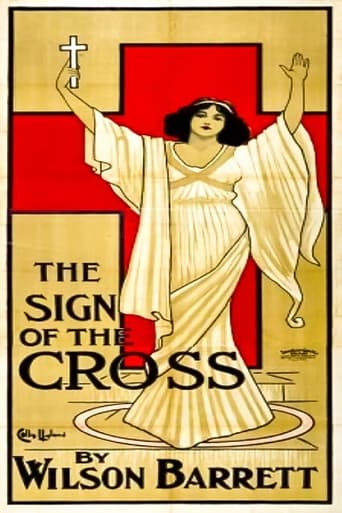
- Appeared in the 1914 silent film The Sign of the Cross
- Participated in one of the early American Biblical/historical spectacle productions of the silent era
- Represents the class of working silent-era performers whose screen work survives mainly through sparse cast records
Roles
- Unnamed role in The Sign of the Cross (1914)
Films
- The Sign of the Cross (1914)
Notes
- Charles E. Vernon is associated with a single surviving film credit in the available record: The Sign of the Cross (1914).
- His documented career falls entirely within the silent-film era.
- He appears to have been active only in 1914, at least in currently accessible filmography records.
- No reliable birth or death information is readily confirmed in standard classic-cinema reference materials.
- He is not commonly listed among major silent-era stars, suggesting a brief or lightly documented screen career.
- His surviving credit places him in an early historical-spectacle production, a popular form in 1910s American cinema.
- Research on him is complicated by the incomplete preservation of cast and biographical records from the silent period.
Questions
Who was Charles E. Vernon?
Charles E. Vernon was a silent-era actor whose surviving film record is extremely limited. He is known primarily for appearing in The Sign of the Cross (1914), and little else about his life or broader career is securely documented.
What films is Charles E. Vernon best known for?
He is best known for The Sign of the Cross (1914). At present, that is the principal surviving screen credit associated with his name in classic cinema references.
When was Charles E. Vernon born and when did he die?
His birth and death dates are not reliably documented in the available classic-cinema record. Because of the scarcity of verified biographical information, both details should be treated as unknown unless new archival evidence emerges.
What awards did Charles E. Vernon win?
No awards or nominations are currently documented for Charles E. Vernon. This is not unusual for a lightly recorded silent-era performer whose career may have been brief or whose records have not survived.
What was Charles E. Vernon's acting style?
There is no surviving critical description of his individual acting style. As a silent-era performer in a 1914 feature, he would have worked within the expressive, gesture-based conventions of early screen acting, but specific technique cannot be verified.
What is Charles E. Vernon's legacy in film history?
His legacy is mainly archival, as one of the many early film performers whose names survive in production records even when detailed personal histories do not. He helps document the ensemble nature of silent-era filmmaking and the breadth of talent involved in early American cinema.