Nikolai Brechling
Actor
- Active
- 1911-1911
Films 1
About Nikolai Brechling
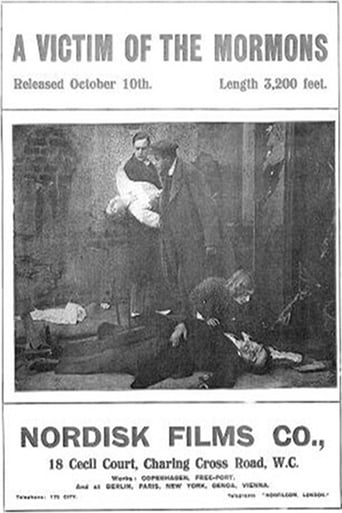
Nikolai Brechling is a little-documented early film performer associated with the silent-era production A Victim of the Mormons (1911). Available film-reference sources indicate that he worked as an actor in the very early period of Scandinavian and European cinema, when film credits were often incomplete and many performers left only fragmentary archival traces. Beyond this single credited appearance, surviving records do not currently provide a fuller biographical account of his life, training, or later career. Because of the scarcity of documentation, it is not possible to reconstruct a reliable multi-film career arc or personal history without risking confusion with similarly named individuals. His importance lies primarily in his presence in an early 1911 film that has attracted historical interest for its place in silent cinema history. In the absence of stronger archival evidence, he should be treated as an obscure early screen actor whose surviving footprint in film history is extremely limited. Researchers interested in his career would likely need to consult original production records, contemporary trade papers, or national film archives to uncover additional verified details.
More about Nikolai Brechling
In film history
Nikolai Brechling's cultural impact is primarily archival and historical rather than based on a large body of preserved performances. As a credited participant in an early 1911 film, he belongs to the generation of performers who helped establish screen acting conventions during cinema's formative years. Even when little is known about an individual performer, such credits are valuable because they document the breadth of personnel involved in early film production and help historians reconstruct production networks. His name also highlights the many silent-era contributors whose work is now largely invisible because of incomplete records and the loss of many early films.
Later reputation
Brechling's legacy is that of a documented but obscure early cinema actor whose known contribution survives as a single credit in film history databases. In the broader history of silent film, such figures are important because they remind researchers that the medium was built not only by major stars and directors, but also by lesser-known performers whose names appeared briefly in early production records. His presence in A Victim of the Mormons (1911) gives him a small but permanent place in the historiography of early screen culture. For film historians, that trace itself is significant, because it helps map the personnel and casting practices of a period when on-screen attribution was still evolving.
Influence
There is no documented evidence that Nikolai Brechling had a measurable influence on later actors or directors. His influence is best understood indirectly, as part of the collective pool of early screen performers who helped define the visual language and performance habits of silent cinema. Because only one film credit is currently associated with him, any claim of direct influence would be speculative. His main historical value lies in documentation rather than in a clearly traceable artistic legacy.
Off screen
No reliable surviving biographical information is currently available about Nikolai Brechling's personal life, including family background, marriages, or domestic life. Standard reference sources do not provide verified details concerning his education, residence, or activities outside of the one known film credit. Because early silent-era records are frequently incomplete, it is possible that additional information exists in archival holdings, but it has not been established in readily accessible published sources. For a database entry, his personal life should be treated as undocumented rather than inferred.
Credits
- Credited screen appearance in A Victim of the Mormons (1911)
- Participation in one of the early silent-era productions associated with Scandinavian cinema history
- Represents the kind of little-credited performer who appeared in foundational cinema before comprehensive on-screen credits became standard
Roles
- Role in A Victim of the Mormons (1911) not reliably identified in surviving sources
Films
- A Victim of the Mormons (1911)
Notes
- Nikolai Brechling is currently identified in available sources primarily through a single 1911 film credit.
- He is associated with A Victim of the Mormons, an early silent-era film that has drawn interest from film historians.
- His surviving public record is so limited that even basic biographical details such as birth and death dates are not readily verified.
- Early film credits from this period were often incomplete, which is one reason why many performers like Brechling remain obscure.
- He is an example of a historically important but underdocumented participant in the earliest decades of screen acting.
Questions
Who was Nikolai Brechling?
Nikolai Brechling was an early silent-film actor known from a credited appearance in A Victim of the Mormons (1911). Very little else has survived in accessible reference sources about his life or career. He is best understood as an obscure figure from the formative period of cinema.
What films is Nikolai Brechling best known for?
He is best known for A Victim of the Mormons (1911), which is the principal film credit currently associated with his name. No additional verified screen credits are readily established in the available sources. Because of that, his filmography appears extremely limited or at least very sparsely documented.
When was Nikolai Brechling born and when did he die?
His birth and death dates are not currently verified in accessible reference sources. Available film history records do not provide enough reliable biographical information to state those details confidently. Until stronger archival evidence is found, both dates should remain listed as unknown.
What awards did Nikolai Brechling win?
No awards or nominations are currently documented for Nikolai Brechling. As an early 1911 screen actor with a very limited surviving record, he predates the modern awards culture that later developed around cinema. His significance is historical rather than award-based.
What was Nikolai Brechling's acting style?
There is no surviving detailed description of his personal acting style in the sources currently available. Since he worked in the silent era, his performance would have depended on gesture, facial expression, and visual clarity, as was common for actors of the period. Beyond that general context, any precise stylistic description would be speculative.
What is Nikolai Brechling's legacy in film history?
His legacy is that of a documented but obscure early cinema performer whose name survives in film records from 1911. While he is not a widely recognized star, his credit helps historians reconstruct the personnel involved in the silent era. In that sense, he contributes to the broader preservation of early film history.