Roald Amundsen
Actor & Director
- Born
- July 16, 1872, Borge, Østfold, Norway
- Died
- June 18, 1928
- Active
- 1912-1912
- Birth name
- Roald Engelbregt Gravning Amundsen
Films 1
About Roald Amundsen
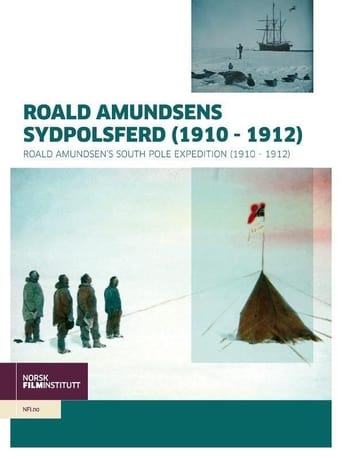
Roald Engelbregt Gravning Amundsen was a Norwegian explorer and polar pioneer who was not a professional actor or filmmaker in the usual sense, but he did appear as himself in the documentary record of his historic South Pole expedition. Born in Borge, Norway, he became internationally famous long before the cinema era for his feats of exploration, including the Northwest Passage and the first verified expedition to reach the South Pole. In 1911-1912, his Antarctic expedition was documented on film, and the resulting footage is associated with Roald Amundsen's South Pole Expedition (1912), in which he is credited as both director and performer because the film records his expedition and he appears onscreen as himself. His screen presence was therefore documentary rather than dramatic, and his significance to film history lies in the early use of cinema to preserve major scientific and exploratory achievement. Amundsen later continued his polar work and public lecturing, but he remained primarily a national hero, explorer, and writer rather than a career entertainer. He died in 1928 while participating in a rescue mission in the Arctic, leaving behind one of the most famous names in exploration history and a unique place in early nonfiction film.
More about Roald Amundsen
On screen
Amundsen was not a trained screen actor, so any screen performance attributed to him is documentary and observational rather than theatrical. His on-camera presence is that of a real expedition leader captured in actuality footage, with no evidence of dramatic performance technique. He appears as himself, serving as the central figure in a historical record rather than as a character embodying fiction.
Behind the camera
As credited on the expedition film, Amundsen's 'directing' is best understood as authorship or leadership of the expedition footage rather than formal film direction in the studio sense. The footage reflects practical, observational documentary recording, focused on travel, equipment, landscape, and expedition life. The style is utilitarian and historically valuable, emphasizing factual documentation over artistic staging.
In film history
Amundsen's cultural impact on cinema is indirect but important because his expeditions were among the major real-world events captured by early nonfiction filmmaking. The film associated with his South Pole journey belongs to the tradition of expedition documentaries that helped audiences around the world experience remote and dangerous places through moving images. His image in film history is that of the heroic explorer: stoic, methodical, and associated with conquest of nature through planning and endurance. Beyond cinema, he became a global symbol of polar achievement, and his name circulated widely in newsreels, documentaries, school materials, and historical films about the age of exploration.
Later reputation
His legacy in film history rests less on performance or authorship in the entertainment industry and more on the survival of moving-image documentation of one of the great feats of the early twentieth century. Because he appears in expedition footage, he occupies a rare crossover position between exploration history and silent-era documentary cinema. The documentary record of his voyage preserves not only his face and presence but also the material culture of exploration: sleds, tents, clothing, dogs, and survival methods. In broader cultural history, he remains one of the most enduring names of the heroic age of exploration, and films about Antarctica and polar history continue to invoke his achievements.
Influence
Amundsen influenced later explorers, documentary makers, and historical filmmakers by demonstrating the value of visual documentation in extreme environments. His expeditions helped establish the cinematic appeal of real adventure and the authority of actuality footage. For performers and directors, his legacy lies in the prototype of the explorer-as-public-figure, a subject whose life story was larger than fiction and whose image could be used to symbolize determination, precision, and triumph. In that sense, he helped shape the public imagination that later adventure films and documentaries would draw upon.
Off screen
Amundsen was born into a seafaring family and chose exploration over a conventional professional life, devoting himself to polar travel, navigation, and scientific adventure. He never married and is generally recorded as having no children. His private life was often subordinated to expedition planning, fundraising, and travel, and he cultivated the image of a disciplined, reserved explorer who valued preparation and endurance. His close personal associations were often with fellow explorers, expedition crews, financiers, and scientific supporters rather than with a theater or film circle.
Education
He attended the University of Christiania for a time, studying medicine before leaving formal study to pursue exploration.
Credits
- Led the first successful expedition to reach the South Pole in 1911-1912
- Was documented in the early expedition film Roald Amundsen's South Pole Expedition (1912)
- Became one of the most celebrated polar explorers in world history
- Used early film and photography to publicize and preserve the achievements of Antarctic exploration
- Completed landmark Arctic and Antarctic voyages that expanded geographic and scientific knowledge
Roles
- Himself in Roald Amundsen's South Pole Expedition
- Leader of the South Pole expedition as represented in documentary footage
Films
Awards
- Commander of the Order of St. Olav
- Knight Grand Cross of the Order of St. Olav
- Honorary recognition from Norway and international geographic societies for polar exploration
Honors
- Internationally celebrated as the first verified conqueror of the South Pole
- Subject of numerous monuments, memorials, and place names in the Arctic and Antarctic
- Commemorated in museum exhibitions and historical surveys of exploration
- Honored in Norway as a national hero
Collaborators
- Olav Bjaaland
- Helmer Hanssen
- Sverre Hassel
- Oscar Wisting
- Expedition cameramen and documentary recorders associated with his Antarctic voyages
Notes
- He is far better known as an explorer than as a cinema figure, and his film credit comes from documentary expedition footage rather than fictional acting.
- He is the first verified person to reach the South Pole, a feat completed in 1911 and announced in 1912.
- His name is associated with early scientific and exploratory film because his voyages were photographed and filmed for posterity.
- He died in 1928 during an Arctic rescue mission and was never recovered in a manner that produced a conventional burial site.
- He studied medicine briefly before committing himself to exploration.
- He was a leading figure in the heroic age of Arctic and Antarctic exploration.
- His achievements were often compared with those of Robert Falcon Scott in polar history narratives.
- He was known for meticulous preparation, practical leadership, and disciplined expedition management.
Quotes
Victory awaits him who has everything in order. Luck, people call it. (widely attributed to Roald Amundsen in discussions of his method and planning)
Adventure is just bad planning. (widely attributed to Roald Amundsen, though attribution can vary in secondary sources)
Questions
Who was Roald Amundsen?
Roald Amundsen was a Norwegian polar explorer and a major figure in the history of early documentary film because his Antarctic expedition was captured on camera. He is credited with appearing in Roald Amundsen's South Pole Expedition (1912), but he was not a career actor or director in the entertainment industry.
What films is Roald Amundsen best known for?
He is best known for Roald Amundsen's South Pole Expedition (1912), the expedition documentary associated with his historic Antarctic journey. Any screen presence he has is tied to his real-life role as the leader of the expedition rather than fictional performance.
When was Roald Amundsen born and when did he die?
He was born on July 16, 1872, in Borge, Østfold, Norway. He died on June 18, 1928, while participating in an Arctic rescue mission.
What awards did Roald Amundsen win?
His recognition came primarily as an explorer rather than a film artist. He received major Norwegian honors, including high orders of St. Olav, and was widely celebrated by geographic and scientific institutions for his polar achievements.
What was Roald Amundsen's acting or directing style?
He did not have a conventional acting or directing style because his film credit comes from documentary expedition footage. His on-screen presence is naturalistic and unscripted, and the footage is practical, observational, and focused on recording exploration rather than performance.
What is Roald Amundsen's legacy in film history?
His film legacy lies in being part of early nonfiction cinema documenting a landmark historical event. The expedition footage preserves one of the most famous achievements of the age of exploration and shows how film was used to capture real adventure for public audiences.