Lou-Scha-Enya
Actor
Born: December 4, 1905 in Ardmore, Chickasaw Nation (Oklahoma), USA Died: December 19, 1990 Active: 1920s-1950s Birth Name: Aurelia Guy Mobley
Films
1 film
About Lou-Scha-Enya
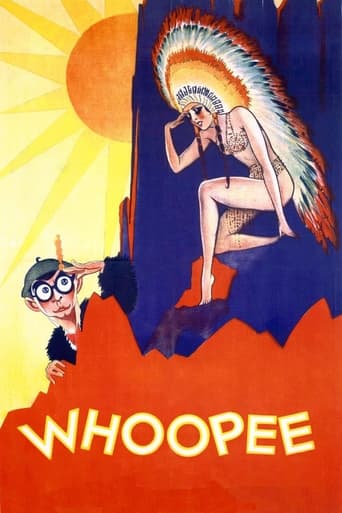
Lou-Scha-Enya, born Aurelia Guy 'Tessie' Mobley, was a Chickasaw operatic soprano and actress who achieved international acclaim during the early 20th century. Born in the Chickasaw Nation (modern-day Oklahoma), she — classically trained singer who studied at prestigious academies in Europe, including the Berlin State Opera. She made her motion picture debut in the 1930 Technicolor musical 'Whoopee!', where she played the role of Matafay, a performance that brought her Native American heritage to the forefront of Hollywood's Golden Age. Beyond her film work, she was a celebrated concert artist known as the 'Hummingbird of the Chickasaws,' performing for world leaders and at major venues like the Hollywood Bowl. In 1937, she became the first Native American to perform at the La Scala in Milan, Italy, debuting in the title role of 'Aida.' Throughout her career, she balanced her identity as a modern operatic star with her commitment to representing Indigenous culture, often performing in traditional regalia to educate audiences.
The Craft
On Screen
Lou-Scha-Enya's acting was deeply intertwined with her operatic training, characterized by a regal presence and a powerful, expressive vocal delivery. In her film work, she brought a sense of dignity and authenticity to Indigenous roles, contrasting with the caricatured portrayals common in early Hollywood. Her performances often utilized her mezzo-soprano range to add a lyrical quality to her characters.
Milestones
- Featured role as Matafay in the 1930 film 'Whoopee!'
- First Native American to perform at La Scala in Milan (1937)
- Performed for the coronation of King George VI of England (1937)
- Known as the 'Hummingbird of the Chickasaws' in international concert tours
- Headlined the annual 'The First American' pageant in Albuquerque
- Studied under the renowned Madame De Zaruba in Los Angeles
Best Known For
Iconic Roles
Must-See Films
Accolades
Won
- Inductee, Chickasaw Hall of Fame (Posthumous, 2009)
Special Recognition
- Billed as 'The Nationally Known Chickasaw Mezzo-Soprano'
- Honorary title of 'Princess' used during her international tours
- Recognized as a cultural ambassador for the Chickasaw Nation
Working Relationships
Worked Often With
Studios
Why They Matter
Impact on Culture
Vital figure in the 'Indigenous Modernity' movement of the early 20th century, proving that Native American artists could excel in the highest tiers of Western classical art. By performing at La Scala and for European royalty, she shattered stereotypes that confined Indigenous people to primitive or folkloric roles. Her presence in 'Whoopee!'—one of the first major Technicolor talkies—ensured that a real Native American voice was heard in a production otherwise dominated by artifice and caricature.
Lasting Legacy
Her legacy is preserved through her groundbreaking achievements in the world of opera, where she remains a symbol of Indigenous excellence. She is remembered by the Chickasaw Nation as a trailblazer who used her 'Hummingbird' voice to bring pride to her people on a global stage. Her career serves as a bridge between the traditional world of the Chickasaw Nation and the cosmopolitan world of 20th-century high culture.
Who They Inspired
She influenced subsequent generations of Native American performers, such as Maria Tallchief, by demonstrating that Indigenous identity could be maintained while achieving success in European art forms. Her success helped pave the way for the Indian Actors Association and other advocacy groups that sought better representation in Hollywood.
Off Screen
She was the daughter of Eldridge H. Mobley and was raised in a family that valued education and the arts. She was married to the famous Chilean operatic tenor Ramón Vinay, with whom she shared a life dedicated to the international opera circuit. Her sister, Marie Mobley Muchmore, gained historical footnote fame for capturing footage of the John F. Kennedy assassination.
Education
Studied at the Berlin State Opera; trained under Madame De Zaruba in Los Angeles; attended voice academies in Paris and Milan.
Family
- Ramón Vinay (m. 1954-1990)
Did You Know?
- Her stage name 'Lushanya' or 'Lou-Scha-Enya' is often translated as 'Songbird' in Chickasaw.
- She was the first Native American to sing at the world-famous La Scala opera house in Italy.
- In 1929, she took the inaugural Western Air Express flight from Albuquerque to Los Angeles as a promotional 'Indian Princess.'
- She was often billed as 'Princess Lou-Scha-Enya' to appeal to the public's fascination with 'Indian Royalty.'
- She appeared in 'Whoopee!' alongside future stars like Betty Grable and Paulette Goddard (who were uncredited Goldwyn Girls).
- Her sister Marie Muchmore was one of the few people to film the JFK assassination in Dealey Plaza.
- She was a featured soloist at the Hollywood Bowl Inter-tribal Ceremonial.
- She lived in Europe for several years during the 1930s to perfect her operatic craft.
In Their Own Words
I want to present the Indian as he deserves. (Context: Discussing her educational mission through her musical performances.)
Frequently Asked Questions
Who was Lou-Scha-Enya?
Lou-Scha-Enya, born Aurelia Guy Mobley, was a Chickasaw operatic soprano and actress. She is best known for her role in the 1930 film 'Whoopee!' and for being the first Native American to perform at La Scala in Milan.
What films is Lou-Scha-Enya best known for?
Titles linked here include Whoopee! (1930).
When was Lou-Scha-Enya born and when did she die?
Born December 4, 1905; died December 19, 1990.
What awards did Lou-Scha-Enya win?
While she did not win major film awards, she was posthumously inducted into the Chickasaw Hall of Fame in 2009 for her contributions to the arts and her community.
What was Lou-Scha-Enya's acting style?
Her style was operatic and dignified, bringing a sense of high-culture refinement to her roles. She used her powerful mezzo-soprano voice to create a commanding presence on screen and stage.
Was Lou-Scha-Enya a real princess?
No, the title 'Princess' was a stage persona common for Native American performers in the early 20th century to enhance their commercial appeal, though she was a genuine citizen of the Chickasaw Nation.