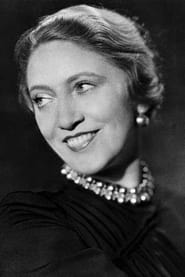
Käthe Dorsch
Actor
Born: December 29, 1890 in Neumarkt, Germany (now in Poland) Died: May 25, 1957 Active: 1910-1957 Birth Name: Katharina Dorsch
Films
2 films
About Käthe Dorsch
Renowned German stage and film actress who became character actresses of her generation. Born Katharina Dorsch, she began her career in the theater before transitioning to film during the silent era, making her debut in 1915. Her powerful stage presence and distinctive voice made her particularly successful in both mediums, allowing her to excel in the transition from silent to sound films. Throughout her career spanning nearly five decades, she appeared in numerous German films and theater productions, becoming a beloved figure in German cultural life. She was known for her versatility, playing everything from dramatic roles to comedic characters with equal skill and psychological depth. Her career continued successfully through the Nazi era and into post-war Germany, where she remained active until her death in 1957. Dorsch was particularly admired for her ability to portray strong, complex female characters with remarkable authenticity and emotional intensity.
The Craft
On Screen
Dorsch was known for her intense, emotionally charged performances and commanding stage presence, combining naturalistic delivery with dramatic intensity. Her technique was rooted in classical German theater training but she adapted effectively to cinema's more intimate requirements. She excelled at conveying complex psychological states with remarkable authenticity, using her distinctive, powerful voice to great effect in sound films. Her performances were characterized by their emotional depth and psychological realism, particularly in portraying strong, independent female characters.
Milestones
- Stage debut in 1910
- Film debut in 1915
- Leading roles at Berlin's Deutsches Theater
- Successful transition from silent to sound films
- Starred in 'Münchhausen' (1943)
- Berlin Arts Prize recipient (1955)
- Final film appearance in 1956
Best Known For
Iconic Roles
Must-See Films
Accolades
Won
- Berlin Arts Prize (1955)
- German Film Award for Best Actress (multiple nominations)
Nominated
- German Film Award for Best Actress (multiple nominations throughout career)
Special Recognition
- Honorary citizenship of Berlin
- Käthe Dorsch Prize established in her honor for theater achievements
Working Relationships
Worked Often With
Studios
Why They Matter
Impact on Culture
Käthe Dorsch represented the pinnacle of German theater acting during the first half of the 20th century, bridging classical theater and modern cinema with remarkable success. Her ability to maintain artistic integrity through multiple political regimes demonstrated her adaptability and commitment to her craft. She helped establish standards for character acting in German cinema, bringing theatrical gravitas to film performances while adapting to the medium's unique demands. Her work influenced the development of German film acting techniques and contributed to the cultural landscape during some of Germany's most turbulent periods.
Lasting Legacy
Dorsch is remembered as one of Germany's greatest character actresses, whose active years covered from the silent era through the early sound period and into post-war German cinema. Her performances set benchmarks for psychological realism and emotional authenticity in German acting, particularly in her portrayal of complex female characters. The Käthe Dorsch Prize continues to honor outstanding achievements in German theater, ensuring her legacy endures. She is frequently cited in German acting textbooks as an exemplar of character acting technique and emotional truth.
Who They Inspired
She influenced numerous German actors who followed, particularly in the area of character acting and the transition from stage to film. Her techniques for conveying complex emotions through both voice and physical presence were studied by younger performers and incorporated into German acting pedagogy. Her success in maintaining artistic integrity through politically challenging periods served as a model for other artists facing similar circumstances. Many post-war German actresses cited her as an inspiration for their own careers.
Off Screen
Dorsch married three times throughout her life: first to actor Hermann Thimig (1916-1921), then to director/actor Harry Liedtke (1925-1928), and finally to businessman Wilhelm Bendow. Despite her public celebrity, she maintained a relatively private personal life and had no children. She was known for her intense dedication to her craft and professional reputation, often prioritizing her career over personal matters. Her marriages to fellow actors reflected her deep connection to the theatrical world.
Education
Classical German theater training; formal acting education in Berlin during early 1910s
Family
- Hermann Thimig (1916-1921)
- Harry Liedtke (1925-1928)
- Wilhelm Bendow (1928-1957)
Did You Know?
- She was nicknamed 'The Dorsch' by admirers and colleagues
- Her distinctive voice made her particularly successful in sound films
- She continued performing on stage until shortly before her death at age 66
- She was one of the few actresses to successfully maintain popularity across Weimar, Nazi, and post-war Germany
- Her performance in 'Münchhausen' (1943) was particularly acclaimed by critics
- Despite her film success, she always considered herself primarily a stage actress
- She was known for mentoring younger actors throughout her career
- She received the Berlin Arts Prize just two years before her death
- Her final film appearance was in 1956, one year before her death
- She was known for her professionalism and dedication to her craft, often working through illness
In Their Own Words
The stage is my home, film is my guest room
Acting is not about pretending, it's about finding truth in the character
The voice is the soul's instrument, and we must learn to play it well
Frequently Asked Questions
Who was Käthe Dorsch?
Käthe Dorsch was one of Germany's most celebrated stage and film actresses of the first half of the 20th century, known for her powerful performances and distinctive voice. She had a career spanning nearly five decades, from the silent era through post-war German cinema, and was particularly renowned for her character acting and psychological depth in portraying complex female roles.
What films is Käthe Dorsch best known for?
Titles linked here include Sleeping Beauty (1917), Münchhausen (1943).
When was Käthe Dorsch born and when did she die?
Born December 29, 1890; died May 25, 1957.
What awards did Käthe Dorsch win?
Käthe Dorsch received the prestigious Berlin Arts Prize in 1955, one of Germany's highest cultural honors. She was also nominated multiple times for the German Film Award for Best Actress throughout her career. In her honor, the Käthe Dorsch Prize was established to recognize outstanding achievements in German theater, and she received honorary citizenship of Berlin.
What was Käthe Dorsch's acting style?
Dorsch's acting style combined classical German theatrical training with naturalistic emotional delivery, characterized by intense psychological depth and powerful stage presence. She was known for her ability to convey complex emotions through both her distinctive voice and physical presence, excelling particularly in portraying strong, independent female characters with remarkable authenticity and truth.