Harald Austin
Actor
Born: June 22, 1892 in Stamford, Connecticut, USA Died: June 14, 1965 Active: 1919-1945 Birth Name: Harold A. Swezy
Films
1 film
About Harald Austin
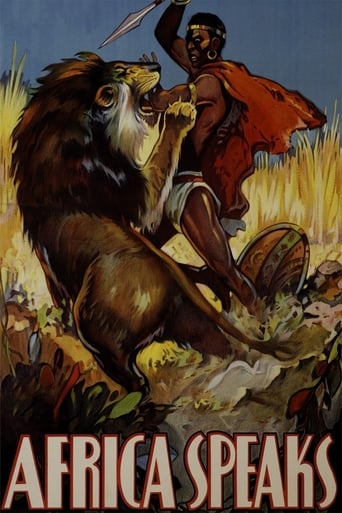
Harald Austin (often credited as Harold Austin) was a multifaceted figure in early cinema, serving as an actor, director, cameraman, and producer. Born Harold A. Swezy in Connecticut, he transitioned from a background in the U.S. Navy and the automotive industry to become a notable presence in both silent and early sound films. He is most prominently remembered for his role in the 1930 landmark documentary 'Africa Speaks!', where he appeared as himself alongside explorer Paul L. Hoefler. Throughout the 1920s, he built a reputation in comedy and dramatic shorts before gravitating toward 'nature films' that blended documentary realism with dramatic flair. His career was marked by a spirit of adventure, often putting himself in physical danger to capture authentic footage, which included surviving a shark attack during a 1933 filming expedition. Despite the controversies surrounding the staged elements of early ethnographic films, Austin remained a respected technical and creative force in the industry until his retirement.
The Craft
On Screen
In his documentary work, Austin employed a 'naturalistic explorer' persona, often appearing in pith helmets and safari gear to provide a human anchor for the exotic footage. In his earlier silent work, he was known for a versatile approach to both physical comedy and dramatic tension, though he eventually became synonymous with the 'brave adventurer' archetype of the early 1930s.
Milestones
- Starring in 'Africa Speaks!' (1930), one of the first major sound documentaries.
- Member of the Colorado African Expedition (1928-1929).
- Successful transition from silent comedy shorts to sound-era nature documentaries.
- Survived a shark attack while filming underwater sequences in 1933.
- Collaborated with renowned narrator Lowell Thomas and explorer Paul L. Hoefler.
Best Known For
Iconic Roles
Must-See Films
Accolades
Special Recognition
- Recognized as a pioneer of the sound-era travelogue and ethnographic film.
Working Relationships
Worked Often With
Studios
Why They Matter
Impact on Culture
Harald Austin played a pivotal role in the 'jungle-graph' craze of the early 1930s. 'Africa Speaks!' was a massive box office success that brought the sounds of the African continent to American audiences for the first time, including the first recorded sounds of a lion's roar and the languages of various tribes. While modern audiences view these films through a critical lens regarding colonial perspectives and staged 'reality,' Austin's work was instrumental in establishing the commercial viability of the feature-length documentary.
Lasting Legacy
Austin's legacy lies in his contribution to the evolution of the nature documentary. By combining authentic exploration with cinematic storytelling, he helped bridge the gap between early travelogues and the sophisticated wildlife filmmaking of the mid-20th century. His technical bravery as a cameraman, particularly in capturing dangerous wildlife and underwater scenes, set a standard for the 'adventure' genre in cinema.
Who They Inspired
His work influenced the 'exploitation-documentary' genre and provided a template for future wildlife filmmakers who sought to balance education with entertainment. The success of his films encouraged major studios to invest in location-based filmmaking and ethnographic studies.
Off Screen
Austin was born to Austin G. Swezy and later lived with his mother and stepfather after his father's early death. He served in the U.S. Navy during World War I (1917-1918). He was a close personal friend of actor Frank Morgan (famous for 'The Wizard of Oz'), even listing Morgan as his next of kin on his WWII draft card while residing in Morgan's home.
Education
Attended Stamford Military Academy for three years.
Family
- Enid 'Billy' Edis (1927-1932)
Did You Know?
- He lost the ends of two fingers on his left hand due to a shark bite while filming in 1933.
- His real surname, Swezy, appears on both his WWI and WWII draft cards.
- He was living with Frank Morgan (The Wizard of Oz) during the early 1940s.
- Before entering film, he worked for the Studebaker Car Rental Co. In New York City.
- He was a member of the first expedition to cross the African continent from east to west by motor truck.
- In 'Africa Speaks!', he is seen dealing with a massive locust swarm that nearly destroyed the expedition's equipment.
In Their Own Words
"We'll have to cover everything up, come on!" (Spoken during the locust swarm sequence in 'Africa Speaks!')
"I'm coming with that camera to help them on the truck!" (Context: Urgency during a dangerous expedition crossing)
Frequently Asked Questions
Who was Harald Austin?
American with credits in this catalog. He was a pioneer of early sound-era travelogues and nature films.
What films is Harald Austin best known for?
Titles linked here include Africa Speaks! (1930), The Blonde Captive (1931).
When was Harald Austin born and when did he die?
Born June 22, 1892; died June 14, 1965.
Was Harald Austin a real explorer or just an actor?
Austin was both; he was a legitimate member of the Colorado African Expedition and a skilled cameraman who frequently put himself in danger to capture footage, though his films often included staged dramatic elements.
What happened to Harald Austin's hand?
He lost the tips of two fingers on his left hand after being bitten by a shark while filming an underwater nature documentary in 1933.