Films
1 film
About Narciso Vaz
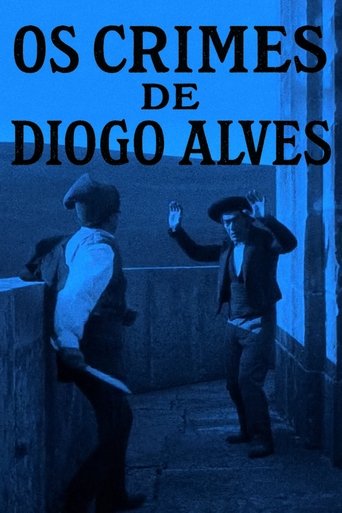
Actor in Portuguese cinema during the silent film era, best known for his role in the 1911 film 'Crimes of Diogo Alves.' As one of the earliest actors in Portuguese film history, Vaz participated in the country's nascent movie industry at a time when cinema was still establishing itself as an art form. His appearance in 'Crimes of Diogo Alves' marked him as part of the first generation of Portuguese film actors who helped lay the foundation for the nation's cinematic tradition. The film itself was based on the real-life story of Diogo Alves, a notorious Spanish serial killer who terrorized Lisbon in the 1840s, making Vaz's role significant in bringing this dark chapter of Portuguese history to the screen. Unfortunately, like many early film actors, Vaz's career appears to have been extremely brief, limited to the year 1911, which was common for performers in the experimental early days of cinema. His contribution, though small in scale, represents an important part of Portugal's film heritage and the development of Iberian cinema during the silent era.
The Craft
On Screen
As a silent era actor, Narciso Vaz would have employed exaggerated gestures and facial expressions typical of early cinema, where acting had to convey emotion without dialogue. His performance style would have been influenced by theatrical traditions, as many early film actors came from stage backgrounds.
Milestones
- Starred in 'Crimes of Diogo Alves' (1911), one of Portugal's earliest feature films
- Participated in the foundational period of Portuguese cinema
- Helped bring the story of notorious serial killer Diogo Alves to the screen
Best Known For
Iconic Roles
Must-See Films
Working Relationships
Worked Often With
Studios
Why They Matter
Impact on Culture
Narciso Vaz represents an important but often overlooked figure in the history of Portuguese cinema as one of the country's first film actors. His participation in 'Crimes de Diogo Alves' contributed to the early development of Portuguese narrative cinema at a time when most films were short documentaries or actualities. The film itself was significant for being one of the first Portuguese productions to tackle a dramatic historical subject, helping establish the country's tradition of historical filmmaking. Vaz's work, along with that of other early Portuguese actors, helped prove that Portuguese stories and actors could sustain a domestic film industry, paving the way for future generations of Portuguese filmmakers and performers.
Lasting Legacy
The legacy of Narciso Vaz is primarily historical rather than artistic, as he represents the generation of Portuguese cinema. While his individual performance may be lost to time due to the fragility of early film stock, his contribution to establishing Portuguese cinema's foundation remains significant. He stands as proof of the courage and innovation of early filmmakers and actors who worked with primitive technology and limited resources to create the first motion pictures in Portugal. His brief career exemplifies the experimental nature of early cinema, where many participants tried their hand at this new art form before either moving on to other pursuits or becoming part of the developing industry.
Who They Inspired
Due to his extremely brief career and the obscurity of early Portuguese cinema records, Narciso Vaz's direct influence on subsequent actors and filmmakers cannot be definitively traced. However, as part of the first generation of Portuguese film actors, he contributed to establishing acting conventions in Portuguese cinema that would influence later performers. His work in bringing historical Portuguese stories to the screen helped demonstrate the viability of domestic film production, indirectly influencing future generations of Portuguese filmmakers who would continue to explore national themes and stories.
Off Screen
Very little is known about the personal life of Narciso Vaz, which is typical for actors from the earliest days of Portuguese cinema. As a performer from 1911, he lived during a time when film actors were not yet celebrities and personal details were rarely documented in press coverage.
Did You Know?
- Appeared in only one known film during his entire career
- Participated in Portuguese cinema during its first decade of existence
- 'Crimes of Diogo Alves' was based on a real 19th-century serial killer who operated in Lisbon
- The film was made when Portugal was still a monarchy, just before the 1910 revolution
- Early Portuguese films like this one are extremely rare today due to film decomposition and loss
- Narciso Vaz worked during the silent era when actors had to rely solely on physical expression
- His active years covered only one year, making him one of cinema's briefest professional actors
- The film he appeared in represents one of Portugal's earliest attempts at dramatic narrative cinema
Frequently Asked Questions
Who was Narciso Vaz?
Portuguese with credits in this catalog.' He was one of the earliest actors in Portuguese cinema history, working during the foundational period when motion pictures were first being produced in Portugal.
What films is Narciso Vaz best known for?
Titles linked here include Crimes of Diogo Alves (1911).
When was Narciso Vaz born and when did he die?
The specific birth and death dates of Narciso Vaz are not documented in historical records, which is common for actors from the earliest days of Portuguese cinema. We know he was active in 1911 and was Portuguese by nationality.
What awards did Narciso Vaz win?
Narciso Vaz did not receive any formal awards or recognition, as award systems for cinema did not exist in Portugal in 1911. The film industry was still in its experimental phase, and formal recognition of cinematic achievements would come decades later.
What was Narciso Vaz's acting style?
As a silent era actor, Narciso Vaz would have used the exaggerated gestures and facial expressions typical of early cinema. His acting would have been heavily influenced by theatrical traditions, as early film actors often came from stage backgrounds and needed to convey emotions without dialogue.
Why is Narciso Vaz significant in film history?
Narciso Vaz is significant as one of the first actors in Portuguese cinema history. His participation in early Portuguese films helped establish the foundation for the country's film industry during the silent era, making him part of cinema's generation in Portugal.
Is 'Crimes of Diogo Alves' still available to watch?
Unfortunately, like most films from this era, 'Crimes de Diogo Alves' is likely lost due to the deterioration of early film stock. Most Portuguese films from 1911 have not survived to the present day, making the work of actors like Narciso Vaz largely inaccessible to modern audiences.