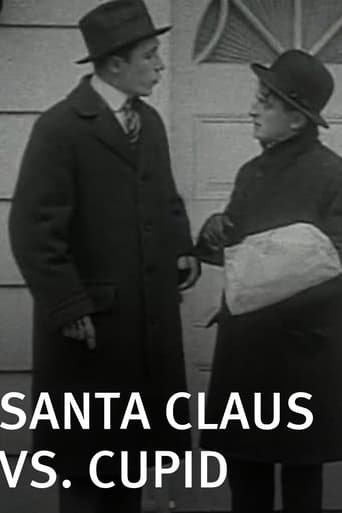
Films
1 film
About Billy Casey
Billy Casey worked on one surviving credit: Santa Claus vs (1915). Cupid. His known filmography consists primarily of the 1915 comedy short 'Santa Claus vs. Cupid,' suggesting he was likely a character actor or bit player during the transitional period of early Hollywood. Like many actors of his era, Casey's career was brief and coincided with the rapid expansion of the film industry in the mid-1910s. His work in silent comedies places him among the countless performers who contributed to the foundation of American cinema, though individual records from this period are often incomplete. The fact that he appeared in only one documented film suggests he may have been an extra, supporting player, or someone who briefly dabbled in acting before pursuing other ventures. His career trajectory was typical of many early film actors who worked during the industry's formative years before professional standards and comprehensive record-keeping became established.
The Craft
Milestones
- Appeared in 'Santa Claus vs. Cupid' (1915)
Best Known For
Must-See Films
Why They Matter
Impact on Culture
Billy Casey represents the countless anonymous performers who contributed to the foundation of American cinema during its formative years. While his individual impact may be minimal, his participation in early film production reflects the collaborative nature of silent era filmmaking, where even minor actors played crucial roles in establishing cinematic storytelling techniques. His work in 1915 places him during a pivotal period when American cinema was transitioning from novelty to art form.
Lasting Legacy
Billy Casey's legacy is primarily historical, serving as an example of the many forgotten performers who populated early American films. His single documented appearance in 'Santa Claus vs. Cupid' makes him part of the broader tapestry of silent cinema history, where thousands of actors contributed to the medium's development without achieving lasting fame. His story illustrates the transient nature of early Hollywood careers and the challenges of preserving complete records from cinema's earliest decades.
Who They Inspired
Given the limited scope of Billy Casey's documented career, there is no evidence of direct influence on other performers or filmmakers. However, like all actors of his era, he contributed to the development of film acting techniques that would evolve and influence subsequent generations of performers.
Off Screen
Very little is documented about Billy Casey's personal life, which was common for minor actors of the silent era who did not achieve significant fame. Like many performers from this period, personal details were often not preserved in film industry records unless the actor achieved stardom.
Did You Know?
- Billy Casey appeared in films during the same year that D.W. Griffith's 'The Birth of a Nation' was released, marking a pivotal moment in American cinema history
- 1915 was the year Charlie Chaplin began his legendary film career with Essanay Studios
- The film 'Santa Claus vs. Cupid' was produced during the early days of feature-length film development in America
- Silent film actors from this era often worked multiple roles on set, sometimes serving as crew members between acting jobs
- Many actors from the 1910s used their real names, as the concept of stage names was not yet standardized in Hollywood
- Film credits were often incomplete or inaccurate during this period, making comprehensive documentation difficult
- The average career length for minor actors in the 1910s was often less than two years
Frequently Asked Questions
Who was Billy Casey?
Silent film with credits in this catalog. Cupid.' He represents one of the many minor performers from early American cinema whose careers were brief and sparsely documented.
What films is Billy Casey best known for?
Titles linked here include Santa Claus vs. Cupid (1915).
When was Billy Casey born and when did he die?
Specific birth and death dates for Billy Casey are not documented in available historical records, which was common for minor actors of the silent era who did not achieve significant fame or leave behind extensive personal documentation.
What awards did Billy Casey win?
Billy Casey did not receive any documented awards or nominations, which was typical for most actors of his era, particularly those working in minor or supporting roles during the early years of American cinema.
What was Billy Casey's acting style?
Specific details about Billy Casey's acting style are not documented in available sources. However, actors of this period typically used the exaggerated physical gestures and facial expressions characteristic of silent film performance to convey emotions and story points to audiences.
Why is so little known about Billy Casey?
Limited documentation of Billy Casey's life and career reflects the broader challenge of preserving complete records from early cinema. Many actors from this period, especially those with brief careers or minor roles, left behind minimal paper trails as studio record-keeping and industry documentation were still developing.
What was happening in Hollywood during Billy Casey's career?
During 1915, Hollywood was rapidly transforming from a small filmmaking outpost into the center of American cinema. This year saw major developments including the establishment of studio systems, the rise of feature films, and the emergence of early movie stars like Charlie Chaplin and Mary Pickford.