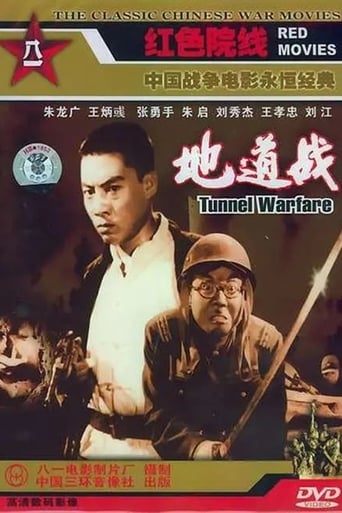
Films
1 film
About Ren Xudong
Chinese film director active during the mid-1960s, primarily known for his work on the 1965 war film 'Tunnel Warfare.' His career appears to have been concentrated during a significant period in Chinese cinema history, when the industry was heavily influenced by political ideologies and nationalistic themes. The film he directed became recognizable examples of Chinese revolutionary cinema, showcasing the resistance of Chinese civilians against Japanese invasion during World War II. While detailed biographical information about Ren Xudong is limited in available sources, his contribution to this important historical film demonstrates his involvement in China's cultural and political filmmaking landscape during the 1960s. His work reflects the collective approach to filmmaking that was common in China during this era, where individual directors often worked as part of larger creative teams.
The Craft
Behind the Camera
Ren Xudong's directing style in 'Tunnel Warfare' reflected the aesthetic and ideological requirements of Chinese cinema in the mid-1960s. His approach emphasized collective heroism, patriotic themes, and the glorification of civilian resistance against foreign invasion. The film employed techniques common to propaganda cinema of the era, including clear moral dichotomies, dramatic action sequences, and educational elements about guerrilla warfare tactics.
Milestones
- Director of Tunnel Warfare (1965)
- Contributed to Chinese revolutionary cinema
- Participated in wartime propaganda filmmaking
Best Known For
Must-See Films
Working Relationships
Studios
Why They Matter
Impact on Culture
Ren Xudong's work on 'Tunnel Warfare' contributed to a significant cultural phenomenon in Chinese cinema. The film became a widely shown model for guerrilla-war storytelling. Its depiction of civilian ingenuity and resistance against foreign invasion resonated deeply with Chinese audiences and became part of the national cultural memory. The film's techniques and themes influenced subsequent generations of Chinese war films and propaganda cinema.
Lasting Legacy
While Ren Xudong's individual legacy as a director remains somewhat obscured by the collective nature of Chinese filmmaking in the 1960s, his contribution to 'Tunnel Warfare' ensures his place in Chinese film history. The movie itself has endured as a classic example of revolutionary cinema, frequently referenced in Chinese popular culture and studied for its historical and artistic significance. The film's influence extends beyond cinema into military education and national identity formation.
Who They Inspired
The directing approach demonstrated in 'Tunnel Warfare' influenced subsequent Chinese war films, particularly in their portrayal of civilian-military cooperation and guerrilla tactics. The film's success helped establish certain narrative and visual conventions that would appear in later Chinese military and historical films. Its emphasis on collective action and resourcefulness became recurring themes in Chinese cinema dealing with wartime resistance.
Off Screen
Limited biographical information is available about Ren Xudong's personal life. As was common with many Chinese filmmakers of his era, personal details were often secondary to the collective nature of film production and the political context in which they worked.
Did You Know?
- 'Tunnel Warfare' was
- The film was used for military training purposes due to its detailed depiction of tunnel warfare tactics
- Despite being made in 1965, the film gained its greatest popularity during the late 1960s and early 1970s
- The movie was frequently shown to Red Guard units during the Cultural Revolution
- Many Chinese viewers could recite lines from the film decades after its release
- The film's techniques for tunnel construction were studied by military historians
- It was part of a trilogy of films about Chinese resistance, along with 'Mine Warfare' and 'War of Attrition'
Frequently Asked Questions
Who was Ren Xudong?
Ren Xudong — credits here include Tunnel Warfare (1965). Active 1965-1965.
What films is Ren Xudong best known for?
Titles linked here include Tunnel Warfare (1965).
When was Ren Xudong active as a director?
Based on available information, Ren Xudong was active as a director in 1965, though his career may have extended beyond this single year.
What was the significance of 'Tunnel Warfare'?
'Tunnel Warfare' became one of the best-known Chinese war films of its era, shaping later underground-resistance narratives.
What was Ren Xudong's directing style?
Ren Xudong's directing style reflected the requirements of 1960s Chinese cinema, emphasizing collective heroism, patriotic themes, and clear moral narratives typical of revolutionary propaganda films.