Films
1 film
About Mariusz Maszynski
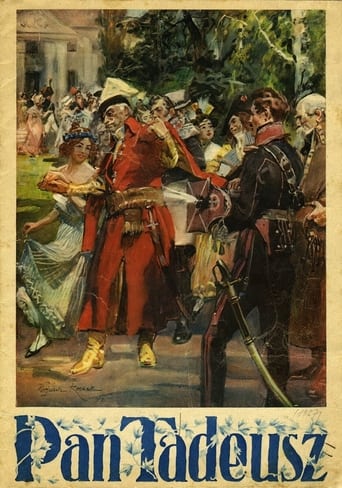
Mariusz Maszynski is credited on a single production — Pan Tadeusz (1928). His career was notably brief, with his only known film credit being the 1928 adaptation of Adam Mickiewicz's epic poem 'Pan Tadeusz.' This film was one of the earliest Polish cinematic adaptations of the national literary masterpiece, directed by Ryszard Ordyński. Maszynski's role in this production came Polish cinema, as the industry was transitioning from silent films to talkies. Unfortunately, like many actors from this era, particularly those with brief careers, detailed records of his life and career are scarce. The film itself was considered significant in Polish cinematic history for its ambitious attempt to bring national literature to the screen. Maszynski's contribution, while limited to this single known appearance, was part of the foundation of Polish film acting during its formative years.
The Craft
Milestones
- Appeared in the 1928 film adaptation of 'Pan Tadeusz'
Best Known For
Iconic Roles
Must-See Films
Working Relationships
Worked Often With
Why They Matter
Impact on Culture
Mariusz Maszynski's cultural impact is primarily through his participation in one of the earliest cinematic adaptations of Poland's national epic poem 'Pan Tadeusz.' Though his individual contribution may seem minor given the brevity of his career, he was part of an important movement in Polish cinema that sought to preserve and promote national literature through the new medium of film. The 1928 adaptation itself represents a significant milestone in Polish film history, attempting to capture the essence of Mickiewicz's work during the silent era. Actors like Maszynski, even in small roles, contributed to establishing the tradition of literary adaptations that would become important in Polish cinema throughout the 20th century.
Lasting Legacy
Mariusz Maszynski's legacy is that of a representative figure from the earliest days of Polish cinema, a period when many actors participated in film projects that would shape the national film industry. While his name may not be widely recognized today, his contribution to the 1928 'Pan Tadeusz' places him within the historical context of Polish actors who helped bridge the gap between classical literature and cinematic storytelling. His brief career exemplifies the transient nature of many early film careers, particularly in countries with developing film industries like Poland in the 1920s. The preservation of his film work, however limited, provides valuable insight into the acting styles and production values of early Polish silent cinema.
Who They Inspired
Due to the extremely brief nature of his known career, Mariusz Maszynski's direct influence on other actors or filmmakers is difficult to trace. However, as a participant in early Polish cinema, he was part of a generation that helped establish the foundation for future Polish actors and filmmakers. The 1928 'Pan Tadeusz' adaptation itself would later serve as a reference point for subsequent adaptations of Polish literary works, indirectly influencing how actors approached roles based on classic literature.
Off Screen
Very little is known about Mariusz Maszynski's personal life, which is common for actors from early Polish cinema who had brief careers. The lack of available biographical information suggests he may not have achieved significant fame during his lifetime.
Did You Know?
- Mariusz Maszynski's entire known film career consists of a single film from 1928
- The film 'Pan Tadeusz' (1928) was one of the earliest attempts to adapt Poland's national epic poem to cinema
- The 1928 version of 'Pan Tadeusz' was a silent film, requiring actors to convey emotion through physical expression rather than dialogue
- Director Ryszard Ordyński was a prominent figure in early Polish cinema, having studied film in France
- The original poem 'Pan Tadeusz' by Adam Mickiewicz is considered
- Very few complete copies of early Polish films from the 1920s have survived, making Maszynski's work potentially rare
- The film was produced during the Second Polish Republic, a period of cultural renaissance in Poland
- Silent film actors in Poland often had theatrical backgrounds, as stage acting techniques were well-suited to silent cinema
Frequently Asked Questions
Who was Mariusz Maszynski?
Polish with credits in this catalog.' His career was notably brief, with this being his only known film credit, making him a representative figure from early Polish cinema.
What films is Mariusz Maszynski best known for?
Titles linked here include Pan Tadeusz (1928).
When was Mariusz Maszynski born and when did he die?
Specific birth and death dates for Mariusz Maszynski are not available in historical records, which is common for actors who had brief careers in early Polish cinema. He was active as an actor in 1928 and was of Polish nationality.
What awards did Mariusz Maszynski win?
There are no records of Mariusz Maszynski receiving any major awards or nominations. During the silent era in Poland, formal award systems for cinema were not as established as they would become in later decades.
What was Mariusz Maszynski's acting style?
While specific details about Maszynski's acting style are not documented, actors in Polish silent films of the 1920s typically used exaggerated gestures and facial expressions to convey emotion, drawing heavily from theatrical traditions.
Why is Mariusz Maszynski considered significant in film history?
Despite his brief career, Maszynski is significant as a participant in one of the earliest Polish film adaptations of national literature. His work represents the foundational period of Polish cinema and the efforts to preserve cultural heritage through film.