Films
1 film
About Helena Górska-Brylinska
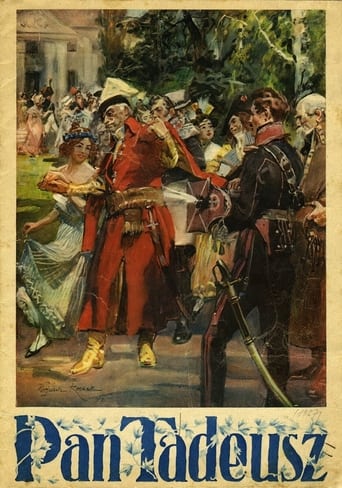
The 1928 film Pan Tadeusz is the only title linked here for Helena Górska-Brylinska. Her most notable contribution to cinema was her role in the 1928 adaptation of 'Pan Tadeusz,' directed by Ryszard Ordynski, which was based on Adam Mickiewicz's celebrated epic poem. This film represented one of the major Polish cinematic productions of the late 1920s, attempting to bring national literary heritage to the silver screen. Górska-Brylinska's career appears to have been brief, concentrated primarily around 1928, which was not uncommon for actors in early Polish cinema where opportunities were limited and the industry was still developing. Her participation in this significant cultural project suggests she was recognized for her talent during this transitional period between silent films and the advent of sound. Unfortunately, like many actors from this era in Eastern European cinema, detailed records of her life and career beyond this single notable production are scarce. The 1928 'Pan Tadeusz' remains her primary documented contribution to film history.
The Craft
Milestones
- Role in 'Pan Tadeusz' (1928), one of the major Polish silent film productions
Best Known For
Iconic Roles
Must-See Films
Working Relationships
Worked Often With
Why They Matter
Impact on Culture
Helena Górska-Brylinska's contribution to cinema, though limited to primarily one documented film, represents the broader cultural movement of 1920s Polish cinema attempting to establish a national film identity. Her participation in 'Pan Tadeusz' (1928) placed her within a significant artistic endeavor to adapt Poland's most revered literary work for the screen, reflecting the era's ambition to create culturally meaningful cinema. While her individual impact may be difficult to trace due to limited documentation, she represents the generation of Polish actors who helped bridge the gap between theatrical traditions and the emerging medium of film during a crucial period of Polish cultural development between World Wars.
Lasting Legacy
The legacy of Helena Górska-Brylinska is primarily preserved through her involvement in the 1928 adaptation of 'Pan Tadeusz,' which stands as an important artifact of Poland's silent film history. Though her career appears to have been brief, her participation in this significant cultural production ensures her place in the annals of early Polish cinema. Like many actors from this era and region, her story illustrates the challenges of preserving complete film histories, especially for performers working in national cinemas that were disrupted by historical events. The 1928 'Pan Tadeusz' remains a reference point for scholars of Polish film history, and by extension, keeps the memory of its cast, including Górska-Brylinska, alive within cinematic scholarship.
Who They Inspired
Due to the limited documentation of Helena Górska-Brylinska's career and the apparent brevity of her film work, her direct influence on subsequent generations of actors cannot be definitively traced. However, her participation in one of the major Polish silent film productions of the late 1920s places her within the continuum of Polish performers who helped establish the foundation for the country's film industry. The actors of this era, even those with brief careers, collectively influenced the development of Polish screen acting techniques and helped transition theatrical performance styles to the demands of cinema.
Off Screen
Very little documented information is available about Helena Górska-Brylinska's personal life, which is typical for many actors from the silent era in Eastern European cinema. Historical records from this period are often incomplete, especially for performers who had brief careers or worked primarily in regional productions.
Did You Know?
- Her only documented film role was in the 1928 adaptation of 'Pan Tadeusz,' based on Poland's national epic poem by Adam Mickiewicz
- The film 'Pan Tadeusz' (1928) was directed by Ryszard Ordynski, a prominent Polish director of the era
- She was active during the final years of Poland's silent film era, just before the transition to sound cinema
- Like many Eastern European actors from the 1920s, detailed biographical information is scarce due to historical disruptions and incomplete record-keeping
- The 1928 'Pan Tadeusz' was
Frequently Asked Questions
Who was Helena Górska-Brylinska?
Polish actress from the silent film era, best known for her role in the 1928 adaptation of 'Pan Tadeusz.' Her career appears to have been brief and primarily concentrated around this single significant film production during the late 1920s Polish cinema boom.
What films is Helena Górska-Brylinska best known for?
Titles linked here include Pan Tadeusz (1928).
When was Helena Górska-Brylinska born and when did she die?
Unfortunately, specific birth and death dates for Helena Górska-Brylinska are not available in documented film history records. This lack of biographical detail is common for many actors from early Polish cinema, especially those with brief careers.
What awards did Helena Górska-Brylinska win?
There are no documented awards or major recognitions for Helena Górska-Brylinska in available film history records. The award systems for cinema were still developing during her active period in the late 1920s, particularly in Eastern European film industries.
What was Helena Górska-Brylinska's acting style?
Specific details about Helena Górska-Brylinska's acting style are not documented in available sources. However, as a performer in late silent era Polish cinema, she likely employed the exaggerated gestures and expressive techniques typical of silent film acting, which emphasized visual storytelling to compensate for the absence of dialogue.