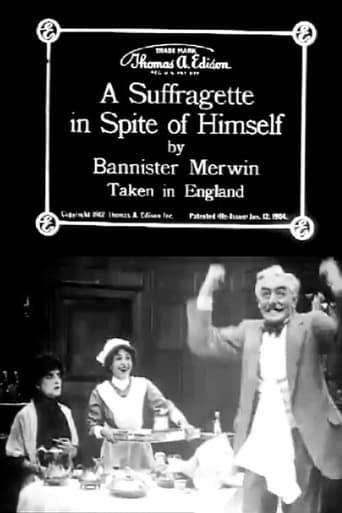
Bannister Merwin
Director
- Active
- 1912-1912
Films directed 1
About Bannister Merwin
Bannister Merwin was an American silent-era film director whose known screen career is concentrated in the early 1910s, a formative period for narrative motion pictures in the United States. He is documented in film history primarily through his direction of short subjects, including the 1912 title "A Suffragette in Spite of Himself," which places him among the working filmmakers contributing to the rapid expansion of one-reel comedies and dramatic shorts during the pre-feature era. Because surviving studio records and contemporary publicity about him are sparse, many details of his personal life remain obscure, but his filmography shows that he was active during a crucial transitional moment when filmmaking was shifting from novelty production toward a more standardized industry. His work belongs to the world of early silent cinema, when directors often handled compact stories, rapid production schedules, and very limited on-screen credit. The extant evidence suggests that Merwin's career was brief or at least poorly documented, and he did not become one of the era's major public-facing auteurs. Even so, his participation in early 1912 filmmaking makes him part of the foundational generation of directors who helped establish cinematic storytelling conventions. In film database terms, he is best understood as a minor but historically relevant silent-era director whose surviving credit contributes to the broader record of early American motion pictures.
More about Bannister Merwin
Behind the camera
No detailed contemporary descriptions of Bannister Merwin's directing method survive in standard reference sources, but his work fits the early silent-film practice of concise, visually driven storytelling. Directors in this period typically relied on clear blocking, broad characterization, simple but legible staging, and strong action-based scenes that could be understood without synchronized sound. Given the limited surviving information, Merwin's style can only be described in general terms as representative of early 1910s screen direction rather than as a uniquely documented personal signature. His known output suggests the compact, efficient approach common to short-form silent productions of the era.
In film history
Bannister Merwin's cultural impact is primarily historical rather than celebrity-based. He is part of the large but essential group of early silent-era directors whose work helped normalize film as a storytelling medium in the years before features and star-driven publicity fully transformed the business. His credit on "A Suffragette in Spite of Himself" also places him in the orbit of early screen treatments of contemporary social themes, including the suffrage movement, which was an important cultural topic in the 1910s. Even where his individual reputation has not endured, his existence in the film record helps scholars reconstruct the labor and output of early American cinema. Because many early films are lost and many early filmmakers are under-documented, Merwin's legacy is tied to preservation of film history itself. Database entries for figures like him are valuable because they preserve the names of working directors who contributed to the medium's earliest language and industrial growth. His surviving credit demonstrates how quickly cinema expanded during the silent era, employing numerous directors whose careers may have been brief, regional, or poorly archived. In that sense, his legacy is the historical footprint of early filmmaking rather than a widely celebrated body of surviving work.
Later reputation
Bannister Merwin's lasting legacy lies in his place within the foundation of American silent cinema. He is remembered not as a major celebrity director but as one of the many early practitioners whose credited work documents the industry's rapid maturation in the 1910s. For historians, such credits are important evidence of the personnel, themes, and production practices of the period. His name continues to appear in film reference sources because early cinema scholarship depends on preserving even the smallest surviving traces of directors whose work helped define the medium.
Influence
There is no clear evidence of a direct, named influence on later directors that can be confidently attributed to Bannister Merwin. His influence is better understood as indirect: he participated in the early system of short-form silent filmmaking that later directors built upon. The conventions used in these productions—economical storytelling, visual clarity, and staging for the camera—became standard practices in the evolving film language of the 1910s. In that broader sense, Merwin belongs to the generation whose work helped establish the professional craft later filmmakers inherited.
Off screen
Reliable biographical information about Bannister Merwin's personal life is not readily available in major standard film references. His family background, marriages, children, and off-screen activities are not clearly documented in the surviving historical record associated with his film work. As a result, any detailed personal biography would risk speculation. What can be said with confidence is that he worked in the early American silent-film industry, a field in which many practitioners left behind very limited personal documentation.
Education
Unknown; no reliable educational record is readily available in standard film references.
Credits
- Directed the 1912 silent film "A Suffragette in Spite of Himself"
- Worked during the formative one-reel era of American silent cinema
- Represents one of the many early filmmakers whose credited work helps map the development of narrative short films
- Contributed to the silent-era studio system before feature-length production became dominant
Films
Notes
- Bannister Merwin is chiefly known today from silent-film credits rather than from a widely documented personal biography.
- His known filmography is extremely limited, with 1912 as the documented active period in the provided record.
- He directed "A Suffragette in Spite of Himself," a title that suggests early cinema's interest in contemporary social issues and topical comedy or drama.
- He appears to have worked in the one-reel era, when many films were brief and many directors handled rapid turnaround productions.
- Like many early silent-era filmmakers, he left behind little surviving biographical detail in standard reference sources.
- His name is useful to film historians because it helps reconstruct the crowded and often under-credited world of early American studio production.
- The scarcity of information about him is itself typical of many early cinema workers whose careers were documented only through trade papers and surviving title cards.
Questions
Who was Bannister Merwin?
Bannister Merwin was an American silent-era film director active in the early 1910s. He is primarily remembered through his credit on the 1912 film "A Suffragette in Spite of Himself," and little detailed personal biography survives in standard sources.
What films is Bannister Merwin best known for?
He is best known for directing "A Suffragette in Spite of Himself" (1912). Beyond that, his surviving documented filmography is very limited, which is common for many early silent-era directors.
When was Bannister Merwin born and when did he die?
His birth and death dates are not readily documented in the standard references available for early silent-film personnel. The historical record currently accessible does not provide reliable confirmed dates or places.
What awards did Bannister Merwin win?
No awards or formal honors are readily documented for Bannister Merwin. This is not unusual for early silent-era directors, many of whom worked before the modern awards culture of Hollywood was established.
What was Bannister Merwin's directing style?
There is no detailed surviving critical description of his personal style, but his work fits the early silent-film tradition of visually clear, efficient storytelling. Directors in 1912 typically used simple staging, expressive performance, and concise scene construction to communicate without sound.
What is Bannister Merwin's legacy in film history?
His legacy is that of a documented early filmmaker whose credit helps historians map the development of American silent cinema. Even though he is not a widely famous name, his work belongs to the foundational period when film grammar and production practices were still being shaped.