Ileana Leonidoff
Actor
- Active
- 1917-1917
Films 1
About Ileana Leonidoff
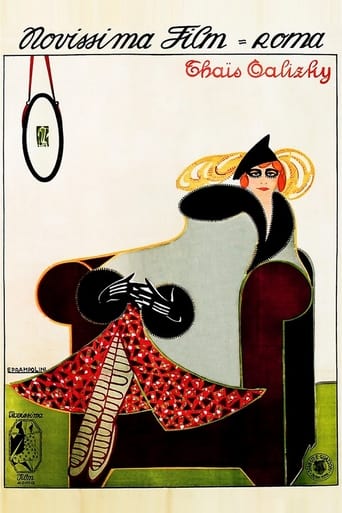
Ileana Leonidoff was a silent-era screen performer whose recorded film career is extremely brief and currently documented almost entirely through her appearance in the 1917 Italian production Thaïs. Available historical records suggest that she worked in the European silent cinema world during the 1910s, a period when many performers appeared in only one or a handful of productions and were often credited differently across surviving sources. Because she is a very obscure figure, detailed biographical information about her early life, training, and later career has not survived in widely accessible reference works. Her surviving credit places her in one of the more visually ambitious films of the era, a work associated with the refined, symbolist side of Italian silent cinema. Beyond that single known screen appearance, her broader career arc remains undocumented in mainstream film histories and archival databases. For this reason, she is best remembered as a name preserved by silent-film scholarship rather than as a star with an extensive surviving body of work. Her presence in Thaïs connects her to the artistic experimentation of the Italian silent period, even though the rest of her life remains largely a mystery.
More about Ileana Leonidoff
On screen
No detailed contemporary or archival description of her acting style has been reliably preserved. Given her participation in a 1917 silent film, her performance would have relied on the expressive visual techniques typical of the era, including pantomime, facial expression, and heightened physical gesture. Any more specific characterization would be speculative.
In film history
Ileana Leonidoff’s cultural significance lies less in a large body of screen performances than in what her surviving credit reveals about the silent-film ecosystem. Performers like Leonidoff were part of the larger constellation of actors, extras, and featured players who gave early cinema its expressive force, even when history preserved only fragments of their careers. Her association with Thaïs places her within an important phase of Italian silent cinema, a period that contributed substantially to the international development of visual storytelling, art direction, and screen melodrama. For film historians, such names are valuable because they help reconstruct the texture of production history around famous surviving works. She is also an example of how many silent-era artists have been partially erased by the fragmentary survival of records, even when their work participated in significant cinematic achievements.
Later reputation
Her lasting legacy is primarily archival: she remains part of the historical record of Thaïs and of silent-era Italian filmmaking. Even when an artist’s personal history is obscure, the preservation of a credited role ensures that they remain a traceable presence in film history. Leonidoff therefore represents the many unheralded performers whose labor supported the artistic ambitions of early cinema. Her name continues to matter to researchers, database compilers, and silent-film enthusiasts who seek to document every contributor to early screen culture. In that sense, her legacy is tied to preservation, scholarship, and the ongoing effort to recover lost or underdocumented figures from cinema’s first decades.
Influence
There is no evidence that Leonidoff had a documented direct influence on later actors or filmmakers, but her participation in early silent cinema contributes indirectly to the broader lineage of screen performance. By appearing in a visually stylized silent film, she participated in a performance tradition that helped define acting for the camera before spoken dialogue reshaped technique. Her preserved credit is part of the historical foundation upon which later scholarship reconstructs the careers of early film performers. The influence here is systemic rather than personal: she is one of the many artists whose work collectively shaped the language of silent cinema.
Off screen
No reliable public biographical record has been located that describes her personal life, family background, relationships, or later activities. Because she appears to have had a very limited documented screen career, standard biographical details such as marriages, children, residence, or later occupations are not readily available in surviving reference materials. Any attempt to supply those details would be speculative, so they are best left unconfirmed until archival evidence emerges.
Credits
- Appeared in the 1917 silent film Thaïs, her only firmly documented screen credit
- Associated with Italian silent cinema during a period of strong artistic experimentation
- Her name survives in film history through archival and reference sources connected to Thaïs
- Represents the many lesser-known performers whose work helped shape early European cinema despite limited surviving documentation
Roles
- Role in Thaïs (1917) — exact character name not reliably documented in accessible sources
Films
- Thaïs (1917)
Collaborators
- No frequent collaborators are reliably documented
Studios
- No confirmed studio affiliations are reliably documented
Notes
- She is best known today for a single confirmed screen appearance in Thaïs (1917).
- Her biographical details such as birth and death dates are not readily documented in widely accessible sources.
- Leonidoff is one of many silent-era performers whose careers are difficult to reconstruct because of incomplete surviving records.
- Her name survives in film history mainly through cast documentation and archival references rather than extensive press coverage.
- Thaïs (1917) is associated with the artistic and symbolist currents of Italian silent cinema, giving her a place in an important cinematic tradition.
- Because silent films often reused or varied credit spellings, some historical documentation for obscure performers can be inconsistent.
- Her obscurity makes her a useful example of how much early film history remains partially hidden in archives.
- She is remembered more as a historical film-credit presence than as a widely publicized star.
Questions
Who was Ileana Leonidoff?
Ileana Leonidoff was a silent-era actor best known for appearing in the 1917 film Thaïs. She is an obscure historical figure whose surviving documentation is limited, so much of her personal life remains unknown. Her importance today is primarily archival and historical, as part of the early Italian cinema record.
What films is Ileana Leonidoff best known for?
She is best known for Thaïs (1917), which is the only reliably documented film credit readily associated with her. No broader filmography is securely established in widely available sources. As a result, Thaïs remains her defining screen appearance.
When was Ileana Leonidoff born and when did she die?
Her birth date and death date are not currently verified in accessible reference sources. Likewise, her birthplace and other core biographical details have not been reliably documented. This makes her one of the many early cinema figures whose personal history remains largely obscure.
What awards did Ileana Leonidoff win?
No awards or nominations are known for Ileana Leonidoff. This is not unusual for obscure silent-era performers, many of whom worked before modern awards systems were established or before their careers were extensively documented. Her recognition is primarily historical rather than award-based.
What was Ileana Leonidoff's acting style?
There is no surviving critical description of her acting style that can be verified. As a silent-film performer in 1917, her work would have relied on the expressive visual conventions of the era, such as gesture, posture, and facial expression. Any more detailed assessment would be speculative.
What is Ileana Leonidoff's legacy in film history?
Her legacy lies in her place within the record of silent-era cinema, especially through her association with Thaïs. Even with limited biographical information, her credited presence helps historians reconstruct the personnel behind early European films. She stands as an example of how many contributors to cinema history survive only as names attached to important works.