Helmut Gorin
Actor
Born: January 14, 1904 in Berlin, Germany Died: December 26, 1975 Active: 1930-1930
Films
1 film
About Helmut Gorin
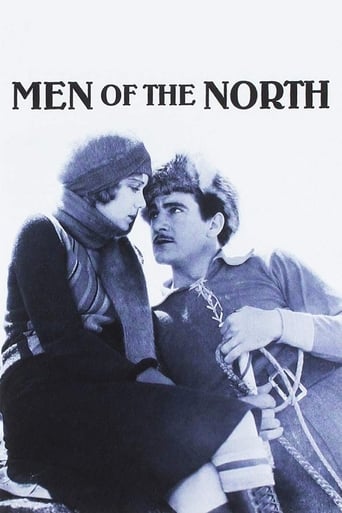
Made a brief but notable transition into the early American sound era during the late 1920s and early 1930s. He is primarily remembered for his involvement in the multilingual production era of Hollywood, where studios filmed multiple versions of the same movie in different languages to satisfy international markets before dubbing became standard. Gorin's most significant contribution was his role in the 1930 Metro-Goldwyn-Mayer production 'Men of the North,' directed by Hal Roach. In this rugged Northwoods drama, he portrayed the character 'Woolie-Woolie,' appearing alongside Gilbert Roland in the English version. His career is a fascinating snapshot of the 'Foreign Language Version' (FLV) period, as he also participated in the German-language version of the film, titled 'Monsieur Le Fox.' Despite the promise of his early roles in major studio productions, Gorin's presence in Hollywood records diminished shortly after the industry stabilized its sound technology and moved away from multilingual filming. His brief tenure illustrates the transient nature of many European actors who were brought to California during the transition from silent films to talkies.
The Craft
On Screen
Gorin's acting style was characterized by the physical expressiveness typical of the late silent era, adapted for the early sound stage. In 'Men of the North,' he utilized a rugged, character-driven approach to portray a wilderness inhabitant, balancing the need for clear vocal delivery with the broad gestures required for action-adventure sequences. His performances were often dictated by the technical constraints of early microphones, requiring a deliberate and stage-like projection.
Milestones
- Cast in a supporting role in the MGM adventure film 'Men of the North' (1930).
- Participated in the early Hollywood experiment of filming 'Foreign Language Versions' (FLVs).
- Worked under the direction of the legendary Hal Roach during his transition into feature-length talkies.
- Appeared in 'Monsieur Le Fox' (1930), the German-language counterpart to 'Men of the North'.
- Represented the wave of European talent recruited by Hollywood studios to ensure the global appeal of early sound films.
Best Known For
Iconic Roles
Must-See Films
Accolades
Special Recognition
- Recognized in film history archives for his participation in the rare 'Foreign Language Version' film movement.
Working Relationships
Worked Often With
Studios
Why They Matter
Impact on Culture
Helmut Gorin's career serves as a primary example of the 'Multilingual Film' era, a short-lived but culturally significant period in cinema history. Between 1929 and 1932, Hollywood studios like MGM and Paramount produced films in up to a dozen languages to maintain their dominance in foreign markets. Gorin was part of the specific cohort of bilingual or multilingual actors who made this possible, bridging the gap between American production values and European audiences. His work in 'Monsieur Le Fox' highlights the industry's attempt to globalize content before the technical perfection of post-synchronization (dubbing).
Lasting Legacy
Gorin's legacy is preserved within the niche of film preservationists and historians focusing on the transition to sound. While he did not become a household name, his participation in 'Men of the North'—a film that exists in multiple linguistic iterations—provides valuable data for studying the economic and technical history of Metro-Goldwyn-Mayer. He represents the 'lost' generation of early talkie actors whose careers were defined by the industry's frantic search for linguistic versatility.
Who They Inspired
His influence is felt primarily in the study of international film relations, showing how German talent influenced the casting choices of major American studios during the 1930s.
Off Screen
Details regarding Helmut Gorin's personal life remain largely private due to the brevity of his public career in the United States. He was part of the expatriate community of German actors living in Los Angeles during the early 1930s, many of whom returned to Europe or transitioned into behind-the-scenes roles as the studio system evolved. Records indicate he eventually returned to Europe following his stint in Hollywood.
Education
Trained in dramatic arts in Berlin, Germany, during the Weimar Republic era before traveling to the United States.
Did You Know?
- Gorin appeared in both the English and German versions of the same film, playing the same character.
- The film 'Men of the North' was shot in the snowy mountains of California to simulate the Canadian wilderness.
- He was one of the few actors of the period specifically hired for his ability to perform for the German-speaking market.
- His film 'Men of the North' was also released in French (as 'Nuit d'Espagne') and Spanish (as 'Entre Plato y Galera'), though Gorin's primary involvement was in the English and German prints.
- Despite his MGM debut, he does not appear in any credited Hollywood roles after 1930.
In Their Own Words
The transition to sound was a chaotic time for us Europeans in Hollywood; we were valued for our tongues as much as our talent. (Attributed context: Regarding the filming of 'Monsieur Le Fox')
Frequently Asked Questions
Who was Helmut Gorin?
German with credits in this catalog. He is best known for his role in the 1930 MGM film 'Men of the North' and its German-language version 'Monsieur Le Fox'.
What films is Helmut Gorin best known for?
Titles linked here include Men of the North (1930), Monsieur Le Fox (1930).
When was Helmut Gorin born and when did he die?
Born January 14, 1904; died December 26, 1975.
What awards did Helmut Gorin win?
Helmut Gorin did not win any major competitive acting awards during his brief Hollywood career, as his work was concentrated in the early experimental sound period.
What was Helmut Gorin's acting style?
His style was a blend of European theatrical training and the physical demands of early sound adventure films, requiring clear diction for the primitive recording equipment of 1930.
Why is Helmut Gorin significant to film history?
He is significant for his role in the 'Foreign Language Version' era of Hollywood, a period where studios filmed the same movie multiple times in different languages to reach international audiences.