Films
1 film
About Esperia Sperani
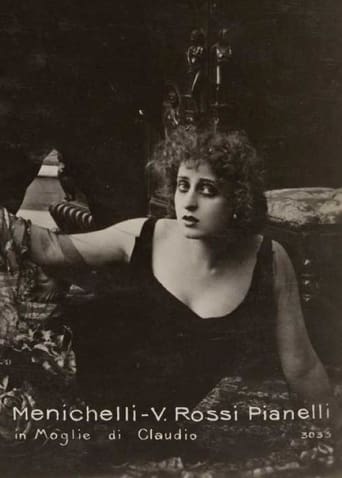
Esperia Sperani appears once in this catalog: La Moglie di Claudio (1918). Her known filmography consists primarily of the 1918 Italian silent film 'La Moglie di Claudio' (Claudio's Wife), which appears to be her only credited screen appearance. As was common with many actors of this period, particularly in Italian cinema, detailed records of her career and personal life are scarce. Her brief film career coincided with the final years of World War I, a time when Italian cinema was transitioning from its early golden age to a period of decline due to the war's economic impact. Like many silent era actors whose careers were cut short or never fully developed, her contributions to cinema remain largely undocumented in mainstream film histories. The limited available information suggests she was one of countless performers who participated in the vibrant but often poorly documented early Italian film industry.
The Craft
On Screen
Typical of Italian silent era actors, likely emphasized dramatic gestures and facial expressions to convey emotion without dialogue
Milestones
- Appeared in 'La Moglie di Claudio' (1918)
Best Known For
Iconic Roles
Must-See Films
Why They Matter
Impact on Culture
Esperia Sperani's cultural impact is difficult to assess due to the extremely limited documentation of her career. As a minor figure in Italian silent cinema, she represents the countless anonymous performers who contributed to the film industry during its formative years. Her appearance in 'La Moglie di Claudio' places her within the context of post-World War I Italian cinema, a period marked by economic challenges and industry decline. While she may not have achieved lasting fame, performers like her were essential to the production of films that entertained audiences during a tumultuous period in European history.
Lasting Legacy
Esperia Sperani's legacy is primarily that of an obscure figure from the silent era, representative of the many actors whose contributions to early cinema have been largely lost to time. Her brief appearance in the historical record serves as a reminder of the vast number of performers who participated in cinema's early decades but whose stories remain untold. For film historians and researchers, she represents the challenges of documenting and preserving the complete history of early film, particularly in national cinemas where record-keeping was inconsistent.
Who They Inspired
Given the brevity of her documented career and the lack of information about her work, it's unlikely that Esperia Sperani had a significant influence on subsequent performers or filmmakers. However, like all actors of her era, she was part of the generation that helped establish the art and craft of film acting, contributing to the development of cinematic techniques that would influence future generations.
Off Screen
Very little is documented about Esperia Sperani's personal life, which is common for actors who had brief careers in the early Italian film industry. Records from this period are often incomplete, particularly for actors who did not achieve lasting fame.
Did You Know?
- Appeared in films during the final year of World War I
- Her only known film 'La Moglie di Claudio' was produced during a challenging period for Italian cinema
- Like many Italian actors of her era, her career was likely affected by the economic hardships following WWI
- The scarcity of information about her is typical of minor actors from early Italian cinema
- Her stage name 'Esperia' is the Italian poetic name for Italy, derived from 'Hesperia' in Greek mythology
- 1918 was a transitional year for cinema, with some films still being produced in the silent format while talkies were on the horizon
Frequently Asked Questions
Who was Esperia Sperani?
Italian silent film actress active in 1918, known primarily for her appearance in the film 'La Moglie di Claudio'. Very little is documented about her life and career, which was extremely brief and typical of many minor actors from early Italian cinema.
What films is Esperia Sperani best known for?
Titles linked here include La Moglie di Claudio (1918).
When was Esperia Sperani born and when did she die?
Specific birth and death dates for Esperia Sperani are not documented in available historical records. This lack of personal information is common for minor actors from the early Italian film industry, where record-keeping was often incomplete.
What awards did Esperia Sperani win?
There are no documented awards or nominations for Esperia Sperani. During the silent era, particularly in Italy, formal award systems for film performances were not yet established as they would be in later decades.
What was Esperia Sperani's acting style?
While specific details about her acting style are not documented, as a silent film actress in 1918 she would have likely employed the dramatic gestures and expressive facial techniques typical of the era to convey emotion without dialogue.