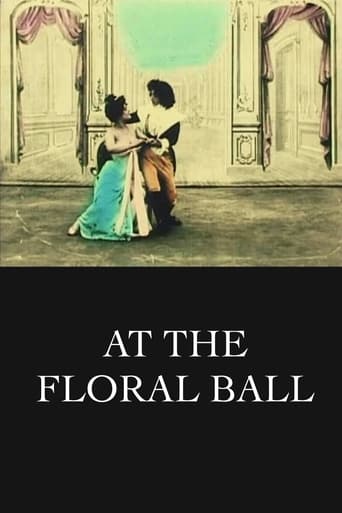
Miss Lally
Actor
- Active
- 1900-1900
Films 1
About Miss Lally
Miss Lally is a very early film performer associated with one of the surviving and best-known actuality-style dance films of the silent era, At the Floral Ball (1900). Because the filmography linked to her name is extremely limited and early cinema records from this period are often fragmentary, very little biographical information about her life has survived in standard film reference sources. She appears in the historical record primarily as a credited or identified screen performer in a short, early motion picture rather than as a later star of the developing film industry. Her presence in At the Floral Ball places her among the small group of performers who helped define cinema’s first experiments with staged entertainment, performance recording, and on-screen spectacle around the turn of the 20th century. Beyond this single documented credit, no reliable evidence has been found in major reference sources for her full legal name, birth details, training, later career, or personal life. As a result, Miss Lally is best understood as a minor but historically significant figure in cinema’s earliest years, representative of the many performers whose names are preserved only because they appeared in pioneering films. Her contribution lies less in an extensive body of work than in her participation in the foundational period when motion pictures were still discovering how to present theatrical and popular performance on film.
More about Miss Lally
On screen
No detailed description of Miss Lally's acting style survives in reliable reference sources. Given the date of her known film credit, her performance would have belonged to the highly expressive, stage-influenced style common in early silent cinema, where movement, gesture, and visual clarity were more important than spoken dialogue. Her work likely emphasized posed or choreographed display suited to the film's floral-ball presentation rather than character-based psychological acting.
In film history
Miss Lally's cultural importance is tied to the historical significance of At the Floral Ball and to the broader emergence of screen performance at the dawn of the 20th century. Even though she is not a documented star with a large surviving body of work, her appearance in an early film helps illustrate how cinema first captured popular entertainment, dance, and staged pageantry for mass audiences. Performers like Miss Lally contributed to the visual grammar of early film by showing that motion pictures could preserve ephemeral live performance and create a new kind of spectacle independent of the theater. Her name also underscores how much of early cinema history depends on fragmentary records, where a single surviving credit can preserve the memory of a performer otherwise lost to history.
Later reputation
Miss Lally's legacy is primarily archival and historical rather than star-based. She remains part of the surviving record of cinema's infancy, when many performers were not yet broadly promoted by name and when documentation was often incomplete or inconsistent. For film historians, her credit in At the Floral Ball serves as evidence of the diversity of early screen performers and the kinds of stage-oriented pieces that helped establish film as an entertainment medium. Her continued presence in film databases reflects the importance of preserving even the smallest documented contributions to silent-era history.
Influence
There is no documented direct influence from Miss Lally on later actors or filmmakers that can be verified from reliable sources. Her broader influence is indirect: by participating in one of cinema's earliest preserved performance films, she is part of the lineage that demonstrated how theatrical and dance performance could be translated to the screen. That early experimentation informed the development of silent acting conventions, visual storytelling, and filmed entertainment as a commercial form. In this sense, her work belongs to the foundation on which later generations of screen performers built more elaborate techniques.
Off screen
No dependable biographical record survives detailing Miss Lally's personal life, family background, marriage, or later years. Standard film reference materials do not provide information about her education, upbringing, or any off-screen pursuits. Because early film documentation was inconsistent and many performers in 1900 were not yet treated as public stars, it is possible that she remained a local stage or exhibition performer whose identity was not extensively recorded. At present, her private life remains unknown in verifiable sources.
Credits
- Appeared in At the Floral Ball (1900), one of the surviving films associated with the very earliest years of cinema.
- Represents an early on-screen performer from the transitional period when film was moving from novelty recording toward staged entertainment.
- Documented in historical film records despite the scarcity of surviving biographical information, making her a traceable figure from cinema's formative era.
Roles
- Performer in At the Floral Ball (1900)
Films
- At the Floral Ball (1900)
Notes
- Miss Lally is associated with one of the earliest years in film history, 1900.
- Her known film At the Floral Ball belongs to the period when movies were still brief, experimental, and often performance-based.
- She is one of many early cinema figures whose surviving documentation is limited to a single credit or a very small number of records.
- Her name appears in film history despite the absence of a fuller biographical profile, which is common for performers from the silent era's earliest years.
- Because no verified birth or death information is available, she remains one of the more enigmatic figures in early cinema records.
- Her documented activity predates the establishment of the modern Hollywood star system by more than a decade.
Questions
Who was Miss Lally?
Miss Lally was an early cinema performer known for appearing in At the Floral Ball (1900). Very little biographical information survives about her, but she is part of the earliest recorded generation of screen actors. Her historical importance comes from her presence in one of the formative years of motion picture production.
What films is Miss Lally best known for?
She is best known for At the Floral Ball (1900), which is the only securely identified film credit associated with her in the available record. No additional verified filmography has been established in standard references. As a result, her known screen career is extremely brief in surviving documentation.
When was Miss Lally born and when did she die?
Her birth and death dates are not currently documented in reliable surviving sources. Early film records often preserve the names of performers without personal biographical details. Until stronger archival evidence appears, both her birth and death information remain unknown.
What awards did Miss Lally win?
No awards or nominations are known for Miss Lally. This is not unusual for performers from the earliest years of cinema, when formal award systems did not yet exist in the modern sense. Her recognition is historical rather than award-based.
What was Miss Lally's acting style?
No detailed description of her acting style has survived, but her work would have reflected the expressive, stage-influenced performance style typical of very early silent films. In 1900, actors relied on gesture, posture, and clear visual movement rather than spoken dialogue. Her performance likely fit the presentation style of a filmed dance or ball scene.
What is Miss Lally's legacy in film history?
Her legacy lies in her place among the earliest documented screen performers. Even with only a single known film credit, she helps illuminate how motion pictures evolved from simple recorded spectacles into a new art form. For historians, names like hers are valuable because they preserve the human presence behind cinema's earliest experiments.