Miss Julyett
Actor
- Active
- 1900-1900
Films 1
About Miss Julyett
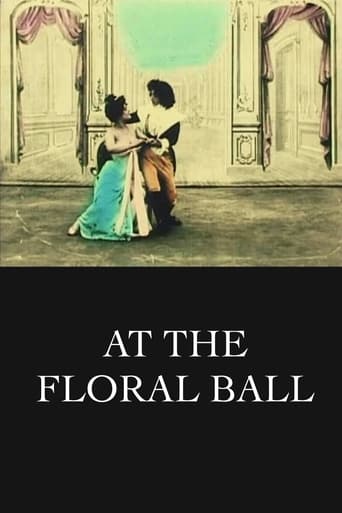
Miss Julyett appears in surviving film references as a performer credited in the 1900 short At the Floral Ball, a very early motion-picture title from the turn of the century. Beyond that single credit, reliable biographical documentation about her life, background, and later career is extremely limited or unavailable in standard film reference sources. Her screen presence belongs to the earliest phase of cinema, when performers were often listed only by professional names, and many working actors from the era left little archival trace. Because of the fragmentary record, it is not currently possible to reconstruct a full career arc with confidence or to verify additional film appearances. What can be said with certainty is that she was active in one of the formative years of film history and participated in a production associated with early silent-era entertainment and filmed stage-style performance. Like many performers from 1900, she likely worked during a period when screen acting was still developing its own conventions and when credits were often sparse. Miss Julyett is therefore best understood as a little-documented early cinema personality whose surviving significance comes from her appearance in one of the very earliest surviving cataloged motion pictures.
More about Miss Julyett
In film history
Miss Julyett's cultural impact is difficult to measure in the conventional sense because the surviving record preserves only a single film credit and no confirmed biographical trail. Nevertheless, her name belongs to the foundational layer of cinema history: the period when films were often brief, promotional, or performance-based, and when many actors were only sporadically documented. For researchers and historians, such names are important because they remind us how much of early film culture remains partially lost or under-credited. Even a minimal surviving credit helps map the personnel who participated in cinema's first decade and supports broader scholarship on early screen exhibition, performance practices, and crediting conventions.
Later reputation
Her legacy is primarily archival rather than celebrity-based. Miss Julyett remains part of the historical record of early motion pictures, preserving evidence that named performers were already active in film by 1900. In film history terms, that makes her a small but meaningful point of reference for the study of silent-era and pre-narrative cinema, when many careers were undocumented and many films themselves are lost or only partially cataloged. Her surviving credit ensures that she is not entirely anonymous within the early-cinema canon, even though her fuller life story has not yet been recovered.
Influence
There is no documented evidence that Miss Julyett directly influenced other actors or filmmakers, and no surviving record of a teaching, mentoring, or collaborative role. Her influence is therefore indirect and historical: she stands as one of the many early performers whose existence helps define the beginnings of screen acting as a profession. For scholars, her presence contributes to the broader understanding of how early performers shaped cinema before the star system became formalized.
Off screen
No dependable biographical record of Miss Julyett's personal life has been located in standard classic-cinema references. Her family background, relationships, residence, and later life are not documented in the sources available for this identification. This is common for very early film performers, especially those credited under a professional or stage name and working in the first years of motion-picture production.
Credits
- Credited performer in the early film At the Floral Ball (1900)
- Represents one of the many named performers working in cinema during the medium's first era of public exhibition and short-form production
- Associated with the earliest surviving period of screen performance when film acting was transitioning from stage-based presentation to specifically cinematic expression
Roles
- Performer in At the Floral Ball (1900)
Films
- At the Floral Ball (1900)
Notes
- Miss Julyett is associated with one of the earliest years in film history, 1900.
- Her recorded screen work appears in a period when many performers were identified by stage names or partial credits.
- At the Floral Ball (1900) places her in the formative silent-film era, before feature-length storytelling became standard.
- Very few early performers from this period have surviving biographical details, making her a historically elusive figure.
- Her film credit is useful for researchers studying the transition from stage performance to motion-picture acting.
- She is one of many early cinema names whose legacy survives mainly in film catalogs rather than in personal archives.
Questions
Who was Miss Julyett?
Miss Julyett was an early film performer credited in At the Floral Ball (1900). Very little biographical information has survived about her, so she is best known as a little-documented actor from cinema's earliest years.
What films is Miss Julyett best known for?
She is currently known for At the Floral Ball (1900), which is the only confirmed film credit available in the record consulted. No additional filmography can be verified with confidence at this time.
When was Miss Julyett born and when did she die?
Her birth and death dates are not presently documented in reliable classic-cinema references. The surviving record does not provide enough verified information to establish those details.
What awards did Miss Julyett win?
No awards or nominations are known for Miss Julyett. Early film performers from this period were rarely formally awarded, and no honors have been documented for her in available sources.
What was Miss Julyett's acting style?
Her acting style cannot be assessed in detail because no descriptive critical record has survived. Given the date of her credited film, her performance would have belonged to the very early silent-film tradition, which was still closely tied to stage presentation and pantomime.
Why is Miss Julyett important to film history?
She is important as part of the earliest documented generation of screen performers. Even with minimal surviving information, her credit helps historians trace the development of cinema at the turn of the 20th century.
Did Miss Julyett work with any famous directors or actors?
No collaborators can be verified from the available record. Because her surviving filmography is so limited, there is not enough evidence to identify frequent partners or major professional relationships.