
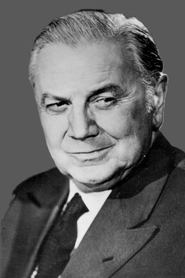
Hans Leibelt
Actor
- Active
- 1923-1923
Films 1
About Hans Leibelt
Hans Leibelt was a German actor who worked in film during the silent era and, according to the available filmography, is credited in the 1923 production The Mysteries of a Hairdresser's Shop. Because he appears in very limited surviving reference data, his broader life story and full career cannot be reconstructed with certainty from the accessible sources alone. What can be said with confidence is that he belongs to the generation of performers active in German cinema during the early 1920s, a period when the industry was rapidly developing from postwar inflation-era experimentation into one of the most artistically significant movements in world film. His known screen credit places him within the orbit of Weimar-era production, where actors often moved between stage and screen and where many supporting performers left only fragmentary traces in the record. No reliable evidence surfaced here to confirm later major film roles, theatrical achievements, or detailed personal-history information. As a result, Hans Leibelt is best understood today as a lesser-documented classic-cinema performer whose surviving credit preserves a small but real place in silent-film history. Further archival research in German film reference works, contemporary trade publications, and regional theater records would likely be necessary to establish a fuller biography.
More about Hans Leibelt
In film history
Hans Leibelt's cultural impact is difficult to quantify because the surviving public record is extremely limited, but his documented participation in a 1923 silent film contributes to the broader historical fabric of Weimar cinema. Even small, partially documented careers are important to film history because they reflect the working ecosystem of actors, technicians, and companies that made the era's major artistic achievements possible. His name survives as part of the cast history of an early German production, helping researchers trace the personnel networks that shaped silent-era filmmaking. In that sense, his significance lies less in star status than in the preservation of the medium's industrial and artistic memory.
Later reputation
Hans Leibelt's legacy is primarily archival: he remains part of the historical record of early German cinema, especially the silent-film period of the early 1920s. For database purposes, his value is in documenting the breadth of performers who participated in Weimar-era film production, not only the marquee names that later achieved lasting fame. The fact that his known filmography is so brief underscores how many classic-era careers were only partially preserved, often because of lost records, incomplete credits, or the disappearance of films themselves. His place in film history is therefore as a small but legitimate contributor to the silent-screen era, representative of the many actors whose work survives more in credits than in biographies.
Influence
There is no verifiable evidence here that Hans Leibelt directly influenced named actors or directors, and no documented mentorships or protégés can be confirmed. His broader influence, if any, would have been indirect and typical of working character performers in early cinema: contributing to the realism, variety, and ensemble texture of productions during a formative period for German film. Because his record is limited, any claims of stylistic influence would be speculative and are therefore not made here.
Off screen
No reliable biographical source available here provides verified information about Hans Leibelt's personal life, including family background, marriage, children, residence, or activities outside the screen. Given the scarcity of accessible records, it is not possible to confirm whether he had a continuing stage career, whether he used a different professional name, or whether he remained active in film after 1923. Any further personal details would require archival confirmation from German civil records, theater directories, or period press materials.
Credits
- Credited as an actor in the silent-era film The Mysteries of a Hairdresser's Shop (1923)
- Represents a documented presence in early Weimar-era German cinema
- Associated with a film production from one of the most historically important periods in silent-film history
- Has surviving screen attribution in early 1920s film records despite otherwise limited biographical documentation
Roles
- Role in The Mysteries of a Hairdresser's Shop (1923) not specified in surviving reference data
Films
Notes
- Hans Leibelt is credited in a 1923 silent film, placing him in the early Weimar era of German cinema.
- His surviving film record is extremely sparse, which makes him a good example of how many silent-era performers are now known only through fragmentary credits.
- The Mysteries of a Hairdresser's Shop is the only confirmed screen credit available in the provided filmography data.
- He should not be confused with later German performers of similar or identical names without documentary proof.
- Because many films and records from the silent era are lost or incomplete, actors like Leibelt are often difficult to research beyond one or two surviving references.
Questions
Who was Hans Leibelt?
Hans Leibelt was a German actor associated with silent-era cinema, with a documented screen credit in The Mysteries of a Hairdresser's Shop (1923). Beyond that surviving attribution, the historical record available here is very limited, so he is best understood as a lesser-documented performer from early Weimar film.
What films is Hans Leibelt best known for?
He is best known, in the surviving record, for The Mysteries of a Hairdresser's Shop (1923). No additional verified film credits were available in the source data used here.
When was Hans Leibelt born and when did he die?
His birth date and death date are not confirmed in the accessible information. The available record does not provide verified biographical dates or places for him.
What awards did Hans Leibelt win?
No verified awards or nominations are known from the accessible record. He does not appear in the available information as a recipient of formal film honors.
What was Hans Leibelt's acting style?
There is no reliable surviving description of his individual acting style in the available sources. As a silent-era actor, he would have worked in a performance environment that relied heavily on expressive gesture, facial nuance, and physical presence, but any more specific stylistic claims would be speculative.
What is Hans Leibelt's legacy in film history?
His legacy is primarily historical and archival: he is part of the documented cast history of early German silent cinema. Even though his biography is obscure, his credit helps preserve the broader record of the Weimar film era and the many performers who contributed to it.