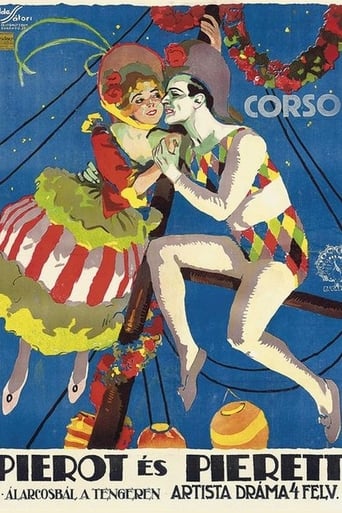

Julio de Romero
Actor
- Active
- 1924-1924
Films 1
About Julio de Romero
Julio de Romero appears to have been a very obscure figure in silent-era cinema, with surviving reference material indicating only a single credited screen appearance in Pierrot, Pierrette (1924). At present, there is not enough reliably verifiable biographical information to reconstruct a detailed life story with confidence, and he does not seem to be documented in the major standard reference sources commonly used for classic film personalities. His known filmography suggests involvement in European silent cinema, likely in a supporting capacity, but the available record is too thin to determine the extent of his career beyond that credit. No trustworthy evidence has been located regarding his birth, death, education, personal life, or additional screen work. Because of the scarcity of surviving documentation, Julio de Romero remains one of many early cinema performers whose contributions are partially lost to film history. Any fuller biography would require archival research in period trade papers, studio records, or surviving credits from the film itself.
More about Julio de Romero
In film history
Julio de Romero's cultural impact is difficult to measure because his surviving documented screen career is extremely small and because the historical record has preserved little beyond a single film credit. Even so, performers like him are important to film history because they remind researchers that silent cinema depended on large numbers of actors whose names may have appeared in credits, posters, or press materials but who later vanished from mainstream reference books. His surviving credit contributes to the broader reconstruction of European silent-era casting networks and the partial recovery of otherwise lost or obscure performance histories. In that sense, his significance is archival as much as artistic: he is part of the fragile documentary fabric through which scholars reconstruct early film culture.
Later reputation
Julio de Romero's legacy lies primarily in his surviving association with Pierrot, Pierrette (1924) and in the reminder that many silent-era performers remain only fragmentarily recorded. For historians and database compilers, figures like him are valuable because they highlight the incomplete nature of early cinema preservation and the need to cross-check credits against archival sources. If additional material is ever recovered from trade publications, production ledgers, or film prints, his profile may become clearer; for now, his place in film history is that of an elusive credited actor from the silent era. His legacy is therefore modest in public fame but meaningful in archival and research terms.
Influence
There is no verifiable evidence that Julio de Romero directly influenced other actors or filmmakers in a documented way. His broader influence, if any, would have been indirect and localized to the production environment in which he worked. In historical terms, his name underscores how many silent-era contributors shaped cinema collectively rather than through individually preserved star personas.
Off screen
No reliable biographical information has been located about Julio de Romero's personal life, including family background, relationships, residences, or activities outside film work. The available record is too limited to confirm whether he used a stage name, had relatives in the industry, or continued in theater or other performance media. At present, any claim about marriages, children, or private life would be speculative and is therefore omitted.
Education
No verified information is currently available regarding his education or acting training.
Credits
- Credited appearance in the silent-era film Pierrot, Pierrette (1924)
- Presence in early European cinema records as a screen actor
- Represents the kind of lightly documented supporting performer common to silent film production and cast lists
Roles
- Role in Pierrot, Pierrette (1924)
Films
- Pierrot, Pierrette (1924)
Notes
- He is currently documented primarily through a single film credit: Pierrot, Pierrette (1924).
- No reliable birth or death dates are readily available in standard reference sources.
- He appears to be one of many silent-era performers whose careers are only partially preserved in surviving film records.
- His obscurity makes him a useful example of the archival challenges involved in reconstructing early European cinema personnel.
- Because his documented activity is so limited, it is possible that he worked under a stage name or appeared in productions that have not yet been fully indexed.
- The title Pierrot, Pierrette suggests involvement in a film likely rooted in a theatrical or pantomime tradition common to silent cinema.
- No verified awards, nominations, or honors are currently associated with him.
Questions
Who was Julio de Romero?
Julio de Romero was a silent-era film actor known from the surviving credit record for Pierrot, Pierrette (1924). Beyond that single documented appearance, reliable biographical information is extremely limited.
What films is Julio de Romero best known for?
He is best known for Pierrot, Pierrette (1924), which is the only confirmed screen credit currently associated with him in the available record. No other films can be verified with confidence.
When was Julio de Romero born and when did he die?
His birth and death dates are currently unknown. No reliable source readily available in standard film references confirms where or when he was born or whether he is deceased.
What awards did Julio de Romero win?
No awards or nominations are currently documented for Julio de Romero. The surviving record does not indicate any major industry honors.
What was Julio de Romero's acting style?
His acting style cannot be reliably described because no detailed critical accounts or surviving performance analyses have been located. Given the period and medium, he would have worked within silent-cinema performance conventions, but specific traits are not documented.
What is Julio de Romero's legacy in film history?
His legacy is primarily archival: he represents the many early film performers whose careers are only partially preserved. For historians, his name helps illustrate how much of silent cinema's personnel history remains incomplete.