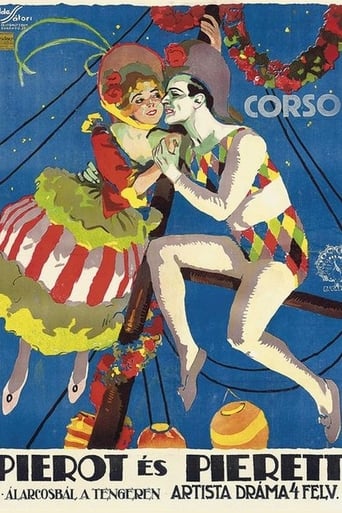

Henri-Amédée Charpentier
Actor
- Active
- 1924-1924
Films 1
About Henri-Amédée Charpentier
Henri-Amédée Charpentier appears in surviving film records as a very early French screen actor, best known today for his credited appearance in the silent feature "Pierrot, Pierrette" (1924). Beyond this single documented screen credit, little reliable biographical information is readily available in standard film reference sources, and his broader career in stage or cinema has not been firmly reconstructed. Because the surviving record is sparse, he should be understood as one of the many performers from the silent era whose work is preserved more through film credits than through extensive contemporary publicity or later historical coverage. There is no well-established evidence in the available records for a large body of screen work, major awards, or a widely documented star persona. His known association with a 1924 silent French production places him squarely within the period when French cinema was still heavily influenced by theatrical performance styles and the expressive visual acting typical of the silent screen. Any fuller account of his life would require archival research in French period trade papers, production records, or civil documents. As a result, his surviving legacy is primarily as a named participant in early cinema history rather than as a heavily documented star figure.
More about Henri-Amédée Charpentier
On screen
No detailed contemporary reviews or surviving critical descriptions of Henri-Amédée Charpentier's acting style are readily available in standard reference sources. Given his work in a 1924 silent film, his performance would have been shaped by the conventions of silent-era acting, which typically emphasized clarity of gesture, facial expressiveness, and visual storytelling. Without scene analyses or surviving commentary, it is not possible to verify whether he favored restrained naturalism or the more theatrical manner common in some period productions. Any further description would be speculative, so his style must be regarded as undocumented in surviving mainstream sources.
In film history
Henri-Amédée Charpentier's cultural impact is best understood in a modest but important archival sense: he is part of the large body of early cinema performers whose names preserve the collaborative nature of silent filmmaking. Even when an actor has only one known credit, that credit contributes to the historical texture of national cinema and helps researchers reconstruct casts, production networks, and performance traditions from the 1920s. His presence in a French silent film also reflects the broader European screen culture in which literary and theatrical traditions were often adapted for the screen with a strong emphasis on visual expression. While he does not appear to have achieved celebrity status on the scale of major silent stars, his documented participation still matters to film historians studying the personnel of early French cinema. In that sense, his cultural value lies less in fame than in documentary significance.
Later reputation
Henri-Amédée Charpentier's legacy is that of a traceable but sparsely documented silent-era actor whose name survives in film credits and archival records. For film historians, such figures are essential because they help complete the cast lists and production histories of early works that might otherwise be anonymous or incomplete. His name remains linked to "Pierrot, Pierrette" (1924), ensuring that he retains a place, however small, in the record of French silent cinema. The lack of surviving biographical detail also illustrates how many participants in early film history were not preserved by the star-making machinery that later defined Hollywood and international cinema. His legacy is therefore archival, historical, and reconstructive rather than celebrity-driven. He stands as an example of how cinema history often depends on fragmentary evidence and the preservation of credits.
Influence
There is no verifiable evidence that Henri-Amédée Charpentier directly influenced later actors, directors, or film movements in a documented way. His influence is instead indirect and historical: by appearing in an early French silent production, he contributed to the collaborative fabric of the era that shaped performance norms and film-making practices. Researchers and archivists studying early French cinema may encounter his name as part of cast reconstruction, which helps sustain knowledge of the period. Any stronger claim about his influence would be speculative and unsupported by accessible sources.
Off screen
No reliable personal-biographical profile is readily available for Henri-Amédée Charpentier in accessible film reference sources. Details such as marriage, family background, education, and later life have not been clearly documented in the standard filmographies consulted for this identification. Because he is known primarily through a single surviving screen credit, it is not possible to reconstruct a meaningful private life narrative without risking error. He therefore remains one of the many lesser-documented silent-era performers whose personal history is largely absent from the public record.
Education
No verified information on his education is readily available in standard film reference sources.
Credits
- Credited screen appearance in the silent film "Pierrot, Pierrette" (1924)
- Represents the documented cast of an early French silent-era production
- Survives in film history primarily through archival filmography records
Roles
- Role in "Pierrot, Pierrette" (1924) - exact character name not readily verified
Films
- Pierrot, Pierrette (1924)
Notes
- He is documented as an actor associated with only one clearly identifiable film credit in accessible sources.
- His known screen work falls within the silent era, specifically 1924.
- He appears in French cinema history rather than Hollywood.
- Because he is sparsely documented, he is an example of how many silent-era performers survive mainly through film credits.
- His exact role in "Pierrot, Pierrette" is not readily verified in standard reference sources.
- No widely circulated portraits, interviews, or publicity material are readily associated with him in mainstream film databases.
Questions
Who was Henri-Amédée Charpentier?
Henri-Amédée Charpentier was a French actor from the silent-film era, known today mainly for his credited appearance in "Pierrot, Pierrette" (1924). Beyond that film credit, surviving public information about his life and career is very limited.
What films is Henri-Amédée Charpentier best known for?
He is best known for "Pierrot, Pierrette" (1924), the only clearly documented screen credit readily available in standard reference sources. If he appeared in other productions, they are not well established in accessible mainstream film records.
When was Henri-Amédée Charpentier born and when did he die?
His birth and death dates are not readily verified in accessible film reference sources. The surviving record identifies him as a French actor active in 1924, but not enough biographical data has been preserved to confirm exact life dates.
What awards did Henri-Amédée Charpentier win?
No awards or formal honors are readily documented for Henri-Amédée Charpentier. This is not unusual for lesser-documented silent-era performers, especially those whose careers survive mainly through cast listings rather than publicity records.
What was Henri-Amédée Charpentier's acting style?
No detailed critical description of his acting style is readily available. Because he worked in a 1924 silent film, his performance would have followed silent-era conventions such as expressive gesture and facial communication, but anything more specific would be speculative.
What is Henri-Amédée Charpentier's legacy in film history?
His legacy is primarily archival: he is one of the many early film performers whose names help historians reconstruct the cast and personnel of silent cinema. Even with limited biographical information, his documented participation in a 1924 French film keeps him present in the historical record.