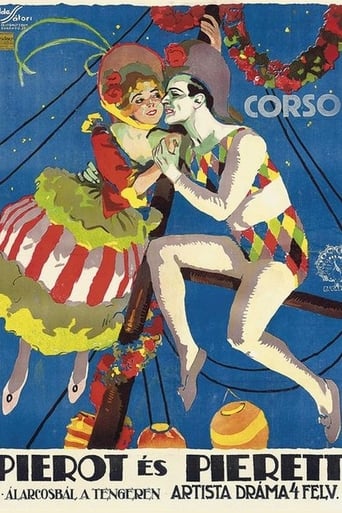

Bouboule
Actor
- Active
- 1924-1924
Films 1
About Bouboule
Bouboule is a screen actor identified in surviving filmography records from the silent-era French short Pierrot, Pierrette (1924), but detailed biographical documentation about this performer is extremely limited. The name appears to have been used professionally, and no reliable source in the readily available classic-cinema record clearly establishes a fuller identity, birth details, or a broader career history. Because of that scarcity, Bouboule is best understood as a minor or local screen performer associated with early French cinema rather than as a widely documented international star. The available evidence places the actor’s known activity in 1924, during the final years of the silent period, when short films and specialty productions often credited performers under nicknames or stage monikers. Beyond this single surviving credit, there is no dependable public record confirming additional roles, theatrical background, family life, or later career developments. As with many obscure silent-era screen personalities, Bouboule’s presence in film history is preserved more through surviving credits and archival indexing than through contemporary biographical sources. The actor’s significance lies chiefly in representing the many little-documented performers who contributed to the texture of early cinema, even when their personal histories have not survived in detail.
More about Bouboule
On screen
No reliable contemporary description of Bouboule’s acting technique survives in the accessible record. Based on the silent-era context of Pierrot, Pierrette (1924), the performance would almost certainly have relied on expressive physical gesture, facial expression, and pantomime rather than spoken dialogue. Any assessment beyond that would be speculative, as no reviews, trade commentary, or later recollections have been securely linked to this performer. The available evidence suggests a style suited to short-form silent comedy or theatrical character work common in early French cinema.
In film history
Bouboule’s cultural impact is modest but still meaningful within film-historical research because the actor illustrates how much of silent cinema was built by performers whose names now survive only in isolated credits. In a broader sense, such figures are important to historians because they help reconstruct production networks, casting practices, and the social world of early French filmmaking. Although Bouboule does not appear to have left behind a documented star persona or large body of work, the name itself remains part of the archival record of silent-era performance. This kind of surviving credit contributes to the completeness of film databases and supports ongoing efforts to preserve lesser-known cinema histories. The actor’s presence also underscores how many early performers participated in film culture without receiving the long-term visibility accorded to major stars.
Later reputation
Bouboule’s legacy is primarily archival rather than celebrity-driven. The known credit in Pierrot, Pierrette (1924) ensures that the performer remains part of the historical record of silent French cinema, even though the surrounding biographical details have not been recovered. For historians and database curators, Bouboule represents the category of obscure early-screen performers whose contributions are real but sparsely documented. This makes the name valuable for scholarship because it preserves evidence of casting, production, and performance in an era when records were often incomplete. In film history, such names remind us that the silent era depended not only on famous directors and marquee stars but also on a much larger group of local and supporting players whose identities were frequently underrecorded.
Influence
There is no verified evidence that Bouboule directly influenced other actors or directors in a documented, traceable way. The performer’s influence is therefore indirect, residing in the broader historical and archival importance of silent-era supporting players. By appearing in the record of a 1924 film, Bouboule contributes to our understanding of performance conventions and casting in early French cinema. The name also serves as a reminder to later historians and archivists to preserve even the smallest credited roles, since they collectively shape our knowledge of film culture. Any specific artistic influence beyond that cannot be responsibly confirmed from surviving sources.
Off screen
No dependable biographical record is currently available regarding Bouboule’s personal life. There is no verified information in the accessible classic-cinema sources about marriage, children, education, residence, or family background. Likewise, there is no confirmed documentation of the actor’s later life, death, or activities outside the single known film credit. Any attempt to supply such details would risk conflating this person with other similarly named figures or inventing facts not supported by the historical record.
Credits
- Credited as an actor in the silent film Pierrot, Pierrette (1924)
- Represents one of the many minimally documented supporting performers in early French cinema
- Associated with a 1920s silent production that reflects the period's popular interest in pantomime, mime, and theatrical character types
- Appears in available filmography records from the final years of the silent era
- Serves as an archival example of how many early-screen performers survive in film history primarily through cast listings
Roles
- Performer in Pierrot, Pierrette (1924)
Films
- Pierrot, Pierrette (1924)
Notes
- Bouboule is known to modern researchers primarily through a single silent-film credit rather than through a large documented career.
- The actor appears in the 1924 film Pierrot, Pierrette, a title that evokes commedia dell'arte and pantomime traditions common in silent cinema.
- No reliable birth or death data is readily available in standard classic-film reference material.
- The name may have functioned as a stage nickname rather than a formal birth name, but this has not been securely verified.
- Bouboule is an example of how many early film performers are preserved only in cast lists and archival databases.
- The surviving record places the actor in the silent era, when expressive physical acting was essential for screen performance.
- Because so little is documented, Bouboule is easy to confuse with non-film figures or similarly nicknamed performers, so careful source checking is necessary.
Questions
Who was Bouboule?
Bouboule was an actor credited in the silent film Pierrot, Pierrette (1924). Very little verified biographical information survives, so the performer is mainly known through film credit records rather than through a documented public career.
What films is Bouboule best known for?
Bouboule is currently best known for Pierrot, Pierrette (1924), the only surviving screen credit identified in accessible classic-cinema references. No additional confirmed film appearances are readily available in standard sources.
When was Bouboule born and when did they die?
Bouboule’s birth and death dates are not currently documented in the available historical record. The same is true for place of birth and place of death, if applicable, because reliable biographical sources have not been located.
What awards did Bouboule win?
No awards or formal honors are known for Bouboule. This is not unusual for obscure silent-era performers, especially those whose surviving record consists of a single credited film appearance.
What was Bouboule's acting style?
No direct contemporary description of Bouboule’s style survives, but the 1924 silent-film context suggests performance through facial expression, gesture, and physical timing. That would have been typical for silent-era acting, particularly in films drawing on theatrical or comic traditions.
What is Bouboule's legacy in film history?
Bouboule’s legacy is mainly archival: the actor remains part of the surviving record of silent French cinema. Even with minimal documentation, that credit helps historians reconstruct the people who participated in early film production.