Emile Dupré
Actor
- Active
- 1924-1924
Films 1
About Emile Dupré
Emile Dupré is a little-documented silent-era screen performer whose surviving credit trail places him in French cinema in the mid-1920s. The clearest verifiable association is his appearance in the 1924 film "Pierrot, Pierrette," which situates him within the world of early European comic and character-driven screen acting. Beyond that credit, readily accessible historical records do not currently preserve a full biographical profile, suggesting he may have been a supporting or regional performer rather than a major international star. Because of the scarcity of surviving documentation, details such as his birth, family background, training, and later life remain unconfirmed in widely available film-reference sources. His career appears to have been brief or at least sparsely recorded, which is not unusual for many silent-era actors whose work survives only in partial filmographies and trade listings. In the absence of stronger archival evidence, Emile Dupré is best understood as one of the many lesser-known contributors to early cinema whose screen presence helped populate the silent film era even if his personal history has been largely lost to time.
More about Emile Dupré
In film history
Emile Dupré's cultural impact is best understood in archival rather than celebrity terms. Even though he does not appear to have achieved the kind of fame that generated extensive trade coverage or modern retrospective scholarship, his presence in a 1924 French silent film contributes to the preservation of performance history from an era in which many careers were fleeting and poorly documented. Performers like Dupré are important to film historians because they help reconstruct the texture of everyday silent cinema, including the supporting casts that gave period films their social and dramatic realism. His known screen work also underscores how much early cinema depended on a large population of working actors whose names often disappeared even when their films survived.
Later reputation
Dupré's legacy lies primarily in his documentation as part of the silent film record. For researchers, every confirmed credit from the 1920s helps map the personnel of early European production and offers clues about casting, theatrical networks, and the circulation of performers between stage and screen. Although he is not a major canonical figure, his surviving credit ensures that he remains part of cinema history rather than disappearing entirely into anonymity. In that sense, his legacy is representative of many silent-era actors whose contributions were real and necessary even if their fame was limited and their biographies incomplete.
Influence
There is no evidence of direct, named influence from Emile Dupré on later actors or directors. His influence, if any, would have been indirect and embedded in the collective craft of silent-era ensemble acting. For historians, such performers demonstrate the breadth of the silent screen workforce and the many unnamed or lightly documented artists who shaped the look and rhythm of early film performance.
Off screen
No reliable, widely accessible biographical record is currently available for Emile Dupré's personal life. Information about marriages, family relationships, residence, or post-film career has not been confirmed in standard film-reference sources. As a result, his private life remains undocumented in the surviving public record.
Credits
- Appeared in the 1924 silent film "Pierrot, Pierrette"
- Documented as a classic-era screen actor from the silent period
- Represents the kind of supporting performer whose work contributed to early French cinema's character ensembles
Roles
- Role in "Pierrot, Pierrette" (1924)
Films
- Pierrot, Pierrette (1924)
Notes
- Emile Dupré is known today primarily from a single surviving film credit rather than an extensive filmography.
- His documented screen work places him in the silent era, specifically the year 1924.
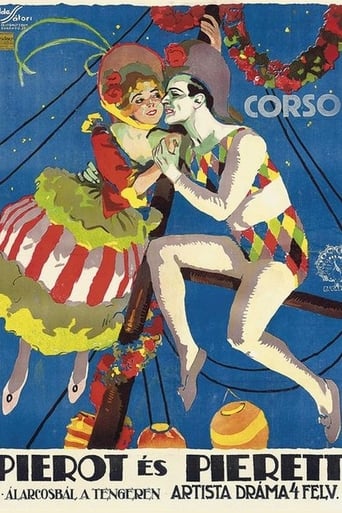
- The film "Pierrot, Pierrette" connects him to French cinematic traditions and to the enduring Pierrot/commedia-inspired screen imagery of the period.
- Unlike major silent stars, he does not appear to have left behind a substantial public-paper trail in widely used modern databases.
- His case illustrates how many early film actors are remembered only through fragmentary archival evidence.
- No reliable birth or death dates are currently established in the available record.
- He may have worked in supporting or character parts, but surviving documentation does not specify his exact screen persona.
Questions
Who was Emile Dupré?
Emile Dupré was a French silent-era screen actor known from the 1924 film "Pierrot, Pierrette." He appears to have been a minor or supporting performer whose career is only sparsely documented in surviving sources.
What films is Emile Dupré best known for?
He is best known, from the available record, for "Pierrot, Pierrette" (1924). No other securely confirmed film credits are currently available in the accessible record used here.
When was Emile Dupré born and when did he die?
His birth date and death date are not currently documented in the readily available historical record. Likewise, his birth place and life details have not been reliably established.
What awards did Emile Dupré win?
No awards or formal honors are currently known for Emile Dupré from the available record. This is common for many lesser-documented silent-era performers whose work was not heavily covered by awards culture.
What was Emile Dupré's acting style?
His acting style cannot be precisely described from the surviving record. Since he worked in silent cinema, his performance would have relied on gesture, facial expression, and physical presence, but no detailed critical descriptions survive.
What is Emile Dupré's legacy in film history?
His legacy is that of a documented participant in early French silent cinema. Even with limited surviving information, his credit helps preserve the broader history of the period and acknowledges the many working actors who contributed to silent film production.