Films
1 film
About Nikolai Larin
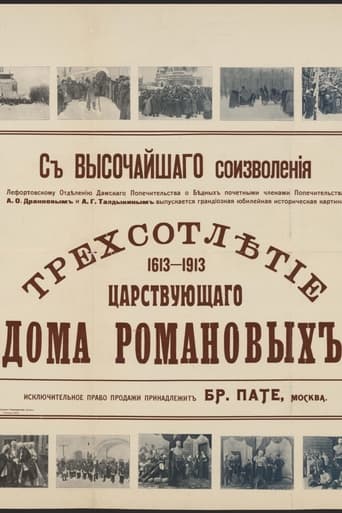
Early Russian filmmaker who emerged during the formative years of cinema in Imperial Russia. His most notable work was the 1913 documentary 'Tercentenary of the Romanov Dynasty's Accession,' which he both directed and appeared in as an actor. This film was created to commemorate the 300th anniversary of the Romanov dynasty's rule in Russia, making it a significant historical and cultural document of the era. Larin's dual role as both director and performer was not uncommon in early cinema, where filmmakers often wore multiple hats due to limited resources and the experimental nature of the medium. His work represents an important example of state-sponsored cinema in pre-revolutionary Russia, designed to celebrate and legitimize imperial power through the new medium of film. Unfortunately, like many early Russian filmmakers, Larin's career appears to have been brief, with no other known surviving works attributed to him beyond this single significant production.
The Craft
On Screen
Given the documentary nature of his only known film, Larin's acting style would have been typical of early cinema performances - likely formal, theatrical, and suited to the ceremonial nature of the subject matter. Early Russian actors often maintained exaggerated gestures and expressions to compensate for the limitations of silent film technology.
Behind the Camera
Larin's directing approach appears to have been documentary and observational, focusing on capturing the grandeur and scale of imperial celebrations. His work reflects the emerging genre of ceremonial documentary in early cinema, emphasizing spectacle, pageantry, and the visual representation of state power.
Milestones
- Directed and acted in 'Tercentenary of the Romanov Dynasty's Accession' (1913)
- Created significant documentary footage of imperial celebrations
- Participated in early Russian cinema development during the Tsarist era
Best Known For
Iconic Roles
Must-See Films
Working Relationships
Studios
Why They Matter
Impact on Culture
Nikolai Larin's work represents an important example of how early cinema was used for political and cultural purposes in Imperial Russia. His documentary of the Romanov tercentenary celebrations demonstrates how the new medium of film was employed to reinforce imperial ideology and create visual records of state ceremonies. This type of ceremonial filmmaking would influence later Soviet propaganda cinema, which similarly used documentary techniques to celebrate political milestones and reinforce state narratives.
Lasting Legacy
Larin's legacy is primarily preserved through his documentation of a pivotal moment in Russian imperial history. While his personal impact on cinema may have been limited due to his brief career, his work provides invaluable visual evidence of how the Romanov dynasty presented itself to the public during its final decades. The film serves as an important historical document that captures the pomp, ceremony, and visual culture of Imperial Russia on the eve of World War I and the subsequent revolutions.
Who They Inspired
As an early practitioner of documentary filmmaking in Russia, Larin contributed to the development of non-fiction cinema in the country. His work exemplifies the transition from actuality films to more structured documentaries that would later be perfected by Soviet filmmakers like Dziga Vertov. The ceremonial style he employed influenced how state occasions would be filmed throughout Russian and Soviet history.
Off Screen
Very little is known about Nikolai Larin's personal life, as is common with many early cinema figures from Imperial Russia whose records were lost or destroyed during the revolutionary period and subsequent historical upheavals.
Did You Know?
- The film 'Tercentenary of the Romanov Dynasty's Accession' was made to celebrate 300 years of Romanov rule in Russia
- 1913 was a significant year for Russian cinema, with increasing state involvement in film production
- The film likely captured extensive footage of Tsar Nicholas II and the imperial family
- Ceremonial documentaries like Larin's were among the earliest forms of state-sponsored cinema
- Many early Russian films from this period were lost or destroyed during the 1917 Revolution and subsequent conflicts
- The tercentenary celebrations were among the last major imperial events before World War I
- Early Russian filmmakers often had to be self-taught as formal film schools did not yet exist
- The film represents an important example of pre-revolutionary Russian cinema
- Larin's dual role as director and actor was typical of early cinema's resource constraints
Frequently Asked Questions
Who was Nikolai Larin?
Early Russian filmmaker active in 1913, known for directing and acting in the documentary 'Tercentenary of the Romanov Dynasty's Accession.' He represents one of the figures in Imperial Russian cinema during its formative years.
What films is Nikolai Larin best known for?
Titles linked here include Tercentenary of the Romanov Dynasty's Accession (1913).
When was Nikolai Larin born and when did he die?
Unfortunately, specific birth and death dates for Nikolai Larin are not available in historical records, which is common for many early Russian cinema figures whose documentation was lost during the revolutionary period.
What awards did Nikolai Larin win?
No awards or nominations are recorded for Nikolai Larin, as formal film award systems did not exist in 1913, particularly in Imperial Russia where cinema was still in its early developmental stages.
What was Nikolai Larin's directing style?
Larin's directing style was documentary and observational, focusing on capturing the grandeur of imperial ceremonies. His work exemplifies early ceremonial documentary filmmaking that emphasized spectacle and the visual representation of state power.
Why is Larin's work historically significant?
Larin's film is historically significant as it documents the Romanov dynasty's tercentenary celebrations, providing visual evidence of Imperial Russia's final years. It represents early use of cinema for state propaganda and ceremonial documentation.
What happened to early Russian cinema figures like Larin?
Many early Russian filmmakers like Larin disappeared from historical records following the 1917 Revolution, as their work was associated with the imperial regime. The chaos of revolution, civil war, and political upheaval led to the loss of many personal and professional records.