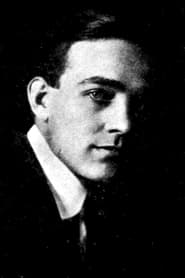
J. Morris Foster
Actor
- Active
- 1915-1915
Films 1
About J. Morris Foster
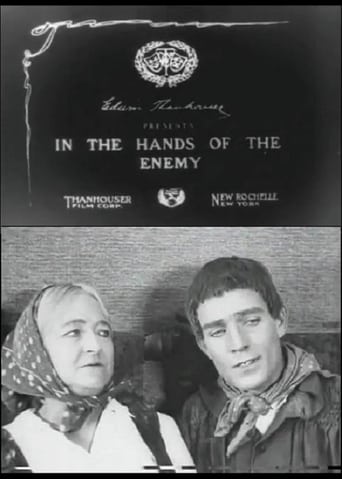
J. Morris Foster was a silent-era screen actor whose known film activity is concentrated in the mid-1910s, a period when many performers worked briefly and often anonymously in short features and two-reel dramas. He is specifically documented in the 1915 film 'In the Hands of the Enemy,' which places him within the vigorous but highly fluid early American film industry. Beyond that credit, surviving public records and standard film-reference sources provide very limited biographical detail, suggesting that he may have worked in a small number of productions or under conditions common to early cinema, where many supporting performers were not consistently credited in surviving documentation. Because the historical record is sparse, his broader life story, training, and later career cannot be securely reconstructed from readily verifiable sources. What can be said with confidence is that he belonged to the generation of actors who helped establish screen acting conventions during the silent era, when performance depended on physical expressiveness, clarity of gesture, and legible emotion. His documented presence in a 1915 production indicates participation in the formative years of feature filmmaking rather than the later star-driven studio era. As with many early cinema personnel, his contribution survives more as a credit in archival filmographies than as a fully documented celebrity career.
More about J. Morris Foster
On screen
No detailed contemporary critical description of J. Morris Foster's acting style has been verified in surviving sources. As a silent-era performer, his work would have depended on visual storytelling, expressive facial technique, and body language rather than spoken dialogue. His screen presence is best understood in the context of 1910s melodramatic performance, where clarity, emotional readability, and stage-derived gesture were essential.
In film history
J. Morris Foster's cultural impact lies primarily in his representation of the many working actors who populated silent-era productions and helped make early American cinema a functioning commercial art form. Even when individual biographies are obscure, these performers contributed to the texture, realism, and dramatic force of early films, especially in short and medium-length productions where ensemble support was crucial. His surviving credit in a 1915 film places him within the transitional moment when cinema was moving toward more elaborate narratives, more standardized production methods, and a broader national audience. In that sense, his importance is archival as well as historical: he is part of the evidence that allows historians to reconstruct the labor structure of the silent-film industry. For researchers and databases, such names matter because they map the enormous ecosystem of actors whose work supported early filmmaking but who were often not promoted as stars.
Later reputation
His legacy is that of a documented but minimally surviving silent-era actor whose name remains attached to early film history through archival filmographies. For classic-cinema scholarship, figures like J. Morris Foster are important because they fill in the cast lists of lost, fragile, or little-studied productions and remind us that the silent era was built by hundreds of such performers. While he does not appear to have left a widely recognized star legacy, his credit endures as part of the historical record of American screen acting in the 1910s. His presence in databases helps preserve the broader industrial and artistic history of early cinema, where many contributors were once visible on screen but later became obscure in public memory.
Influence
There is no verifiable evidence that J. Morris Foster directly influenced later actors or filmmakers in a documented, named way. His influence is therefore indirect and historical rather than personal: he belonged to the generation that established the practical grammar of silent screen acting, including expressive realism, camera-aware movement, and concise emotional communication. Performers of his type collectively shaped the conventions that later actors inherited as cinema evolved into a more sophisticated medium. In archival terms, his name also helps preserve the idea that film history includes not only major stars and auteurs but also the supporting players whose labor made early productions possible.
Off screen
No reliably verified information has been found regarding J. Morris Foster's personal life, family background, marriages, children, or later activities. This is not unusual for minor or sparsely documented silent-era performers, many of whom left little trace in the surviving press, studio records, or later biographical compilations. Any attempt to specify spouse, family, education, or private history would risk conflating him with similarly named individuals or introducing unsupported claims.
Credits
- Documented screen credit in the 1915 silent film 'In the Hands of the Enemy'
- Participation in early American silent cinema during the formative feature-film period
- Presence in archival filmographies that preserve the names of lesser-documented silent-era performers
Roles
- A credited performer in 'In the Hands of the Enemy' (1915)
Films
- In the Hands of the Enemy (1915)
Notes
- J. Morris Foster is specifically associated with only one verified film credit in readily accessible references: 'In the Hands of the Enemy' (1915).
- He appears to be one of many early silent-era performers whose careers were not extensively chronicled in surviving studio publicity materials.
- His documented activity falls entirely within 1915, making his surviving filmography unusually narrow compared with better-known contemporaries.
- Because early film records are often incomplete, it is possible that additional credits existed but were not preserved in later reference sources.
- His name is preserved largely through archival film databases rather than through widespread popular recognition.
- The prefix 'J.' in his name suggests a formal given name or an initial used professionally, but the full expansion has not been securely verified.
- He is an example of the many supporting actors who contributed to silent cinema without becoming enduring public celebrities.
Questions
Who was J. Morris Foster?
J. Morris Foster was a silent-era actor known from early film records, including a credit in 'In the Hands of the Enemy' (1915). Very little biographical information survives about him, which is common for many minor performers from the earliest years of American cinema.
What films is J. Morris Foster best known for?
He is best known for 'In the Hands of the Enemy' (1915), the one film credit that is clearly associated with him in readily accessible historical references. Additional credits may have existed, but they are not securely verified in the surviving record.
When was J. Morris Foster born and when did he die?
His birth date and death date are not currently verifiable from reliable classic-cinema sources. The surviving record is too limited to identify his birth and death details with confidence.
What awards did J. Morris Foster win?
No awards or nominations have been found for J. Morris Foster in the available historical record. This is not unusual for early silent-era performers, especially those whose careers were brief or sparsely documented.
What was J. Morris Foster's acting style?
There is no surviving critical description of his individual style, but as a silent-era actor he would have relied on expressive facial work, gesture, and physical clarity. Performers in 1915 typically used a stage-influenced but highly visual approach designed to communicate emotions without dialogue.
What is J. Morris Foster's legacy in film history?
His legacy is primarily archival: he is one of the many early cinema performers whose name remains attached to the silent era through film records. Even with limited biographical detail, his credit helps historians understand the cast networks and labor behind early American filmmaking.