
Claude Garry
Actor
Born: August 4, 1877 in Asnières-sur-Seine, France Died: August 1, 1918 Active: 1902-1918 Birth Name: Jules Louis Dietz
Films
1 film
About Claude Garry
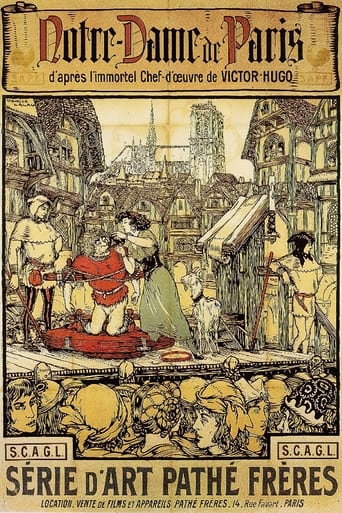
Claude Garry, born Jules Louis Dietz, was a prominent French stage and screen actor whose career was deeply rooted in the prestigious theatrical traditions of Paris. The son of a rhetoric professor, he studied at the Conservatoire de Paris where he won a top prize before joining the Comédie-Française, though he initially left the institution after being relegated to minor roles. He found greater success collaborating with Claude Garry Gabrielle Réjane at her own theater, which helped establish him as a leading dramatic talent of the Belle Époque. In the early 1910s, he became a key figure in the 'Film d'Art' movement, which sought to bring high-culture theatrical prestige to the burgeoning medium of cinema. He is most remembered by film historians for his chilling portrayal of Archdeacon Claude Frollo in the 1911 adaptation of 'Notre-Dame de Paris', directed by Albert Capellani. His career was tragically cut short by the First World War; after being mobilized and suffering a severe foot injury, he died in 1918 at the age of 40, just months before the armistice.
The Craft
On Screen
Garry was known for a sophisticated and intense dramatic style that bridged the gap between 19th-century theatrical grandiosity and the more nuanced requirements of early silent cinema. In his stage work, he was praised for his 'smoldering conviction' and his ability to portray complex, often tormented characters. His performance as Frollo in 1911 is noted for its psychological depth, utilizing expressive facial movements and a commanding physical presence to convey the character's descent into obsessive madness, a hallmark of the 'Film d'Art' style.
Milestones
- Won the prestigious first prize at the Conservatoire de Paris
- Member of the Comédie-Française (1902-1904 and 1914-1918)
- Starred as Claude Frollo in the landmark 1911 adaptation of Notre-Dame de Paris
- Collaborated extensively with director Albert Capellani and the S.C.A.G.L. Studio
- Triumphant return to the Comédie-Française in 1914 for 'Ruy Blas'
Best Known For
Iconic Roles
Must-See Films
Accolades
Won
- Prix du Conservatoire (First Prize in Comedy/Drama)
Special Recognition
- Sociétaire of the Comédie-Française
Working Relationships
Worked Often With
Studios
Why They Matter
Impact on Culture
Pivotal figure in the professionalization of film acting in France. By moving between the Comédie-Française and the film sets of Pathé, he helped elevate the status of 'movie actors' from mere carnival performers to respected artists. His 1911 portrayal of Claude Frollo set the template for the character in cinema, emphasizing the tragic, human conflict of the Archdeacon rather than portraying him as a one-dimensional villain, a nuance that influenced later adaptations.
Lasting Legacy
Garry's legacy is preserved primarily through the surviving prints of Albert Capellani's films, which are considered masterpieces of early narrative cinema. As one of the first 'stars' of the Film d'Art movement, he proved that literary classics could be effectively translated to the screen with gravitas. He is also remembered in French theatrical history as a brilliant talent whose potential was cut short by the tragedies of the Great War.
Who They Inspired
He directly influenced his nephew, Pierre Fresnay, who would become one of the greatest French actors of the 20th century. His transition from the stage to the screen served as a model for other stage actors of his generation, demonstrating that the new medium of film could offer a serious venue for dramatic expression.
Off Screen
Claude Garry came from an intellectual and artistic family; his father, Hermann Dietz, was a respected professor of rhetoric at the Lycée Buffon. He was the nephew of the painter Jules Dietz. Notably, Garry was the maternal uncle of the legendary French actor Pierre Fresnay, whom he influenced and mentored during Fresnay's early years. His life was significantly impacted by World War I, during which he was mobilized and sustained injuries that contributed to his early death.
Education
Conservatoire de Paris (National Conservatory of Dramatic Art)
Did You Know?
- His real name was Jules Louis Dietz, but he adopted the stage name Claude Garry.
- He was a member of the Comédie-Française, the oldest active theater company in the world.
- He died only three days before his 41st birthday.
- Garry — veteran of the First World War and was discharged only after being seriously wounded in the foot.
- The 1911 film 'Notre-Dame de Paris' in which he starred is the earliest surviving film adaptation of Victor Hugo's novel.
- He was a favorite of the famous actress Réjane, who gave him leading roles at her theater when the Comédie-Française would not.
- His performance as Frollo was controversial at the time in some regions for its depiction of a 'duplicitous' clergyman.
Frequently Asked Questions
Who was Claude Garry?
Highly regarded French stage and silent film with credits in this catalog. He was a member of the Comédie-Française and is best known for his role as Claude Frollo in the 1911 film 'The Hunchback of Notre Dame'.
What films is Claude Garry best known for?
Titles linked here include Notre-Dame de Paris (1911), Quentin Durward (1910).
When was Claude Garry born and when did he die?
Born August 4, 1877; died August 1, 1918.
What was Claude Garry's acting style?
Garry employed a prestigious, dramatic style typical of the French 'Film d'Art' movement, which combined theatrical intensity with the visual storytelling of early cinema. He was known for his ability to portray psychologically complex and tormented characters.
How did Claude Garry die?
Garry died in 1918 following complications from injuries sustained during World War I. He had been mobilized for the war and was severely wounded in the foot before being demobilized.