
Ivan Moskvin
Actor
Born: June 18, 1874 in Moscow, Russian Empire Died: February 16, 1946 Active: 1895-1946 Birth Name: Ivan Mikhailovich Moskvin
Films
2 films
About Ivan Moskvin
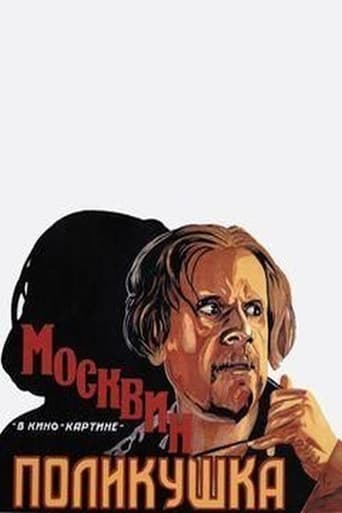
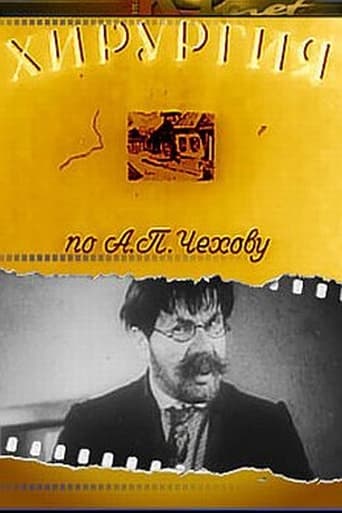
Ivan Mikhailovich Moskvin was actors of Russian and Soviet theatre and cinema, active from the late 19th century through the 1940s. A founding member of the Moscow Art Theatre (MAT) in 1898, Moskvin worked directly under Konstantin Stanislavski and Vladimir Nemirovich-Danchenko, becoming one of the theatre's leading performers. His stage career included roles in productions of Chekhov's works, including 'The Cherry Orchard' and 'Three Sisters,' where he perfected a naturalistic acting style that would influence generations of performers. Transitioning to film during the silent era, Moskvin brought his theatrical gravitas to the emerging medium, starring in landmark Soviet films including 'Polikushka' (1922), an adaptation of Tolstoy's work that showcased his ability to convey deep emotion without dialogue. Throughout the 1930s, he continued to appear in both stage and film productions, with his role in 'Surgery' (1939) demonstrating his versatility in comedic roles. Moskvin was honored with the title People's Artist of the USSR in 1936, recognizing his immense contribution to Soviet performing arts. His final years were spent teaching and mentoring young actors at the Moscow Art Theatre, cementing his legacy as both a performer and educator.
The Craft
On Screen
Moskvin's acting style was characterized by deep psychological realism and emotional authenticity, heavily influenced by the Stanislavski system. He was known for his ability to create complex, multidimensional characters through subtle gestures and nuanced facial expressions, particularly effective in silent film. His stage performances emphasized naturalistic delivery and internal emotional truth, moving away from the melodramatic style of 19th-century theatre. Moskvin possessed remarkable versatility, able to transition seamlessly from tragic to comic roles while maintaining psychological depth and credibility.
Milestones
- Founding member of Moscow Art Theatre (1898)
- Leading stage actor in Chekhov productions
- Star of 'Polikushka' (1922)
- Awarded People's Artist of the USSR (1936)
- Master teacher at Moscow Art Theatre School
- Prolific film actor in Soviet cinema
Best Known For
Iconic Roles
Must-See Films
Accolades
Won
- People's Artist of the USSR (1936)
- Order of Lenin (1937)
- Stalin Prize (1943)
- Order of the Red Banner of Labor (1938)
Special Recognition
- Honored Artist of the RSFSR (1928)
- Moscow Art Theatre Lifetime Achievement Award
- Bust at Moscow Art Theatre
- Moskvin State Drama Theatre named in his honor (Voronezh)
Working Relationships
Worked Often With
Studios
Why They Matter
Impact on Culture
Ivan Moskvin played a pivotal role in shaping modern Russian acting, bridging the gap between 19th-century theatrical traditions and 20th-century realism. As one of the original members of the Moscow Art Theatre, he helped establish and perfect the Stanislavski system, which would revolutionize acting worldwide. His performances in both theatre and film demonstrated how psychological depth and naturalistic portrayal could create powerful, universally resonant characters. Moskvin's work in early Soviet cinema helped establish artistic standards for the new medium, bringing theatrical sophistication to film acting. His dedication to the craft and his role as an educator influenced multiple generations of Russian performers, ensuring the continuation of the MAT tradition.
Lasting Legacy
Moskvin's legacy endures through the continued influence of the Moscow Art Theatre and the Stanislavski system he helped perfect. Several theatres in Russia bear his name, including the Moskvin Drama Theatre in Voronezh, testifying to his enduring cultural significance. His film performances, particularly in 'Polikushka,' remain classics of early Soviet cinema and are studied by film scholars worldwide. As an educator, he trained countless actors who would become stars of Soviet stage and screen, extending his influence far beyond his own performances. Moskvin is remembered as one of the foundational figures of modern Russian theatre, a bridge between the golden age of Russian drama and the Soviet theatrical renaissance.
Who They Inspired
Moskvin directly influenced the development of realistic acting techniques through his work with Stanislavski and his own performances. His approach to character creation, emphasizing psychological truth and emotional authenticity, became a model for actors worldwide. Many of his students went on to become leading figures in Soviet theatre and cinema, spreading his methods throughout the Russian performing arts community. International theatre practitioners studying the MAT system often cite Moskvin's performances as exemplary models of Stanislavski's theories in practice. His film work demonstrated how theatrical techniques could be adapted for the camera, influencing the development of film acting in the Soviet Union and beyond.
Off Screen
Ivan Moskvin was deeply devoted to the theatre and remained unmarried throughout his life, dedicating himself entirely to his craft and the Moscow Art Theatre. He lived modestly in Moscow, maintaining close relationships with his MAT colleagues including Stanislavski, who considered him one of the theatre's most valuable assets. Despite his fame, Moskvin was known for his humility and dedication to mentoring younger actors. He continued performing well into his 60s, only retiring from the stage due to declining health in his final years.
Education
Graduated from Moscow Philharmonic School (1893), Studied under Vladimir Nemirovich-Danchenko at Moscow Art Theatre School
Did You Know?
- Was one of only 13 founding members of the Moscow Art Theatre in 1898
- Never married, dedicating his entire life to the theatre
- Stanislavski considered him his 'most reliable actor'
- Performed in over 50 stage productions during his MAT career
- Was among the first theatre actors to successfully transition to silent film
- His performance in 'Polikushka' was praised by Lenin himself
- Continued teaching acting classes even during the Siege of Moscow in WWII
- The asteroid 3260 Moskvin was named in his honor
- His acting method emphasized 'living the part' rather than 'representing' it
- Was known for his photographic memory and ability to memorize entire plays in days
In Their Own Words
The actor must not simply play, he must become
Truth in art is not what is, but what might be
Every role is a new life that must be lived completely
The stage is not a platform for showing off, but a place for revealing truth
Silence can speak louder than words when the actor has prepared properly
Frequently Asked Questions
Who was Ivan Moskvin?
Legendary Russian and Soviet stage and film with credits in this catalog. He was named People's Artist of the USSR and had a career spanning over five decades.
What films is Ivan Moskvin best known for?
Titles linked here include Polikushka (1922), Surgery (1939).
When was Ivan Moskvin born and when did he die?
Born June 18, 1874; died February 16, 1946.
What awards did Ivan Moskvin win?
Moskvin received numerous prestigious awards including the title People's Artist of the USSR (1936), the Order of Lenin (1937), the Stalin Prize (1943), and the Order of the Red Banner of Labor (1938), recognizing his immense contributions to Soviet performing arts.
What was Ivan Moskvin's acting style?
Moskvin's acting style was characterized by deep psychological realism and emotional authenticity, heavily influenced by the Stanislavski system. He emphasized naturalistic delivery, internal emotional truth, and the ability to create complex characters through subtle gestures and nuanced expressions.
What was Ivan Moskvin's connection to the Moscow Art Theatre?
Moskvin was one of the 13 founding members of the Moscow Art Theatre in 1898 and remained associated with it throughout his entire career. He worked directly with Konstantin Stanislavski and Vladimir Nemirovich-Danchenko, becoming one of the theatre's most celebrated performers and later a master teacher at the MAT school.
Did Ivan Moskvin have any family?
No, Ivan Moskvin never married and had no children, dedicating his entire life to his craft and the Moscow Art Theatre. He was known for his complete devotion to acting and mentoring younger performers.