Films
1 film
About S.D. Subbalakshmi
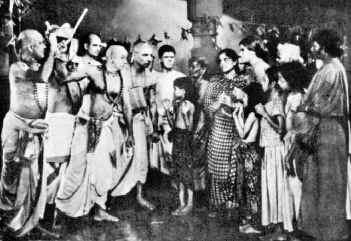
Made her mark during the formative years of Tamil talkies. Her most notable performance came in the 1939 landmark film 'Thyagabhoomi,' directed by the K. Subramanyam. The film was for its social themes and was one of the first Indian films to deal with women's liberation and social reform. Subbalakshmi's role in this socially conscious film demonstrated the emerging trend of cinema as a medium for social change in South India. Her career, while brief, coincided with a crucial period when Indian cinema was transitioning from silent films to talkies and establishing its unique identity. Though her filmography appears limited to this period, her contribution to early Tamil cinema represents the important work of actresses who helped shape the foundation of South Indian film industry during its golden era of social reform cinema.
The Craft
Milestones
- Starred in the groundbreaking social film 'Thyagabhoomi' (1939)
- Part of early Tamil cinema's transition to social themes
- Worked with director K. Subramanyam
Best Known For
Iconic Roles
Must-See Films
Working Relationships
Worked Often With
Why They Matter
Impact on Culture
S.D. Subbalakshmi's contribution to early Tamil cinema, particularly through 'Thyagabhoomi,' represents the important role of women actors in social reform films of the 1930s. The film she starred in was notable for addressing women's issues and social change, themes that were revolutionary for their time in Indian cinema. Her participation in such a groundbreaking film helped establish the precedent for cinema as a vehicle for social commentary in South Indian film industry. The film itself was so significant that it was banned by the British colonial government for its nationalist themes, making it an important part of India's cinematic resistance to colonial rule.
Lasting Legacy
S.D. Subbalakshmi's legacy, though documented through a brief filmography, is preserved through her association with one of Tamil cinema's most important early films. 'Thyagabhoomi' remains a landmark in Indian film history for its social themes and nationalist undertones, and her contribution to this film places her among the actors who helped shape early Indian cinema's social consciousness. Her work represents the foundation upon which later generations of South Indian actors built their careers in socially relevant cinema.
Who They Inspired
As an early contributor to Tamil cinema's social film movement, S.D. Subbalakshmi was part of a generation of actors who demonstrated that cinema could be more than entertainment - it could be a tool for social change and national awakening. Her work in 'Thyagabhoomi' helped pave the way for future actresses who would take on socially significant roles in Indian cinema.
Off Screen
Very limited information is available about S.D. Subbalakshmi's personal life, which was common for many early Indian cinema actors whose detailed biographies were not extensively documented during that era.
Did You Know?
- 'Thyagabhoomi' (1939) was one of the first Tamil films to address women's liberation and social reform
- The film she starred in was banned by the British government for its nationalist themes
- The film's director, K. Subramanyam, was a pioneer of social cinema in South India
- Despite the film's importance, detailed records of many early actors like Subbalakshmi are scarce
- The film was notable for its progressive stance on women's education and widow remarriage
- Early Tamil cinema actors like Subbalakshmi often came from theatre backgrounds
- The film was made during a crucial period when Indian cinema was establishing its unique identity
- Very few prints of early Tamil films like 'Thyagabhoomi' survive today
- The film was among the first to use cinema as a medium for social reform in South India
Frequently Asked Questions
Who was S.D. Subbalakshmi?
Early Tamil cinema actress active in 1939, best known for her role in the groundbreaking social film 'Thyagabhoomi.' She was part of the generation of actors who helped establish Tamil cinema's tradition of socially relevant filmmaking during the early talkies era.
What films is S.D. Subbalakshmi best known for?
Titles linked here include Thyagabhoomi (1939).
When was S.D. Subbalakshmi born and when did she die?
Unfortunately, detailed biographical information about S.D. Subbalakshmi's birth and death dates is not readily available, which is common for many early Indian cinema actors whose records were not extensively documented during that era.
What awards did S.D. Subbalakshmi win?
No specific awards or nominations for S.D. Subbalakshmi are documented, which was typical for the early period of Indian cinema when formal award systems were not yet established in the industry.
What was S.D. Subbalakshmi's acting style?
While specific details about her acting style are not extensively documented, as an actress in early Tamil social cinema, she likely employed the theatrical style common in early Indian films, which emphasized clear expression of social themes and character emotions important for the reform narratives of the time.