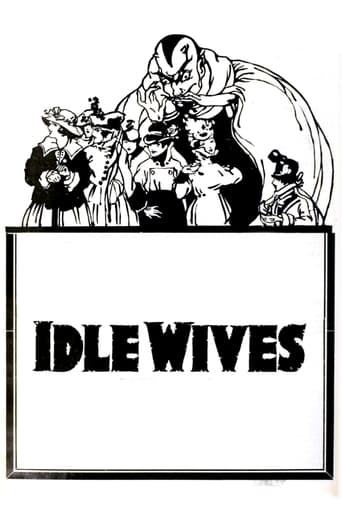
Countess Du Cello
Actor
- Active
- 1916-1916
Films 1
About Countess Du Cello
Countess Du Cello is a little-documented silent-era screen performer whose surviving credit record places her in American cinema during the mid-1910s. The name appears in connection with the 1916 film Idle Wives, a title associated with the early feature-film period when many actors worked on a project-by-project basis and often left only fragmentary archival traces. Available references do not provide a reliable birth name, birthplace, or full life history, which is typical of many minor or supporting players from the silent era whose careers were recorded incompletely in contemporary trade publications and later film indexes. Because of the scarcity of verified documentation, she is best understood as one of the many working actors of early Hollywood and independent American production whose on-screen contributions survive more clearly than biographical detail. Her known activity date of 1916 suggests either a very brief screen career or, more likely, a career that has not been fully reconstructed from surviving records. Her historical significance lies less in celebrity than in the documentary value of her surviving credit, which helps illustrate the broader ensemble culture of silent cinema. As with many personalities of the period, further information may exist only in archived studio paperwork, newspaper notices, or incomplete cast listings that have not yet been digitized.
More about Countess Du Cello
In film history
Countess Du Cello's cultural impact is primarily archival rather than celebrity-driven. Her presence in Idle Wives contributes to the historical record of silent cinema and helps modern researchers reconstruct the large, often undercredited acting communities that supported early feature production. Even when a performer leaves behind only one verified credit, that credit can be important evidence of casting practices, role diversity, and the broad participation of women in the film industry during the 1910s. Her name also demonstrates how many silent-era artists have been partially lost to history, making surviving film credits valuable artifacts of film culture.
Later reputation
Her legacy rests in the preservation of her name within silent-film documentation, where she stands as part of the vast and frequently underrecognized workforce of early American cinema. Because no extended biography survives in common reference sources, her importance to film history is tied to archival visibility rather than fame. For historians, such figures are reminders that the silent era was shaped not only by marquee stars but also by numerous minor players whose work filled out the social worlds of early films. Continued cataloging and archival recovery may eventually reveal more about her life, but for now her legacy is that of a documented participant in one of cinema's foundational periods.
Influence
There is no verified evidence that Countess Du Cello directly influenced later actors or filmmakers in a documented way. Her significance is indirect: by appearing in an early feature film, she forms part of the collective performance tradition from which later screen acting styles evolved. Her recorded presence in silent cinema also helps preserve the names of performers who otherwise might be entirely absent from public memory.
Off screen
No reliable biographical record has been found that confirms Countess Du Cello's personal life, family background, marriages, or later years. This lack of documentation is common for many silent-era performers whose careers were brief, supporting-based, or recorded only in a small number of filmographies. As a result, any claims about spouse, children, education, or private life would be speculative and are not included here.
Credits
- Appeared in the 1916 silent film Idle Wives, the only clearly documented screen credit associated with this name in surviving film records.
- Represents the kind of early screen performer whose work contributed to the ensemble fabric of silent-era feature production.
- Included in historical filmography references that preserve cast information for otherwise obscure silent films.
- Associated with the mid-1910s period of American silent cinema, when many performers worked without extensive publicity or long-term studio identity.
Roles
- Role in Idle Wives (1916) — specific character name not reliably documented in available sources
Films
- Idle Wives (1916)
Notes
- Countess Du Cello is one of many silent-era performers whose surviving fame rests almost entirely on a single credit.
- Her known filmography currently places her in the year 1916 only.
- Idle Wives is the title most securely associated with her in surviving film references.
- No widely accepted birth name or alternate professional name is readily documented in standard public sources.
- Her rarity in modern databases makes her a useful example of how incomplete silent-era records can be.
- The theatrical-sounding surname 'Du Cello' has led some users to assume a stage persona, but no verified biographical explanation is widely available.
- She is a reminder that many early film performers worked before comprehensive studio publicity systems were fully established.
Questions
Who was Countess Du Cello?
Countess Du Cello was a silent-era film actor whose surviving film record places her in the 1916 production Idle Wives. Very little personal biography has survived in standard reference sources, so she is known primarily through her screen credit rather than a detailed life story. She represents many early cinema performers whose careers are only partially documented.
What films is Countess Du Cello best known for?
She is best known for Idle Wives (1916), which is the principal surviving credit associated with her name. No additional film titles can be confirmed with confidence from the available information. Her filmography appears to have been either very short or incompletely preserved.
When was Countess Du Cello born and when did she die?
Her birth date and death date are not reliably documented in the available public records consulted for silent-era film history. Because of that, it is not possible to state her lifespan with confidence. This is common for lesser-known performers from the 1910s.
What awards did Countess Du Cello win?
No awards or formal nominations are documented for Countess Du Cello in the surviving sources. Silent-era supporting performers often worked before modern awards culture was established in Hollywood. Her historical importance is based on her participation in early film rather than competitive recognition.
What was Countess Du Cello's acting style?
There is no surviving critical description of her acting style in the available sources. As a performer in the silent era, her work would have relied on expressive facial performance, gesture, and physical clarity typical of the period. However, any more specific assessment would be speculative without surviving reviews or film prints.
What is Countess Du Cello's legacy in film history?
Her legacy is mainly archival: she remains part of the documented cast history of early silent cinema. Even a single surviving credit helps historians reconstruct the broader ecosystem of performers working in the 1910s. She stands as an example of the many screen artists whose contributions are preserved only in fragments.