Louis Willoughby
Actor
- Active
- 1922-1922
Films 1
About Louis Willoughby
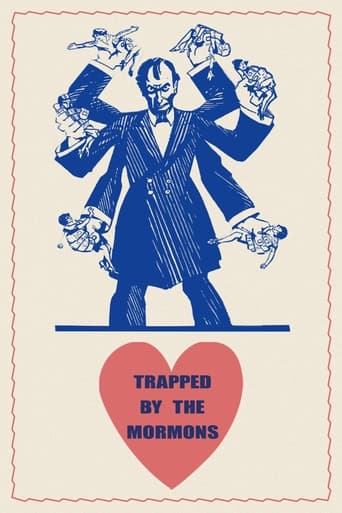
Louis Willoughby is a little-documented British screen actor from the silent era, best remembered today for his appearance in the controversial anti-Mormon melodrama Trapped by the Mormons (1922). Surviving reference sources suggest that his active film career was very brief and, at present, largely traceable through a single confirmed screen credit, which makes him a typical example of the many performers of early cinema whose work has been only partially preserved in the historical record. Because so little biographical documentation survives, details such as his birth, family background, training, and later life remain unclear. His name appears in connection with a period of British sensationalist filmmaking that relied on topical controversy and lurid subject matter to attract audiences in the early 1920s. Although he does not seem to have developed a long screen career or a major celebrity profile, his participation in an historically notable silent film places him within the wider history of British popular cinema. In the absence of fuller archival evidence, Louis Willoughby is best understood as a minor but authentic figure of the silent-film period whose screen work survives more in film history records than in personal biography.
More about Louis Willoughby
On screen
No detailed contemporary descriptions of Louis Willoughby’s acting style have been located in readily available sources. Given the conventions of British silent film in the early 1920s, his performance would likely have relied on expressive gesture, facial emphasis, and clear visual characterization rather than spoken dialogue. Because no extended body of surviving credited work is currently confirmed, any more specific stylistic assessment would be speculative.
In film history
Louis Willoughby’s cultural impact is modest but historically meaningful as part of the cast of Trapped by the Mormons, a film that reflects the sensational subject matter and moral anxieties often exploited by early 20th-century British popular cinema. While he does not appear to have been a star whose name strongly shaped audience tastes or industry practice, his work contributes to the collective record of silent-era performance culture. Performers like Willoughby are important because they help reconstruct the broader ecosystem of early filmmaking, where many actors worked briefly and then disappeared from mainstream documentation. In that sense, his importance lies less in celebrity than in what his surviving credit reveals about the labor and casting practices of the period.
Later reputation
Louis Willoughby’s legacy is primarily archival and historiographic rather than star-based. He remains a name attached to a historically interesting silent film, and that association ensures his inclusion in filmographies and reference lists devoted to early British cinema. For researchers, he represents the large number of early screen performers whose careers are difficult to reconstruct because of incomplete studio records, lost prints, and sparse publicity coverage. His surviving presence in film history underscores how much of silent cinema’s personnel can only be recovered through fragmentary evidence.
Influence
There is no evidence that Louis Willoughby exerted a documented influence on later actors or filmmakers in the way major stars or pioneers did. His importance is indirect: by appearing in a film that remains part of discussions of early British sensationalist cinema, he contributes to the performance and casting history of that tradition. In a broader sense, the survival of his name in film records helps demonstrate the importance of supporting actors in shaping silent-film narratives, even when individual careers were brief or poorly documented.
Off screen
No reliable public information has been found about Louis Willoughby’s personal life, including his family background, marriages, children, or later years. Unlike major silent-era stars, he does not appear to have left behind a substantial biographical footprint in commonly available reference sources. As a result, any specific claims about his private life would be conjectural and are not included here.
Education
Unknown; no verified educational background has been located in accessible reference sources.
Credits
- Appeared in the silent feature Trapped by the Mormons (1922), the only firmly documented film credit currently associated with him
- Participated in a notable example of early 1920s British sensationalist cinema
- Represents the often under-recorded class of silent-era supporting performers whose work survives mainly in surviving credits and trade references
Roles
- Role in Trapped by the Mormons (1922)
Films
- Trapped by the Mormons (1922)
Notes
- Louis Willoughby is currently best documented for only one confirmed film appearance, which is unusual even among silent-era performers.
- His known film, Trapped by the Mormons (1922), is remembered for its sensational anti-Mormon theme, which made it historically notable in British cinema.
- Because his birth and death details are not readily documented, he is one of many silent-era actors whose biographies remain incomplete.
- He appears to have worked during a single known year of activity, suggesting either a very short screen career or a surviving record that has not yet been fully reconstructed.
- His career illustrates how many early film performers were employed in productions that are now primarily studied for their cultural and historical context rather than their individual cast members.
- The surviving record of his work is a reminder that many silent-film actors were local or regional talents who never achieved durable celebrity status.
- He is a useful example of how film historians must often rely on fragmentary credits, trade listings, and surviving prints to reconstruct early cinema personnel.
Questions
Who was Louis Willoughby?
Louis Willoughby was a British silent-era actor best known for appearing in Trapped by the Mormons (1922). Very little personal biographical information survives about him, so he is chiefly remembered through his film credit rather than a long documented career.
What films is Louis Willoughby best known for?
He is best known for Trapped by the Mormons (1922), which is the only clearly documented film credit associated with him in accessible sources. If additional films existed, they are not currently well established in standard reference material.
When was Louis Willoughby born and when did he die?
His birth date and death date are currently unknown. Available reference material does not provide verified details about his place of birth, lifespan, or later life.
What awards did Louis Willoughby win?
No awards or formal honors are currently documented for Louis Willoughby. This is not unusual for a lesser-known silent-era supporting actor whose surviving historical record is limited.
What was Louis Willoughby's acting style?
No contemporary critical description of his acting style has been located. As a silent-film actor, he would have worked within the expressive visual style of the era, using gesture, expression, and physical presence to communicate character.
What is Louis Willoughby's legacy in film history?
His legacy is mainly archival: he is part of the documented cast history of an early British silent film that remains of interest to film historians. He also represents the many early screen performers whose careers were brief and are now only partially recoverable.