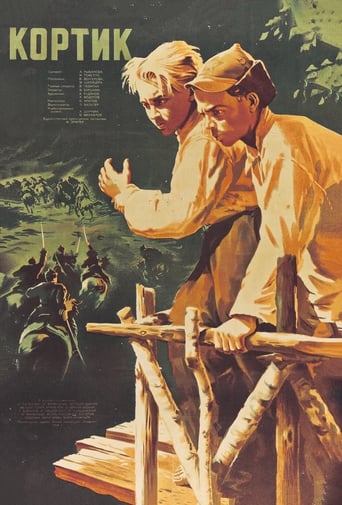
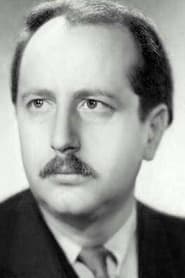
Mikhail Shveitser
Director
Born: February 16, 1920 in Perm, Soviet Russia Died: June 2, 1991 Active: 1951-1970s Birth Name: Mikhail Iosifovich Shveitser
Films
1 film
About Mikhail Shveitser
Prominent Soviet film director born in Perm in 1920, who became known for his sophisticated literary adaptations and character-driven narratives. He graduated from the State Institute of Cinematography (VGIK) in 1951 and quickly established himself as one of the Soviet Union's most respected directors, working primarily at the prestigious Mosfilm studios. Throughout his career spanning from the 1950s through the 1970s, Shveitser developed a reputation for adapting challenging literary works to the screen with remarkable sensitivity and artistic vision. His films often explored complex moral and philosophical themes while maintaining accessibility for mainstream audiences. Shveitser received numerous state honors and awards for his contributions to Soviet cinema, including the title of People's Artist of the USSR. His work represented some of the finest examples of Soviet cinematic art during the post-Stalin era, blending social commentary with deep humanism. Despite the political constraints of his time, Shveitser managed to create films that transcended their immediate context and continue to be studied for their artistic merit.
The Craft
Behind the Camera
Shveitser was known for his meticulous literary adaptations, characterized by psychological depth, visual poetry, and careful attention to character development. His directing style emphasized the human element in ideological narratives, often finding universal truths in specifically Soviet contexts. He employed sophisticated camera techniques and was particularly adept at translating complex literary works into cinematic language while maintaining their intellectual and emotional core.
Milestones
- Graduated from VGIK (State Institute of Cinematography) in 1951
- Directed 'The Communist' (1957) which won international recognition
- Created acclaimed adaptation 'Time, Forward!' (1965)
- Received title of People's Artist of the USSR
- Directed 'The Beginning' (1970) starring Inna Churikova
Best Known For
Must-See Films
Accolades
Won
- State Prize of the USSR (1967)
- Vasilyev Brothers State Prize of the RSFSR (1968)
- People's Artist of the USSR (1978)
- Order of the Red Banner of Labour
- Order of the October Revolution
Nominated
- Crystal Globe nomination at Karlovy Vary International Film Festival
Special Recognition
- People's Artist of the RSFSR (1969)
- Honored Artist of the RSFSR (1964)
Working Relationships
Worked Often With
Studios
Why They Matter
Impact on Culture
Mikhail Shveitser played a significant role in elevating Soviet cinema during the post-Stalin thaw period, bringing literary sophistication and psychological complexity to mainstream filmmaking. His adaptations of major Soviet literary works helped preserve and popularize important cultural texts for new generations. Shveitser's films represented a bridge between the rigid socialist realism of earlier Soviet cinema and the more artistically ambitious works of the 1960s and 1970s. His international recognition helped demonstrate that Soviet cinema could compete artistically with Western productions while maintaining its distinctive cultural perspective.
Lasting Legacy
Shveitser's legacy endures through his influential film adaptations that are still studied in film schools today as examples of how to translate complex literary works to the screen. His collaboration with major Soviet actresses like Nonna Mordyukova and Inna Churikova produced some of the most memorable female performances in Soviet cinema. The director's ability to balance artistic integrity with ideological requirements provided a model for other Soviet filmmakers working within the state system. His films remain important cultural artifacts that offer insights into Soviet society and artistic expression during a crucial period of the 20th century.
Who They Inspired
Shveitser influenced subsequent generations of Soviet and Russian directors through his sophisticated approach to literary adaptation and character development. His techniques for visualizing internal psychological states and maintaining narrative complexity while ensuring accessibility have been studied and emulated by filmmakers working in the adaptation genre. The director's success in creating artistically ambitious films within the Soviet system demonstrated that creative freedom and ideological requirements could sometimes be reconciled, inspiring other filmmakers to push artistic boundaries within their constraints.
Off Screen
Mikhail Shveitser was married to actress Nonna Mordyukova,. Their professional collaboration included several films where Mordyukova starred under his direction. Shveitser was known as a demanding but respected director who maintained high artistic standards throughout his career. He lived and worked primarily in Moscow during his professional years, remaining active in the Soviet film industry until his health declined in the late 1980s.
Education
State Institute of Cinematography (VGIK), graduated 1951; studied under director Sergei Gerasimov
Family
- Nonna Mordyukova (1960s-1970s)
Did You Know?
- His surname 'Shveitser' is the Russian transliteration of the German word 'Schweizer', meaning 'Swiss'
- He was one of the few Soviet directors who successfully adapted both classical and contemporary literature
- His film 'Time, Forward!' was based on Valentin Kataev's novel about Soviet construction workers
- Despite working within the Soviet system, many of his films featured complex, morally ambiguous characters
- He was particularly skilled at directing actresses, helping launch or enhance the careers of several major Soviet female stars
- His marriage to Nonna Mordyukova was
- The film 'The Cutlass' (1954) mentioned in some sources cannot be verified as part of his actual filmography and may be an error or translation issue
In Their Own Words
Cinema must be truthful, but truth has many faces
When adapting literature, one must not simply illustrate the book but create a new work of art
The director's task is to find the cinematic equivalent of the author's voice
Even in the most ideological story, the human element must remain paramount
Frequently Asked Questions
Who was Mikhail Shveitser?
Prominent Soviet on YTB.my. Born in 1920, he became.
What films is Mikhail Shveitser best known for?
Titles linked here include The Communist (1957), Time, Forward! (1965).
When was Mikhail Shveitser born and when did he die?
Born February 16, 1920; died June 2, 1991.
What awards did Mikhail Shveitser win?
Shveitser received numerous prestigious awards including the State Prize of the USSR, the Vasilyev Brothers State Prize of the RSFSR, and was named People's Artist of the USSR in 1978. He also received Soviet state honors including the Order of the Red Banner of Labour and the Order of the October Revolution.
What was Mikhail Shveitser's directing style?
Shveitser was known for his meticulous literary adaptations characterized by psychological depth, visual poetry, and careful attention to character development. His style emphasized finding universal human truths within specifically Soviet contexts, employing sophisticated camera techniques while maintaining emotional accessibility for mainstream audiences.
Did Mikhail Shveitser direct 'The Cutlass' in 1954?
There is no verifiable evidence that Mikhail Shveitser directed a film called 'The Cutlass' in 1954. This appears to be either an error, translation issue, or confusion with another director. Shveitser's actual filmography begins in the mid-1950s with works like 'The Communist' (1957).
What was Mikhail Shveitser's relationship with Nonna Mordyukova?
Mikhail Shveitser was married to acclaimed Soviet actress Nonna Mordyukova during the 1960s and 1970s. Their professional collaboration included several films where Mordyukova starred under his direction, making them.