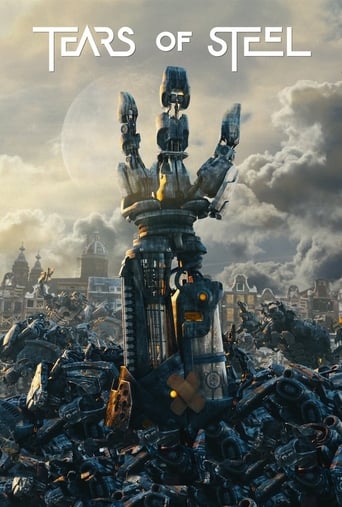

Films
1 film
About Ian Hubert
Ian Hubert is a contemporary digital filmmaker, visual effects artist, and indie creator best known for directing the 2012 short film Tears of Steel, a collaborative science-fiction project associated with the Blender Foundation. He is not a silent-era or Golden Age Hollywood figure, but rather a 21st-century artist whose work became notable within open-source and digital-cinema circles. Hubert gained attention for making resourceful, visually ambitious films with minimal budgets, often emphasizing practical solutions, worldbuilding, and efficient production design. Tears of Steel stands out as his best-known credit and remains his defining screen work in publicly available filmographies. His career is more closely tied to internet-era filmmaking, 3D animation, and experimental production workflows than to classic studio cinema. Because his public profile is centered on a single widely documented title, many personal details such as birth date, birthplace, and education are not publicly documented in reliable classic-cinema references. He should therefore not be confused with any early film or vintage Hollywood personality, as available evidence indicates he is a modern filmmaker active in the 2010s.
The Craft
Behind the Camera
Hubert's directing style, as inferred from Tears of Steel and his broader reputation, is characterized by practical problem-solving, efficient visual storytelling, and a strong emphasis on production design and worldbuilding. Rather than relying on traditional studio-scale resources, his approach favors ingenuity, visual effects integration, and a do-it-yourself sensibility. The work associated with him suggests a filmmaker interested in combining live action, digital compositing, and science-fiction atmosphere in a highly economical production model. His style is especially associated with the open-source filmmaking ethos: collaborative, technically innovative, and designed to prove what small teams can achieve with modern tools.
Milestones
- Directed Tears of Steel (2012), his best-known publicly documented film credit
- Contributed to a landmark open-source film project associated with Blender and digital filmmaking innovation
- Earned recognition in online and independent film communities for practical, low-budget filmmaking ingenuity
- Helped demonstrate how ambitious science-fiction imagery could be achieved with resourceful independent production methods
Best Known For
Must-See Films
Working Relationships
Worked Often With
Studios
Why They Matter
Impact on Culture
Ian Hubert's cultural impact lies primarily in the digital filmmaking and open-source animation communities rather than in classic cinema history. Tears of Steel became a widely discussed example of what independent creators could accomplish using accessible tools, collaborative workflows, and a strong visual concept. The project helped showcase Blender as a serious filmmaking platform and contributed to broader conversations about democratizing special-effects production. His work is often cited by creators interested in practical, economical worldbuilding and by artists looking to merge live action with sophisticated digital imagery without a major studio budget. In that sense, his influence is technical and inspirational, helping shape the mindset of modern indie and internet-native filmmakers.
Lasting Legacy
Hubert's legacy is tied to a single but highly visible body of work that helped define a particular strain of twenty-first-century independent filmmaking. Tears of Steel remains notable as a proof-of-concept for resourceful production design, hybrid visual effects, and collaborative open-source creativity. While he is not part of the classic cinema canon, his work occupies an important niche in the history of digital film production and online distribution. His legacy is strongest among filmmakers, animators, and VFX artists who study efficient methods for creating cinematic spectacle on limited means.
Who They Inspired
He has influenced independent creators who value practical production strategies, digital compositing, and open-source filmmaking tools. His work is especially relevant to artists working with Blender and to filmmakers seeking to blend physical sets with computer-generated environments. Rather than influencing classic-era actors or directors, his impact is felt in contemporary indie circles, VFX education, and maker-oriented filmmaking communities.
Off Screen
Reliable public information about Ian Hubert's personal life is limited. Available film-oriented sources primarily document his work as a filmmaker rather than biographical details such as family background, relationships, or private life. No well-sourced information about marriages, children, or education is consistently documented in widely accessible references tied to his filmography. As a result, most personal-life details remain unavailable in authoritative public records.
Did You Know?
- He is best known for one widely documented film credit, Tears of Steel (2012).
- His public profile is associated more with visual effects and digital production than with classic-era cinema.
- He is often discussed in the context of Blender and open-source filmmaking rather than mainstream studio cinema.
- Tears of Steel is frequently cited as a showcase for ambitious science-fiction visuals on a modest production scale.
- Available public sources provide very limited biographical information about him compared with major studio-era filmmakers.
- He is not a silent-film or Golden Age Hollywood personality despite the film-database request context.
- His work is notable for practical ingenuity and problem-solving within a modern digital workflow.
Frequently Asked Questions
Who was Ian Hubert?
Ian Hubert is a contemporary filmmaker and visual effects artist best known for directing Tears of Steel (2012). He is associated with digital, open-source, and independent filmmaking rather than classic Hollywood cinema.
What films is Ian Hubert best known for?
Titles linked here include Tears of Steel (2012).
When was Ian Hubert born and when did he die?
Reliable public sources do not consistently provide Ian Hubert's birth date or any death date, and he is not documented as deceased. Most accessible references focus on his film work rather than detailed biography.
What awards did Ian Hubert win?
No major awards are consistently documented in widely accessible public sources for Ian Hubert. His recognition is more closely tied to the visibility and influence of Tears of Steel within digital filmmaking communities.
What was Ian Hubert's directing style?
His directing style is associated with practical ingenuity, compact production methods, and strong integration of visual effects. The work linked to him emphasizes worldbuilding and efficient cinematic storytelling rather than traditional studio-era approaches.
What is Ian Hubert's legacy in film history?
His legacy is strongest in modern digital and independent filmmaking, especially in the open-source and Blender communities. He is remembered for helping demonstrate how ambitious science-fiction imagery can be achieved with limited resources and technical creativity.