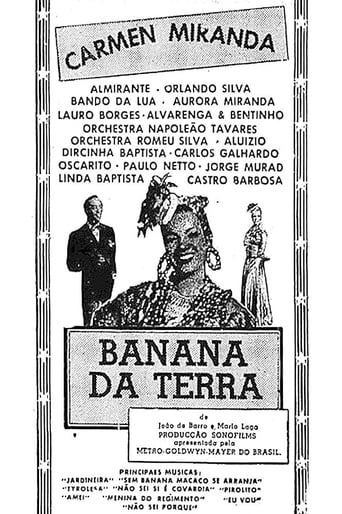

Carmen Miranda
Actor
Born: February 9, 1909 in Marco de Canaveses, Portugal Died: August 5, 1955 Active: 1929-1955 Birth Name: Maria do Carmo Miranda da Cunha
Films
1 film
About Carmen Miranda
Carmen Miranda, born Maria do Carmo Miranda da Cunha, was a Portuguese-born Brazilian samba singer, dancer, Broadway actress, and film star who became entertainers of the 1940s. After achieving immense popularity in Brazil as a recording artist and radio performer in the 1930s, she was discovered by Broadway impresario Lee Shubert and brought to the United States in 1939. Her unique style featuring towering turbans adorned with fruit, colorful ruffled dresses, and rapid-fire Portuguese-English patter made her an instant sensation. She signed with 20th Century Fox and became one of Hollywood's highest-paid stars during World War II, appearing in 14 films between 1940 and 1953. Miranda became a cultural ambassador for Brazil and Latin America during Franklin D. Roosevelt's Good Neighbor Policy, though she later faced criticism for perpetuating stereotypes. Despite her declining health and career in the early 1950s, she continued performing until her sudden death from a heart attack in 1955 at age 46.
The Craft
On Screen
Energetic and flamboyant performer known for her rapid-fire delivery, exaggerated gestures, and infectious charisma. Her acting style blended comedy, musical performance, and exotic allure, often playing variations of the 'Brazilian bombshell' archetype. She incorporated samba dancing and Portuguese-English linguistic playfulness into her performances.
Milestones
- Brazilian recording breakthrough with 'Taí' (1930)
- Broadway debut in 'The Streets of Paris' (1939)
- Hollywood film debut in 'Down Argentine Way' (1940)
- Academy Award nomination for Best Supporting Actress (1941)
- Highest-paid woman in the United States in 1945
- Hollywood Walk of Fame star (1960)
Best Known For
Iconic Roles
Must-See Films
Accolades
Won
- Academy Award Honorary Award (1946) for her contributions to entertainment and culture
- Brazilian Order of Merit (1949)
- Best Actress award from Brazilian Film Critics Association (1933)
Nominated
- Academy Award nomination for Best Supporting Actress for 'Down Argentine Way' (1941)
- Golden Globe nomination for Best Actress in a Motion Picture Musical or Comedy (1948)
Special Recognition
- Hollywood Walk of Fame star (1960)
- Brazilian postage stamp featuring her image (1995)
- Inducted into the International Latin Music Hall of Fame (2002)
- Google Doodle on her 104th birthday (2013)
Working Relationships
Worked Often With
Studios
Why They Matter
Impact on Culture
Carmen Miranda became an unprecedented cultural phenomenon, representing both the exotic allure and political diplomacy of the Good Neighbor Policy era between the U.S. And Latin America. Her image - particularly the fruit hat - became. She broke barriers as the first Latin American star to achieve mainstream Hollywood success, paving the way for future international performers. However, her caricature-like portrayal of Brazilian culture also sparked important discussions about cultural representation and stereotyping in American media that continue to this day.
Lasting Legacy
Carmen Miranda's legacy extends far beyond her film career, encompassing her role as a cultural ambassador and fashion icon. The 'Miranda style' continues to influence fashion designers and performers, with her fruit hat being referenced in everything from high fashion to Halloween costumes. In Brazil, she remains a complex figure - celebrated for her international success while criticized for perpetuating stereotypes. Her life has been the subject of numerous books, documentaries, and academic studies examining issues of cultural identity, representation, and the politics of entertainment. The Carmen Miranda Museum in Rio de Janeiro preserves her costumes and memorabilia, ensuring her story continues to be told to new generations.
Who They Inspired
Miranda's influence can be seen in countless performers who followed, from Desi Arnaz's Latin American stylization to modern pop stars like Lady Gaga and Katy Perry who have referenced her iconic look. She demonstrated the commercial viability of Latin American entertainment in mainstream American media, opening doors for future generations. Her blend of music, dance, and comedy influenced the development of the Hollywood musical genre, particularly in how international elements were incorporated into American films. Contemporary discussions about cultural appropriation and representation in entertainment often reference her career as a case study.
Off Screen
Carmen Miranda never married but had a long-term relationship with her American partner, David Alfred Sebastian, from 1948 until her death. She was deeply devoted to her family, particularly her mother, who lived with her in Beverly Hills. Despite her glamorous public image, she was known to be a private person who suffered from anxiety and health problems due to her demanding career and heavy costume requirements. She became a naturalized U.S. Citizen in 1940 while maintaining her Brazilian citizenship.
Education
Limited formal education; primarily self-taught in music and performance. Began performing in local shops and at school events in Rio de Janeiro as a teenager.
Did You Know?
- Her famous fruit hat was inspired by a photograph of a Brazilian woman selling fruit at a market
- She was only 5 feet tall but wore platform shoes to appear taller in films
- Her costumes were so heavy with sequins and fruit that she suffered from back problems and had to be carried between takes
- She recorded over 300 songs in Portuguese, Spanish, and English during her career
- During WWII, she was the highest-paid woman in the United States, earning over $200,000 annually
- Her signature phrase 'Chica Chica Boom Chic' became a popular catchphrase in the 1940s
- She was the first South American to leave her handprints and footprints in the forecourt of Grauman's Chinese Theatre
- The banana company Chiquita used her image in their advertising for decades without her family's permission
- She appeared on the cover of Time magazine in 1941
- Her death occurred while she was filming a segment for The Jimmy Durante Show
- The Carmen Miranda banana brand was named after her
- She never learned to read music, playing entirely by ear
In Their Own Words
'I say, twenty dollars for a hat! I can buy bananas for my whole family for that money!' (referring to her expensive costume hats)
'I'm a Brazilian, but I'm American too. I love America and America loves me'
'I have been so happy in this country. I love the American people'
'My success has not been easy. I have had to work hard for it'
'I don't want to be a Latin type. I want to be me'
Frequently Asked Questions
Who was Carmen Miranda?
Portuguese-born Brazilian singer, dancer, and actress who became one of Hollywood's most popular stars in the 1940s. Known for her elaborate fruit-topped turbans and energetic samba performances, she was the first Latin American star to achieve mainstream success in Hollywood and became a cultural icon of her era.
What films is Carmen Miranda best known for?
Titles linked here include Down Argentine Way (1940), That Night in Rio (1941).
When was Carmen Miranda born and when did she die?
Born February 9, 1909; died August 5, 1955.
What awards did Carmen Miranda win?
Carmen Miranda received an Academy Award Honorary Award in 1946 for her contributions to entertainment and culture, and was nominated for Best Supporting Actress in 1941 for 'Down Argentine Way.' She also received the Brazilian Order of Merit in 1949 and was honored with a star on the Hollywood Walk of Fame posthumously in 1960.
What was Carmen Miranda's acting style?
Carmen Miranda's acting style was characterized by boundless energy, flamboyant gestures, and a unique blend of comedy and musical performance. She was known for her rapid-fire delivery in a distinctive Portuguese-English accent, exaggerated facial expressions, and incorporating samba dancing into her performances, creating a charismatic and memorable screen presence.
Why was Carmen Miranda so famous in the 1940s?
Carmen Miranda became famous in the 1940s due to her unique visual style, particularly her fruit-adorned turbans and colorful costumes, combined with her energetic performances during World War II. She represented the exotic and colorful culture of Latin America during the Good Neighbor Policy era, making her a perfect cultural ambassador and entertainment sensation during a time when Americans sought escapism and international goodwill.
What was Carmen Miranda's impact on Brazilian culture?
Carmen Miranda had a complex impact on Brazilian culture - she was celebrated for bringing Brazilian music and culture to international attention, but also criticized for creating stereotypical portrayals that Americans associated with all of Latin America. While she made samba and Brazilian rhythms popular worldwide, many Brazilians felt her exaggerated Hollywood persona misrepresented their culture, creating a lasting debate about cultural representation and authenticity.