
Ernest Florman
Director
Born: November 20, 1863 in Stockholm, Sweden Died: October 9, 1952 Active: 1897-1897 Birth Name: Ernst Florman
Films
1 film
About Ernest Florman
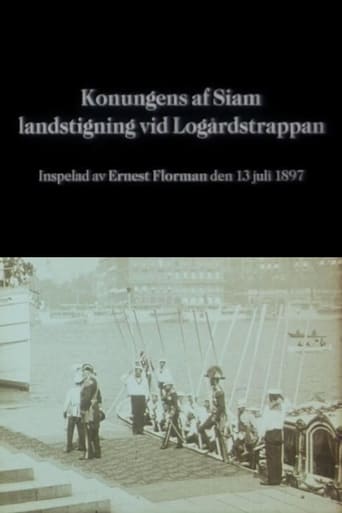
Swedish photographer and filmmaker who operated during the birth of cinema in the late 19th century. Originally established as a professional photographer, Florman transitioned to the emerging medium of motion pictures during cinema's earliest years. His most significant contribution to film history came in 1897 when he documented the historic visit of King Chulalongkorn of Siam to Stockholm, creating what would become one of Sweden's earliest surviving films. Florman worked during a period when filmmaking was still experimental and largely dominated by actuality films and documentary-style recordings of real events. His camera work captured important moments of Swedish royal and social history during a transformative period in both Swedish society and the development of cinema as an art form. Though his filmography was brief, consisting primarily of documentary shorts from 1897, his work represents an important chapter in Scandinavian film history and the global development of motion pictures as a medium for documenting contemporary events.
The Craft
Behind the Camera
Documentary-style actuality filming focusing on real events and royal ceremonies, characterized by stationary camera positions typical of early cinema
Milestones
- Directed 'The Arrival of the King of Siam in Stockholm' (1897)
- One of Sweden's first filmmakers
- Pioneered documentary/newsreel style filmmaking in Sweden
- Captured important royal events during cinema's birth
- Transitioned from photography to early motion pictures
Best Known For
Must-See Films
Accolades
Special Recognition
- Recognized as one of Sweden's cinema pioneers in film history archives
Working Relationships
Studios
Why They Matter
Impact on Culture
Ernest Florman's work represents a crucial moment in Scandinavian film history, capturing the transition from still photography to motion pictures. His documentation of King Chulalongkorn's visit to Stockholm provides valuable historical footage of both an important diplomatic event and the early days of cinema in Sweden. As one of the first Swedish filmmakers, Florman helped establish a foundation for documentary filmmaking in Scandinavia, demonstrating how the new medium could be used to record significant contemporary events for posterity. His work exemplifies the global nature of early cinema, showing how filmmakers across Europe were simultaneously experimenting with the technology to document their local cultures and important events.
Lasting Legacy
Ernest Florman's legacy lies in his role as one of Sweden's cinema pioneers, representing the very beginning of filmmaking in Scandinavia. Though his filmography consists of only a few short films from 1897, these works are historically significant as some of the earliest moving images created in Sweden. His documentary approach to filming actual events helped establish a tradition of non-fiction filmmaking that would continue throughout Swedish cinema history. Film historians and archivists recognize Florman as an important figure in understanding how cinema spread globally and how different cultures adapted the new technology to document their own significant events and ceremonies.
Who They Inspired
Florman influenced early Scandinavian filmmakers by demonstrating how motion pictures could serve as a documentary medium for recording important cultural and political events. His work prefigured the development of newsreel cinema and documentary filmmaking in Sweden and throughout Scandinavia. While direct influences are difficult to trace due to the limited nature of his output, his approach to capturing real events with a camera helped establish conventions that would be followed by generations of documentary filmmakers. His work also represents the early international exchange in cinema, as his film about the King of Siam's visit shows how filmmakers were capturing events of global significance from the very beginning of the medium.
Off Screen
Ernest Florman was born into a family with artistic inclinations and initially established himself as a successful photographer before venturing into motion pictures. He was part of the first generation of artists to embrace the new technology of cinema during its experimental phase. Florman's brief but significant contribution to film history occurred during a pivotal moment when photography was evolving into moving images. He lived through nearly nine decades of technological and social change, witnessing cinema transform from a novelty into a major art form and industry.
Education
Trained as a photographer in Stockholm during the 1880s
Did You Know?
- His film about the King of Siam is one of the earliest examples of diplomatic event documentation in cinema
- Florman was part of the first generation of photographers to transition to filmmaking
- His work predates most major Swedish film productions by several years
- The King of Siam he filmed was King Chulalongkorn, who modernized Thailand
- Florman's film career lasted only one year but produced historically significant footage
- He lived to see cinema evolve from silent shorts to television and color films
- His work is preserved in Swedish film archives as important cultural heritage
- Florman represents the bridge between 19th century photography and 20th century cinema
- His stationary camera style was typical of the earliest period of filmmaking
- The film he created is considered one of Sweden's first surviving motion pictures
Frequently Asked Questions
Who was Ernest Florman?
Swedish photographer and filmmaker who operated during the birth of cinema in 1897. He is best known for directing 'The Arrival of the King of Siam in Stockholm,' one of Sweden's earliest surviving films and an important example of early documentary filmmaking.
What films is Ernest Florman best known for?
Titles linked here include The Arrival of the King of Siam in Stockholm (1897).
When was Ernest Florman born and when did he die?
Born November 20, 1863; died October 9, 1952.
What awards did Ernest Florman win?
Ernest Florman did not receive formal awards during his lifetime, as he worked during the very earliest period of cinema before such recognition systems existed. However, he is recognized posthumously by film historians as an important pioneer of Swedish cinema.
What was Ernest Florman's directing style?
Florman's directing style was typical of early cinema, featuring stationary camera positions and documentary-style filming of actual events. His approach focused on capturing real moments as they happened, particularly royal ceremonies and significant public events, establishing early conventions for documentary filmmaking.