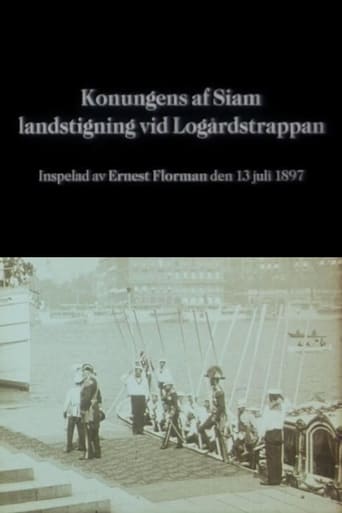
King Chulalongkorn
Actor
Born: September 20, 1853 in Grand Palace, Bangkok, Siam (now Thailand) Died: October 23, 1910 Active: 1868-1910 (as monarch), 1897 (film appearance) Birth Name: Chulalongkorn
Films
1 film
About King Chulalongkorn
King Chulalongkorn, also known as Rama V, was the fifth monarch of Siam (now Thailand) under the House of Chakri, ruling from 1868 until his death in 1910. His reign of 42 years was transformative periods in Thai history, marked by extensive modernization and reforms. In 1897, he became one of the first Asian monarchs to visit Europe, undertaking a historic diplomatic tour that included Sweden, where he was filmed in what would become 'The Arrival of the King of Siam in Stockholm.' This early documentary footage captured the actual king during his state visit, not a performance by a professional actor. King Chulalongkorn was renowned for his progressive policies, including the abolition of slavery, establishment of modern education systems, and reorganization of government administration. His diplomatic skills helped maintain Siam's independence during the age of European colonialism, earning him the epithet 'The Great Beloved King.' His appearance in the 1897 film represents one of the earliest documented instances of a reigning Asian monarch captured on motion picture film.
The Craft
On Screen
Not applicable - appeared as himself in documentary footage during official state visit
Milestones
- Ascended to throne at age 15
- Abolished slavery throughout Siam in 1905
- Undertook first European tour by a Siamese monarch in 1897
- Modernized Thai government and military
- Established modern education system
- Maintained Thai independence during colonial era
Best Known For
Iconic Roles
Must-See Films
Accolades
Won
- Order of the Royal House of Chakri
- Order of the Nine Gems
- Order of Chula Chom Klao
- Legion of Honour (France)
- Order of the Black Eagle (Germany)
- Order of the Garter (United Kingdom)
Special Recognition
- Posthumously titled 'The Great Beloved King' by Thai people
- October 23 observed as Chulalongkorn Day in Thailand
- Numerous institutions named in his honor including Chulalongkorn University
Why They Matter
Impact on Culture
King Chulalongkorn's appearance in the 1897 film represents a significant milestone in cinema history as one of the earliest documented instances of an Asian monarch captured on film. His European tour and subsequent film documentation helped introduce Siam to Western audiences in an unprecedented way. The film serves as an invaluable historical record of late 19th-century diplomatic relations and early documentary filmmaking. His modernization efforts transformed Thai society and laid the foundation for modern Thailand, influencing everything from education to government structure.
Lasting Legacy
King Chulalongkorn is revered as one of Thailand's greatest monarchs, remembered as 'The Great Beloved King' who saved Siam from colonialism and modernized the nation. His reforms abolished slavery, established modern education, and created a centralized government that exists in modified form today. The 1897 film footage provides a rare visual record of this pivotal historical figure. His legacy includes numerous institutions named in his honor, most notably Chulalongkorn University, Thailand's premier institution of higher learning. October 23 is observed as a national holiday in Thailand to commemorate his death and celebrate his contributions to the nation.
Who They Inspired
King Chulalongkorn's diplomatic approach and modernization policies influenced other Asian leaders in their dealings with Western powers. His successful balance of modernization with cultural preservation became a model for other nations facing colonial pressure. The documentary footage of his visit influenced early ethnographic and documentary filmmaking, showing the power of film to record significant historical events and figures. His educational reforms created a new class of Western-educated Thai leaders who would shape the country's future.
Off Screen
King Chulalongkorn had a large royal family with multiple wives and consorts, as was traditional for Siamese monarchs of the era. He was known for his progressive views and implemented many reforms that affected royal practices. His personal life was marked by his dedication to modernizing Siam while maintaining cultural traditions. He was fluent in both Thai and English, which helped his diplomatic efforts.
Education
Educated by private tutors in royal palace, studied Western languages, politics, and modern administration
Family
- Queen Saovabha Phongsri (married 1878)
- Queen Savang Vadhana (married 1878)
- Queen Sukhumala Marasri (married 1878)
- and 91 other royal consorts
Did You Know?
- He was the first Siamese king to visit Europe
- The 1897 Stockholm visit was filmed during his grand tour of Europe
- He learned English from Anna Leonowens (as depicted in 'The King and I')
- He fathered 77 children with his royal consorts
- He established Thailand's first modern postal service
- He introduced the first railway system to Thailand
- He created the first modern ministries in the Thai government
- His portrait appears on the 100 baht banknote
- He was the first Thai monarch to send royal children to study abroad
- He abolished the corvée labor system along with slavery
In Their Own Words
It is not the power of the weapons but the righteousness of the cause that brings victory
The progress of the nation depends upon the education of the people
A kingdom cannot be strong if its people are weak
We must learn from the West but not become the West
Frequently Asked Questions
Who was King Chulalongkorn?
King Chulalongkorn (Rama V) was the fifth monarch of Siam (Thailand) who ruled from 1868 to 1910. He is renowned for modernizing Thailand and maintaining its independence during the colonial era. His appearance in the 1897 film was as himself during an official state visit to Stockholm, not as a professional actor.
What films is King Chulalongkorn best known for?
Titles linked here include The Arrival of the King of Siam in Stockholm (1897).
When was King Chulalongkorn born and when did he die?
Born September 20, 1853; died October 23, 1910.
What awards did King Chulalongkorn win?
As a reigning monarch, King Chulalongkorn received numerous honors and orders from various countries including Thailand's Order of the Royal House of Chakri, France's Legion of Honour, Germany's Order of the Black Eagle, and Britain's Order of the Garter. He was posthumously honored with the title 'The Great Beloved King'.
What was King Chulalongkorn's acting style?
King Chulalongkorn was not an actor by profession. His appearance in the 1897 film was documentary footage captured during his actual state visit to Stockholm. The film shows the king in his official capacity as a visiting monarch, not performing a role.
Why is King Chulalongkorn important in Thai history?
King Chulalongkorn is considered one of Thailand's greatest rulers for modernizing the country while preserving its independence during the age of colonialism. His reforms included abolishing slavery, establishing modern education, creating a centralized government, and introducing infrastructure like railways and postal services.
What was the significance of the 1897 film?
The 1897 film 'The Arrival of the King of Siam in Stockholm' is historically significant as one of the earliest motion pictures of an Asian monarch and a rare visual record of King Chulalongkorn. It represents an important milestone in both cinema history and diplomatic documentation, showing how early film was used to record major international events.