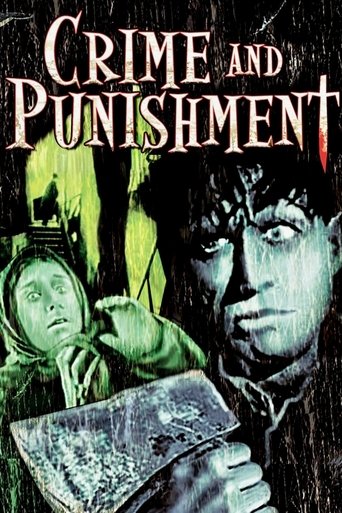
Films
1 film
About Petr Sharov
The 1923 film Crime and Punishment is the only title linked here for Petr Sharov. Working during the transformative years of Russian film, Sharov was part of the generation of actors who helped establish the foundations of Soviet cinematic art. His performance in Crime and Punishment demonstrated the dramatic intensity characteristic of Russian theatrical tradition adapted to the silent medium. While his filmography appears limited to this early period, his contribution to this significant literary adaptation places him among the actors of early Soviet cinema. The film itself was one of the earliest screen adaptations of Dostoevsky's masterpiece, making Sharov's portrayal historically significant. His career, though brief, coincided with the crucial transition from pre-revolutionary Russian cinema to the emerging Soviet film industry. Sharov's work represents the artistic bridge between Imperial Russian theatrical traditions and the new cinematic language being developed in the early Soviet period.
The Craft
On Screen
Embodying the intense, dramatic style characteristic of Russian theatrical tradition adapted for silent cinema, Sharov's performance reflected the emotional depth and psychological complexity valued in Russian dramatic arts.
Milestones
- Starred in the 1923 adaptation of Crime and Punishment
- Participated in early Soviet cinema development
- Contributed to one of the first film adaptations of Dostoevsky's work
Best Known For
Iconic Roles
Must-See Films
Working Relationships
Studios
Why They Matter
Impact on Culture
Petr Sharov's contribution to early Soviet cinema, though limited in scope, represents an important moment in the adaptation of Russian literary masterpieces to the film medium. His participation in the 1923 Crime and Punishment places him among the pioneers who helped establish the tradition of literary adaptations in Russian cinema, a practice that would become central to Soviet filmmaking. The film itself was groundbreaking as one of the earliest attempts to translate Dostoevsky's complex psychological narrative to the silent screen, requiring actors to convey profound emotional and philosophical themes through physical performance alone.
Lasting Legacy
While detailed records of Petr Sharov's career are scarce, his legacy endures through his contribution to one of the earliest cinematic adaptations of Crime and Punishment. His work represents the foundational period of Soviet cinema when Russian theatrical traditions were being transformed into a new cinematic language. The 1923 adaptation itself stands as an important historical document in the evolution of Russian film, and Sharov's performance is part of this significant cultural artifact.
Who They Inspired
As an early Soviet actor, Petr Sharov was part of the generation that helped establish the acting techniques and dramatic approaches that would influence subsequent generations of Russian film performers. His work in literary adaptations contributed to the development of the Russian tradition of bringing classic literature to the screen.
Off Screen
Very limited information is available about Petr Sharov's personal life, as was common for many early Soviet film actors whose detailed biographical records were not systematically preserved during the transitional period of Russian cinema.
Did You Know?
- The 1923 Crime and Punishment was one of the earliest film adaptations of Dostoevsky's novel
- Sharov worked during the transitional period from pre-revolutionary to Soviet cinema
- His career appears to have been brief, concentrated in the early 1920s
- The film was made during the early years of Soviet film industry consolidation
- Silent adaptations of complex literary works like Crime and Punishment required exceptional acting skills
- Very few complete records exist from this early period of Soviet cinema
- The film represents an important milestone in Russian cinematic history
Frequently Asked Questions
Who was Petr Sharov?
Russian with credits in this catalog. He was active during the early years of Soviet cinema and contributed to one of the first film versions of this classic Russian novel.
What films is Petr Sharov best known for?
Titles linked here include Crime and Punishment (1923).
When was Petr Sharov born and when did he die?
Specific birth and death dates for Petr Sharov are not available in historical records, which is common for many early Soviet film actors whose biographical details were not systematically documented during this transitional period in Russian cinema.
What awards did Petr Sharov win?
No specific awards or honors for Petr Sharov are documented, which was typical for actors working in the early Soviet film industry before formal award systems were established in Russian cinema.
What was Petr Sharov's acting style?
Sharov's acting style reflected the intense, dramatic tradition of Russian theater adapted for silent cinema. His performance in Crime and Punishment would have required conveying complex psychological themes through physical expression and gesture, characteristic of the Russian dramatic school.