Mia Cordes
Actor
- Active
- 1913-1914
Films 2
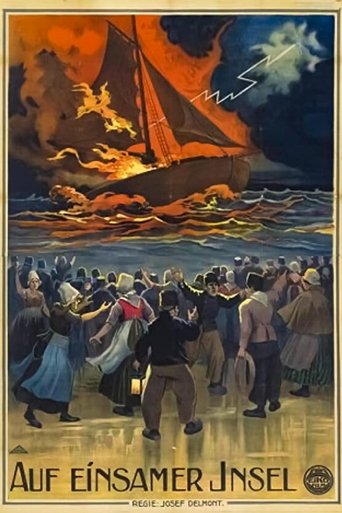
About Mia Cordes
Mia Cordes appears in surviving film records as a very early German screen performer credited in a small number of silent-era productions, most notably "On a Lonely Island" (1913) and "Deutsche Helden" (1914). Beyond those credits, reliable biographical documentation is extremely limited, which is common for minor or less widely documented figures from the European silent era. Based on the available filmography, Cordes worked during the formative years of narrative cinema, when acting styles were still evolving from stage-derived gestures toward a more naturalistic screen presence. The surviving record suggests a brief screen career concentrated in the pre-World War I period, likely in the German film industry. No authoritative evidence has surfaced for later career activity, making Cordes one of many early performers whose historical footprint rests primarily in film credits rather than extensive press coverage. Because of the scarcity of verified sources, many personal details such as birth, death, family, and later life remain unknown. Nevertheless, Cordes remains a documented part of early European cinema history through those surviving film appearances.
More about Mia Cordes
On screen
No detailed critical descriptions of Mia Cordes's acting style survive in readily verifiable sources. Given the era and the productions in which Cordes appeared, the performance approach would likely have followed the conventions of early silent cinema: expressive facial reactions, clear physical staging, and gesture-based communication suited to intertitles and non-synchronous storytelling. Without contemporary reviews or preserved analyses, any more specific characterization would be speculative.
In film history
Mia Cordes's cultural impact lies less in celebrity recognition than in historical representation: the name survives as part of the cast lists that document the earliest years of feature-length and narrative cinema in Germany. Performers like Cordes helped populate the rapidly expanding silent film industry, giving shape to the ensembles that made early cinema commercially viable and artistically sustainable. Even when their individual careers are only faintly recorded, such actors form an essential part of film history because they reveal the breadth of participation in the medium's formative decade. In this sense, Cordes contributes to our understanding of how film production functioned before star systems and archival preservation became more robust.
Later reputation
Mia Cordes's legacy is archival rather than star-driven: the performer is remembered chiefly through sparse but concrete screen credits from 1913 and 1914. That legacy is important because it preserves evidence of early German silent cinema and the many working actors who appeared in it. Cordes stands as a reminder that film history is built not only on major directors and widely celebrated stars, but also on lesser-known performers whose contributions are embedded in surviving titles. For researchers and databases, the value of a figure like Cordes is in the documentation itself, which helps map production networks and the personnel of early European cinema. The name remains part of the historical record even though the surrounding biographical details have not survived in accessible form.
Influence
There is no verifiable evidence that Mia Cordes directly mentored major later film figures or exerted a documented stylistic influence on other actors or directors. However, as an early screen performer in the German silent era, Cordes participated in the performance culture that shaped the acting norms of the period. The broader influence of such performers is cumulative: they helped establish the screen grammar, ensemble conventions, and expressive vocabulary that later actors inherited and refined. Cordes's influence is therefore best understood as indirect and historical rather than personal or explicitly documented.
Off screen
No reliable biographical information is readily available regarding Mia Cordes's personal life, including family background, relationships, residence, or activities outside film. The historical record preserved in modern databases appears to be limited primarily to film credits, with little to no surviving press coverage attached to the name. As a result, there is no verified basis for identifying marriages, children, or broader life events. This lack of documentation is typical for lesser-documented silent-era players, especially those whose screen careers were brief or whose works have not been extensively studied. Any detailed reconstruction of Cordes's personal life would require archival research in German studio records, trade publications, or civil documents.
Education
No verified educational background is currently available in accessible film-history sources.
Credits
- Appeared in the silent film "On a Lonely Island" (1913), one of the few surviving credits associated with the performer.
- Appeared in "Deutsche Helden" (1914), confirming activity in German cinema during the pre-World War I silent period.
- Represents one of the many early-screen performers whose work belongs to the foundational years of European feature filmmaking.
- Documented participation in films from the years immediately before the disruption of the German film industry caused by World War I.
Roles
- Unnamed roles in "On a Lonely Island" (1913)
- Unnamed roles in "Deutsche Helden" (1914)
Films
- On a Lonely Island (1913)
- Deutsche Helden (1914)
Studios
- German silent film production industry
Notes
- Mia Cordes is documented in only a very small number of early silent-film credits.
- The known filmography places Cordes in 1913 and 1914, right before World War I reshaped German cinema.
- No widely circulated portrait, interview, or biography has been reliably associated with the name in standard accessible sources.
- Cordes appears to be one of many early European screen performers whose historical record survives mainly through cast listings.
- Because of the scarcity of documentation, many modern databases can confirm the name but not much else about the performer.
- The surviving record suggests work in the German film industry during cinema's formative years.
Questions
Who was Mia Cordes?
Mia Cordes was an early silent-era film actor active in German cinema in the years 1913 to 1914. The surviving record is very limited, with only a small number of film credits clearly associated with the name.
What films is Mia Cordes best known for?
Mia Cordes is best known for appearing in "On a Lonely Island" (1913) and "Deutsche Helden" (1914). These are the principal surviving credits attached to the performer.
When was Mia Cordes born and when did they die?
Mia Cordes's birth and death dates are not currently verifiable in accessible historical sources. The available record identifies the performer mainly through early film credits rather than detailed civil or biographical information.
What awards did Mia Cordes win?
No awards or nominations are currently documented for Mia Cordes. This is not unusual for early silent-era performers whose careers were brief or whose documentation has not survived.
What was Mia Cordes's acting style?
No contemporary critical description of Mia Cordes's acting style has been reliably preserved. As a performer in early silent cinema, the style would most likely have relied on expressive gesture, facial expression, and clear physical storytelling typical of the period.
What is Mia Cordes's legacy in film history?
Mia Cordes's legacy is primarily historical and archival. The name survives as evidence of early German silent-film production and of the many performers who contributed to cinema's formative years, even when little personal information remains.