Films
1 film
About William Kyle
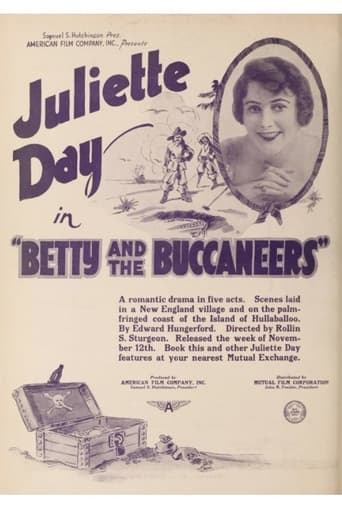
William Kyle worked on one surviving credit: Betty and the Buccaneers (1917). His career was notably brief, with filmography records indicating activity limited to a single year. His most documented work was in the film 'Betty and the Buccaneers' (1917), where he played a supporting role typical of many actors during the silent era. Like many performers of this period, Kyle was likely part of the studio system that produced numerous films annually, with actors often appearing in multiple productions as contract players. The brevity of his film career suggests he may have been either a bit player, someone who transitioned out of acting quickly, or potentially used a stage name for limited appearances. Unfortunately, detailed records about many supporting actors from this era are incomplete, making comprehensive biographical reconstruction challenging.
The Craft
Milestones
- Appeared in 'Betty and the Buccaneers' (1917)
- Worked during the golden age of silent cinema
Best Known For
Must-See Films
Why They Matter
Impact on Culture
As a brief contributor to silent cinema, William Kyle represents the thousands of supporting actors who formed the backbone of early Hollywood productions. While individual records are scarce, actors like Kyle were essential to the studio system that dominated American filmmaking in the 1910s, helping create the visual storytelling techniques that would define cinema's first decades. The lack of detailed documentation about such performers highlights the historical challenges in preserving the complete record of film history, particularly for those who worked behind the leading stars.
Lasting Legacy
William Kyle's legacy is primarily as a representative example of the many anonymous performers who contributed to early cinema. His brief appearance in the historical record underscores the vast scale of film production during the silent era and the thousands of actors who participated in creating America's first cultural industry. While his individual contributions may be lost to time, he stands as part of the foundation upon which modern cinema was built.
Who They Inspired
Due to the brief and undocumented nature of his career, there is no record of William Kyle's direct influence on other performers or filmmakers. However, like all actors of the silent era, he participated in developing the visual language of cinema that would influence generations of performers to come.
Off Screen
Very limited personal information is available about William Kyle, which was common for supporting actors in the silent era. Many performers from this period left behind minimal biographical records, especially those who had brief careers or played minor roles.
Did You Know?
- Worked during a pivotal year in cinema history - 1917 saw the United States enter World War I, which significantly impacted film production
- Silent actors in 1917 often had to exaggerate their performances to convey emotion without dialogue
- Many actors from this period used stage names, making historical identification difficult
- The average career length for supporting actors in the silent era was often very brief
- 1917 was during the transition from short films to feature-length productions in Hollywood
- Film preservation from this era is incomplete, with many silent films lost forever
Frequently Asked Questions
Who was William Kyle?
Silent film with credits in this catalog.' His career was notably brief, typical of many supporting actors during the early Hollywood era who often had short tenures in the film industry.
What films is William Kyle best known for?
Titles linked here include Betty and the Buccaneers (1917).
When was William Kyle born and when did he die?
Birth and death dates for William Kyle are not available in historical records, which is common for many supporting actors from the silent era whose biographical information was not preserved in film archives.
What awards did William Kyle win?
There are no records of William Kyle receiving any major awards or nominations. The Academy Awards were not established until 1929, well after his brief career in 1917.
What was William Kyle's acting style?
Specific details about William Kyle's acting style are not documented. However, as a silent era actor, he would have used the exaggerated physical expressions and gestures typical of the period to convey emotion without dialogue.
Why is so little known about William Kyle?
The scarcity of information about William Kyle is typical of many supporting actors from the silent era. Studio records were often incomplete, many films have been lost, and the press primarily focused on stars rather than bit players.